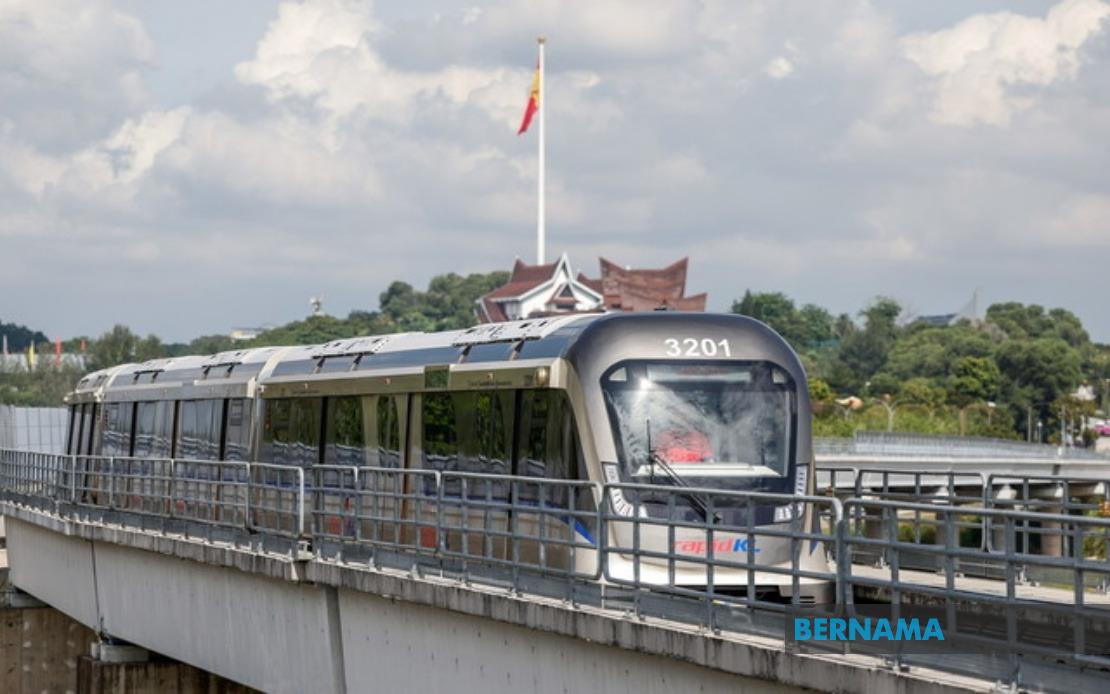
Prime Minister Datuk Seri Anwar Ibrahim will officiate the opening of the Light Rail Transit 3 (LRT3) Shah Alam Line on Sunday, June 28, marking a significant milestone in the Klang Valley's public transportation infrastructure. The 37.8-kilometre transit corridor, fully constructed and ready to serve passengers, has been designed to address mobility challenges for approximately two million residents across the Shah Alam and Klang areas. Shah Alam line chief Mohd Ariffin Idris confirmed the readiness of the project during a recent media preview, noting that the Prime Minister will announce the commercial opening date and operating hours at the launch ceremony.
The new transit route comprises 20 stations strategically positioned throughout the corridor. The northern section features Bandar Utama, Kayu Ara, BU 11 (Bandar Utama 11), Damansara Idaman, Subang, Glenmarie 2, Kerjaya, Stadium Shah Alam, Dato' Menteri, and UiTM Shah Alam. The southern section includes Seksyen 7 Shah Alam, Bandar Baru Klang, Pasar Klang, Jalan Meru, Jambatan Kota, Taman Selatan, Seri Andalas, Klang Jaya, Bandar Bukit Tinggi, and Johan Setia. This comprehensive network geometry aims to capture diverse commuter origins and destinations, maximising the line's utility for daily travellers throughout both municipalities.
The integration of the Shah Alam Line into the broader Klang Valley rail network represents a crucial step toward developing a unified public transportation ecosystem. Commuters will benefit from seamless interchange points, particularly at Bandar Utama, where direct connections to the Kajang Line enable access to the city centre and eastern corridors, and at Glenmarie 2, where linkages to the Kelana Jaya Line provide westbound connectivity. These interchange facilities reduce journey times and eliminate the friction associated with fragmented transit systems, a persistent challenge in sprawling metropolitan regions like the Klang Valley.
Comprehensive last-mile connectivity through feeder services will complement the main rail corridor. Prasarana has deployed 40 feeder buses across 13 routes with 323 designated stops, each charged at a nominal RM1 per journey and operating from 6 am to 11.30 pm. Additionally, a Rapid On-Demand van service comprising 44 vehicles will service 20 distinct zones at RM2 per trip during identical operating hours. These complementary mobility options are designed to capture commuters from residential and employment nodes beyond walking distance of LRT stations, a factor particularly relevant in lower-density suburban developments common across Shah Alam and Klang. Both service types will be calibrated based on emerging demand patterns and commuter behaviour once the line becomes operational.
Parking infrastructure supports the shift toward rail-based commuting by addressing the "first-mile" problem that discourages private vehicle use. Six designated stations—Kayu Ara, Damansara Idaman, Pasar Besar Klang, Sri Andalas, Bandar Bukit Tinggi, and Johan Setia—offer a combined 2,300 parking bays, accommodating commuters who require personal transport to reach the transit network. This park-and-ride strategy has proven effective in comparable metropolitan systems, particularly when integrated with accessible pricing and reliable train frequencies.
Projected ridership targets suggest management confidence in the line's commercial viability and community demand. Prasarana aims to achieve 67,000 daily passengers during the first operational year, with forecasts escalating to 117,708 daily journeys within five years. These figures, if realised, would position the Shah Alam Line among the higher-capacity corridors in the Klang Valley network, reflecting the substantial residential and commercial concentration along its alignment. However, achieving such targets will depend on consistent service quality, competitive journey times relative to private vehicle alternatives, and sustained marketing efforts to shift commuter behaviour.
The project incorporates contemporary sustainability principles throughout its design and operations. Rolling stock vehicles feature inverter-based air conditioning systems that optimise energy consumption, whilst stations employ smart cooling technologies that reduce operational demands. Architectural planning maximises natural ventilation and daylight penetration, strategies that diminish reliance on mechanical systems and support long-term operational cost management. These environmental considerations reflect growing industry recognition that transit infrastructure must balance mobility objectives with resource efficiency, particularly critical in Southeast Asia's rapidly urbanising context where energy consumption and carbon emissions remain substantive policy concerns.
Accessibility provisions ensure inclusive service delivery across all passenger demographics. Every station incorporates wheelchair-accessible ramps and disability-compliant sanitation facilities, whilst each carriage reserves dedicated seating for persons with disabilities. This comprehensive accessibility framework addresses both physical mobility and dignified passenger experience, aligning with international best practices and Malaysia's commitments under disability rights conventions. Given the ageing demographic profile evident in developed suburban areas served by the Shah Alam Line, such provisions will likely benefit a substantial proportion of regular commuters beyond those with designated disability classifications.
The project timeline includes subsequent development phases that will expand the network's coverage. Five additional stations—Tropicana, Raja Muda, Temasya, Bukit Raja, and Bandar Botanik—remain under reconstruction and are scheduled to commence work by year-end. This phased expansion approach permits incremental capital deployment whilst allowing operational stabilisation of the initial 20-station corridor. The sequencing suggests that infrastructure development will continue responding to demonstrated demand and integration requirements rather than pursuing all-at-once deployment, a prudent strategy in a financially constrained public transport sector.
The Shah Alam Line launch represents both operational achievement and policy continuity in Malaysia's rail infrastructure expansion. The project addresses persistent congestion challenges in the Klang Valley whilst demonstrating government commitment to public transportation investment at a time when urban mobility pressures intensify across Southeast Asia. For Malaysian commuters, the opening signals potential alternatives to increasingly congested road networks; for regional observers, it exemplifies ongoing efforts to establish multimodal transit systems that can accommodate rapid urbanisation whilst managing environmental externalities. The success or shortcomings of this initiative will likely inform subsequent public transport investments across Malaysia and neighbouring economies facing comparable growth and congestion pressures.

