%22%2F%3E%3C%2Fpattern%3E%3C%2Fdefs%3E%3Crect%20width%3D%22100%25%22%20height%3D%22100%25%22%20fill%3D%22url(%23ph3uy8bg)%22%2F%3E%3Crect%20width%3D%22100%25%22%20height%3D%22100%25%22%20fill%3D%22url(%23ph3uy8bp)%22%2F%3E%3Ctext%20x%3D%2250%25%22%20y%3D%2250%25%22%20text-anchor%3D%22middle%22%20dominant-baseline%3D%22central%22%20fill%3D%22rgba(255%2C255%2C255%2C0.95)%22%20font-family%3D%22Georgia%2C%20'Times%20New%20Roman'%2C%20serif%22%20font-weight%3D%22700%22%20font-size%3D%22320%22%20letter-spacing%3D%22-0.02em%22%3EPM%3C%2Ftext%3E%3C%2Fsvg%3E)
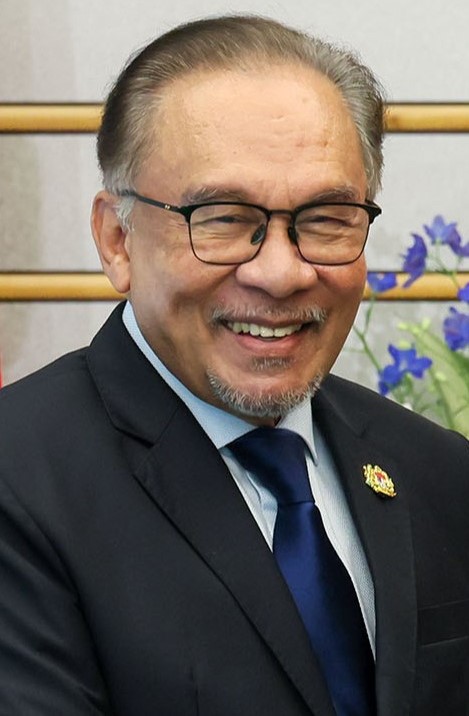
Prime Minister Datuk Seri Anwar Ibrahim has positioned the Islamic concept of Hijrah as a metaphorical and practical framework for Malaysia's ongoing reform agenda, arguing that sustainable national transformation demands collective commitment rather than isolated heroic efforts. Speaking during observances marking Maal Hijrah 1448H, the Prime Minister drew parallels between Prophet Muhammad's historic migration to Madinah and contemporary Malaysian challenges, suggesting that the lessons embedded in that seventh-century event carry direct relevance to modern governance and nation-building.
The fundamental thrust of Anwar's message centred on the proposition that meaningful change requires more than inspirational slogans or top-down directives. Instead, he articulated a vision of reform rooted in broad-based consensus across Malaysia's diverse religious, ethnic, and ideological communities. This framing appears designed to signal that the government's reform programme, which encompasses economic restructuring, anti-corruption initiatives, and institutional strengthening, cannot succeed through executive action alone but necessitates buy-in from opposition parties, civil society, labour unions, business associations, and ordinary citizens.
Anwar's invocation of Hijrah as an organizational principle carries particular significance for Malaysian audiences familiar with both Islamic tradition and the country's plural political system. By emphasizing that the Prophet's migration to Madinah succeeded through coordinated effort—highlighting the roles of youth like Saidina Ali Abi Talib and women such as Asma Abu Bakar—the Prime Minister implicitly critiqued approaches to governance that concentrate power or overlook the contributions of diverse constituencies. This rhetorical move acknowledges Malaysia's demography while advancing a doctrine of inclusive institution-building.
The notion that Hijrah represents sacrifice and struggle, as articulated by the Prime Minister, reframes national reform as a spiritual and moral undertaking rather than merely a technical or administrative exercise. This resonates in a country where Islam holds constitutional primacy and where religious symbolism carries substantial political weight. By coupling the language of Islamic principle with appeals for practical cooperation, Anwar positioned himself as bridging Malaysia's secular and religious spheres—a delicate balancing act given persistent tensions over the role of Islam in the nation's public life.
The Department of Islamic Development Malaysia's selection of the theme "MADANI Dihayati, Ummah Diberkati" for the national celebration reinforces this message of collective blessing and shared responsibility. MADANI, an acronym embedded in the government's policy framework emphasizing prosperity, harmony, sustainability, and inclusivity, echoes the Prime Minister's argument that reform must serve the broader Muslim community while respecting Malaysia's multicultural character. The linkage between the Hijrah narrative and contemporary policy language demonstrates how religious concepts are being operationalized within Malaysia's governance structure.
A closer examination of Anwar's emphasis on patience and persistence reveals an implicit acknowledgment of reform fatigue or resistance. By cautioning that "success will not come merely through rhetoric, slogans and individual effort," the Prime Minister appears to address criticism that his government's reform programme lacks tangible results or moves too incrementally. The invocation of patience as a virtue suggests that substantive transformation requires sustained commitment over years rather than months, a posture that may temper expectations among constituencies eager for rapid change.
The Prime Minister's citation of Quranic verse 100 from Surah An-Nisa—concerning rewards for those who migrate in Allah's path—extends the Hijrah metaphor beyond historical narrative into prescriptive theology. This rhetorical strategy frames governmental reform not simply as political necessity but as religious obligation, potentially mobilizing faith-based motivation among Muslim Malaysians to support the reform agenda. However, this approach also carries the risk of inadvertently excluding non-Muslim Malaysians from a narrative positioned primarily within Islamic discourse.
Anwar's insistence on unity and consensus arrives amid broader regional and domestic challenges. Southeast Asia faces economic pressures, rising geopolitical tensions, and questions about democratic resilience. Malaysia specifically confronts persistent issues of governance transparency, fiscal sustainability, and social cohesion. By grounding reform discourse in Hijrah principles, the Prime Minister attempts to anchor Malaysian reform efforts in values transcending partisan advantage—a significant rhetorical move in a political system characterized by coalition fragmentation and periodic conflict.
The emphasis on teamwork and collective endeavour also implicitly critiques zero-sum political competition. Rather than framing reform as a victory by one political faction over another, Anwar's Hijrah-inspired framework suggests that national progress emerges from cooperation even among historical rivals. This vision contrasts sharply with Malaysia's tradition of intense electoral contestation and suggests an aspiration toward deeper institutional consensus around governance principles.
Looking forward, the sustainability of this reform narrative depends substantially on whether Malaysian institutions and political actors genuinely adopt the collaborative ethos the Prime Minister advocates. Historical patterns indicate that Malaysian politics often reverts to factional competition despite rhetorical commitments to unity. The genuine test of Anwar's Hijrah-inspired approach will emerge through concrete institutional reforms—whether parliament, the judiciary, and law enforcement agencies operate with demonstrable independence and impartiality, and whether civil society gains meaningful voice in policy formulation. Without such tangible manifestations, appeals to unity risk becoming precisely the "rhetoric and slogans" the Prime Minister cautioned against.