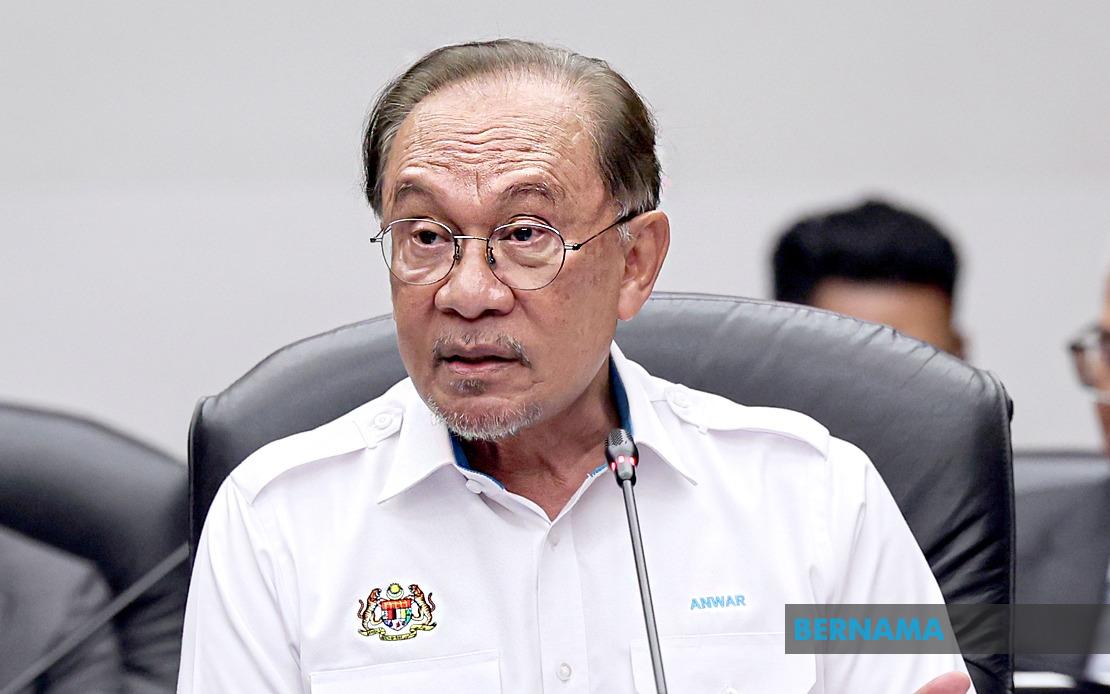
Prime Minister Datuk Seri Anwar Ibrahim is undertaking a two-day working visit to Penang beginning this evening, during which he will preside over several significant programmes spanning education, workforce development, Islamic heritage, and entrepreneurship. The visit reflects the federal government's continued emphasis on strengthening institutional capacity and community engagement in the northern corridor, with particular focus on skills enhancement and religious education aligned with Malaysia's pluralistic framework.
The Prime Minister's itinerary opens with the launch of the Indian Muslim Transformation Framework (IMTF) 2030 Programme at PICCA@Arena Butterworth Convention Centre at 8:30 pm. This initiative targets a specific demographic community and underscores the government's commitment to inclusive development across different cultural and religious groups within the Muslim population, recognising the distinct aspirations and challenges faced by Indian Muslim constituencies in Malaysia.
On the second day, Anwar will attend the National Training Week (NTW) 2026 Summit at Universiti Teknologi MARA (UiTM) Permatang Pauh beginning at 9:30 am. This summit represents part of broader efforts to coordinate vocational and skills training across Malaysian institutions, particularly important given the country's transition toward higher-value economic sectors and the persistent skills gap in the labour market that affects both unemployment and industry competitiveness.
Following the training summit, the Prime Minister will officiate the opening of Sekolah Menengah Kebangsaan Agama (SMKA) Sheikh Tahir Jalaluddin in Bukit Mertajam and simultaneously launch the Nuqaba Programme at 10:45 am. The school carries the name of a towering Penang Islamic scholar and reformer, Sheikh Tahir Jalaluddin, whose historical contributions to Islamic thought and da'wah (Islamic outreach) remain influential in Malaysian educational circles. The institution aims to advance Islamic education grounded in outreach principles whilst promoting social harmony within Malaysia's diverse religious landscape, a delicate balance that few schools attempt to formalise explicitly in their mission statements.
The choice of naming and timing reflects deliberate efforts to anchor contemporary Islamic education to historical figures whose legacies emphasised intellectual rigour and interfaith respect rather than isolationism. Such heritage-conscious institutional naming carries symbolic weight in Malaysia, where educational choices often signal broader political and cultural positioning. The Nuqaba Programme component of the ceremony remains significant as it likely addresses leadership development or specialised training within the Islamic education sector.
In the afternoon, Anwar, who simultaneously holds the Finance Ministry portfolio, will preside over the opening of the Himpunan Usahawan Bumiputera Pulau Pinang (HUBPP) and the 14th Penang International Halal Trade Exhibition (PIHEX) at Seberang Perai Polytechnic in Permatang Pauh at 2 pm. These concurrent events underscore the government's dual focus on supporting bumiputera entrepreneurship whilst positioning Malaysia as a regional halal commerce hub, a strategic economic objective that connects ethnic preference policies with export-oriented industrial policy. The halal trade exhibition, now in its fourteenth edition, demonstrates Penang's sustained positioning as a centre for Islamic commerce and certification, competing with other regional nodes in Southeast Asia for market leadership in halal products and services.
The visit concludes with the opening ceremony of Fort Cornwallis in George Town at 3:30 pm, representing the heritage conservation dimension of Anwar's itinerary. Fort Cornwallis, a historical colonial-era structure and significant tourist landmark, embodies Malaysia's complex relationship with its colonial past and contemporary identity as a modern Muslim-majority nation. The decision to include heritage site inauguration alongside religious and economic programmes reflects government messaging that modernity, Islamic values, and historical preservation can coexist within a coherent national vision.
Communications Minister Datuk Seri Fahmi Fadzil will accompany Anwar at the HUBPP and PIHEX ceremonies, subsequently visiting the Nordin Ahmad Employee Gallery at Sekolah Kebangsaan Permatang Pasir in Permatang Pauh at 4 pm. The presence of the Communications Minister alongside the Prime Minister and Finance Minister amplifies the political messaging value of these events, signalling unified cabinet interest in Penang's development trajectory and bumiputera economic advancement.
Penang, as the locus of this visit, holds particular significance within Malaysia's political economy. The state has historically served as a test bed for economic and social policy innovation, and its recent political trajectory has involved complex negotiations between federal and state governments of different political complexions. Infrastructure investments and high-profile federal programmes such as this visit represent ongoing efforts to maintain federal relevance and demonstrate tangible development outcomes in constituencies that may not uniformly support the federal coalition.
The clustering of these four distinct programme categories—community economic development, vocational training, religious education, and heritage preservation—within a single two-day visit suggests intentional messaging about integrated national development philosophy. Rather than treating these sectors as siloed bureaucratic domains, the visit implicitly positions them as mutually reinforcing elements of a comprehensive vision for community uplift and institutional strengthening.
For Malaysian readers, particularly those in the northern states, such visits provide tangible evidence of federal government investment priorities and signal the government's attention to regional concerns. The emphasis on skills training and halal commerce carries particular resonance given Penang's position as a manufacturing hub and its aspirations toward higher-value economic activities. The religious education components appeal to constituencies concerned with Islamic institutional quality and cultural preservation, whilst heritage initiatives attract tourism and cultural stakeholders.
The timing and scope of Anwar's Penang visit also reflect broader strategic considerations regarding electoral consolidation and institutional legitimacy. By simultaneously addressing economic opportunity (bumiputera entrepreneurship, halal exports), human capital development (skills training), cultural-religious institutional strength (Islamic schooling), and national heritage (monument restoration), the Prime Minister's office constructs a comprehensive narrative of inclusive, multi-dimensional national development that potentially appeals across demographic divides whilst maintaining clear prioritisation of Islamic and bumiputera-focused programmes.

