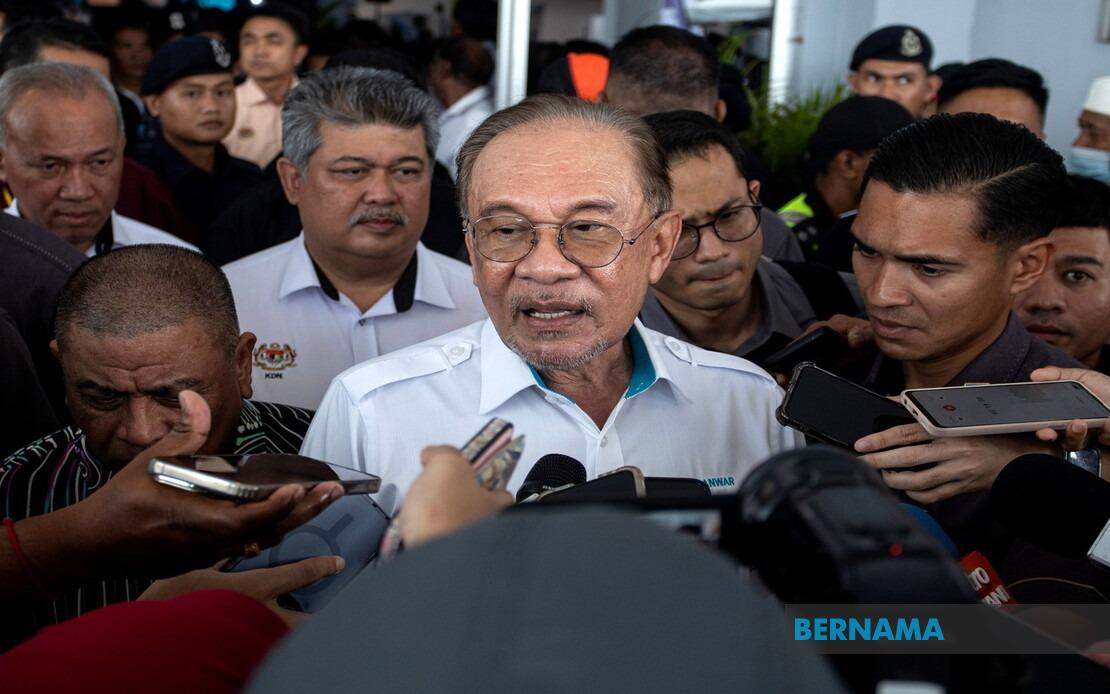
Prime Minister Datuk Seri Anwar Ibrahim has issued a firm directive to officials holding government positions, instructing them to exercise restraint and avoid launching attacks against the Federal Government during ongoing state election campaigns. Speaking in Ipoh following the MADANI KITA community engagement programme, Anwar emphasised that maintaining political discipline across the Unity Government coalition is essential to preserving stability and effective governance at both national and regional levels.
The warning underscores growing tensions within Malaysia's governing alliance as political parties compete fiercely in state-level contests while simultaneously serving as coalition partners in federal administration. This phenomenon, whilst technically permissible under Malaysia's democratic framework, poses significant challenges to cabinet cohesion and governmental effectiveness. Anwar's cautionary remarks suggest that some officials may already be crossing the line between legitimate state-level political advocacy and inappropriate criticism of federal policy or performance.
Anwar made explicit that individuals occupying ministerial posts, deputy ministerial roles, or agency leadership positions face strict standards of conduct. He stated unambiguously that those unwilling to comply with these disciplinary expectations should voluntarily relinquish their government positions rather than continue serving whilst undermining federal authority. This approach represents a pragmatic but forceful means of protecting the government's internal coherence without resorting to immediate disciplinary action.
The Prime Minister acknowledged the inherent complexity of Malaysia's political system, where coalition members frequently find themselves as rival competitors in state elections. He stressed that healthy democratic competition at the state level is entirely legitimate and should be encouraged. However, such competition must operate within agreed boundaries that prevent destructive assaults on the integrity of federal institutions or the collective decision-making authority of the Cabinet.
Anwar disclosed that he has already engaged both Deputy Prime Ministers—Datuk Seri Dr Ahmad Zahid Hamidi and Datuk Seri Fadillah Yusof—to discuss and enforce these standards. This involvement of the two deputies indicates the seriousness with which the Prime Minister views potential breaches of coalition discipline. Their role in reinforcing these expectations across their respective party networks and ministerial portfolios suggests a coordinated approach to preventing further violations.
As Pakatan Harapan chairman, Anwar also appealed directly to all coalition members to prioritise the preservation of cordial relationships across federal and state administrative levels. He argued that maintaining constructive relations between coalition parties is prerequisite to delivering quality public services consistently. When political tensions escalate into public recriminations, government efficiency inevitably suffers, and citizens become caught in the crossfire of internal alliance disputes.
The directive reflects broader concerns about maintaining the delicate balance required for Malaysia's multi-party coalition government to function effectively. Unlike single-party governments that face no internal partisan competition, coalition administrations must continuously manage tensions arising from competing political interests. Officials who campaign aggressively against fellow coalition members risk undermining the trust and reciprocal cooperation upon which smooth governmental operations depend.
Anwar's emphasis on discipline carries particular weight given the historical fragility of Malaysian coalitions. Previous government formations have collapsed when internal tensions became unmanageable, creating political instability and disrupting policy implementation. By establishing clear expectations now, the Prime Minister attempts to prevent small disputes from escalating into alliance-threatening crises during what many anticipate to be a crucial electoral period for government legitimacy.
The stated position also reflects Malaysia's constitutional conventions regarding ministerial conduct and cabinet solidarity. Ministers are traditionally expected to present a united front publicly, even when disagreements exist privately. Anwar's warning essentially invokes these long-established norms, suggesting that some officials may have forgotten or deliberately disregarded these expectations in their enthusiasm for state-level campaigning.
For Malaysian voters and observers of regional politics, this warning illuminates the ongoing tension between democratic pluralism and governmental effectiveness. The Prime Minister's attempt to establish boundaries reflects his recognition that whilst electoral competition among coalition members represents normal democratic practice, unconstrained partisan warfare during elections threatens the entire governmental structure. This balancing act remains one of the most challenging aspects of coalition governance in Malaysian politics.
The implications extend beyond immediate election cycles. How successfully Anwar enforces these expectations will shape the future viability of the Unity Government and influence whether coalition-based governance remains feasible in Malaysian politics. Should officials repeatedly breach these boundaries without consequences, the coalition's internal cohesion may deteriorate further, potentially affecting its capacity to address national priorities including economic management, infrastructure development, and social policy implementation.

