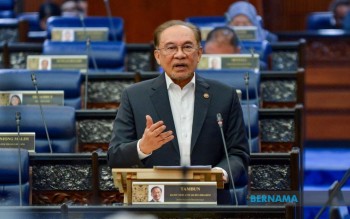
Prime Minister Datuk Seri Anwar Ibrahim has drawn a firm line on governance standards, declaring that the government will accept no lapses in integrity regarding the Retirement Fund (Incorporated)'s investment portfolio, particularly in relation to its stake in eFishery, a start-up focused on aquaculture technology. Speaking during parliamentary proceedings, Anwar underscored that allegations of impropriety—whether corruption or fraud—would trigger stringent accountability measures, signalling his administration's commitment to safeguarding Malaysia's retirement savings even as global uncertainty threatens investment returns.
While initial assessments suggest no irregularities have surfaced in the KWAP investment decision, Anwar, who doubles as Finance Minister, has insisted that the Malaysian Anti-Corruption Commission conduct a comprehensive examination of the entire investment cycle. This methodical approach reflects broader concerns about how pension funds deploy contributors' money into emerging technology companies, where risks can be elevated and due diligence practices demanding. The MACC investigation will scrutinize not merely the outcome of the investment but the procedural steps leading to it, including the deliberations of the investment panel and subsequent board endorsements.
Anwar's remarks come in response to parliamentary inquiries focused on pension fund security amid turbulent global markets. Senator Mohd Hasbie Muda had raised questions about the government's strategy for ensuring that KWAP and the Employees Provident Fund (KWSP) continue delivering competitive returns to members despite geopolitical headwinds affecting asset classes worldwide. The concern reflects a reality facing pension administrators globally: balancing yield expectations with risk management when traditional fixed-income instruments offer historically low returns and equities face cyclical volatility.
The Prime Minister indicated he had personally engaged KWAP management to emphasise the necessity of unreserved cooperation with investigators. This direct involvement signals that the office of the Prime Minister is monitoring the situation closely, reflecting the political sensitivity around pension fund governance. Any substantive breach would undermine public confidence in institutions entrusted with the life savings of millions of Malaysian workers, making transparent and thorough investigation essential for institutional credibility.
Anwar's position also addresses a supplementary question from Senator Wan Martina Wan Yusoff concerning government strategy for identifying investment destinations and protecting citizens' retirement contributions. Her query hints at underlying anxiety about whether sufficient safeguards exist when sovereign wealth and pension vehicles venture into venture capital and technology sectors—domains markedly different from conventional infrastructure or dividend-yielding equities that historically constituted pension portfolios. The question reflects a broader Malaysia-wide conversation about intergenerational fairness and whether current investment strategies adequately shield future retirees from concentrated risks in emerging sectors.
The eFishery investment exemplifies the modernisation pressure facing institutional asset managers in developing economies. Aquaculture technology represents a strategic priority for food security and economic diversification, yet it remains capital-intensive and commercially unproven at scale in many markets. KWAP's decision to back such ventures signals confidence in Malaysia's tech ecosystem and commitment to supporting innovation, but it equally demonstrates that pension funds—typically conservative institutions—are being pressed to take calculated risks in pursuit of returns that statutory contributions alone cannot generate.
The investigation itself carries methodological importance beyond the immediate case. By examining investment panel deliberations and board decisions, the MACC will effectively audit the governance architecture governing pension fund capital allocation. Such scrutiny may produce recommendations affecting how KWAP and KWSP evaluate future opportunities, establish investment thresholds for emerging-market technologies, and document decision-making rationales. These procedural improvements could strengthen confidence among the 40 million Malaysians whose retirement savings depend on sound institutional stewardship.
Anwar's emphasis on investigation reflects an awareness that merely clearing KWAP of wrongdoing may not suffice; the public requires demonstrated vigilance and transparent process to restore confidence. The government's willingness to subject its own agencies and investment decisions to independent external examination—even when preliminary findings appear clean—indicates a shift toward proactive governance rather than reactive crisis management. This posture may set expectations for how other state-linked funds and agencies handle their fiduciary responsibilities.
The broader context involves Malaysia's competitive position in attracting investment and technological talent. If KWAP and other institutional investors retreat from backing promising start-ups due to excessive investigation, Malaysia risks ceding innovation leadership to regional competitors with more agile capital deployment mechanisms. Anwar's framing appears designed to thread this needle: ensuring rigorous oversight without signalling that government-backed investors will become risk-averse partners for entrepreneurs. This balance matters for Malaysia's aspirations to develop a thriving venture ecosystem capable of competing with Singapore and other regional hubs.
Looking forward, the MACC inquiry into the eFishery investment and KWAP's investment processes will likely establish precedents for how Malaysia's pension regulators engage with similar opportunities. The outcome may shape not only KWAP's future mandate but also how institutional investors across the region approach venture capital allocation. Anwar's uncompromising stance on integrity, paired with his readiness to investigate thoroughly, suggests that Malaysia is attempting to demonstrate that strong governance standards and strategic investment need not be mutually exclusive—a message aimed both domestically at concerned citizens and internationally at sovereign wealth partners considering Malaysian opportunities.

