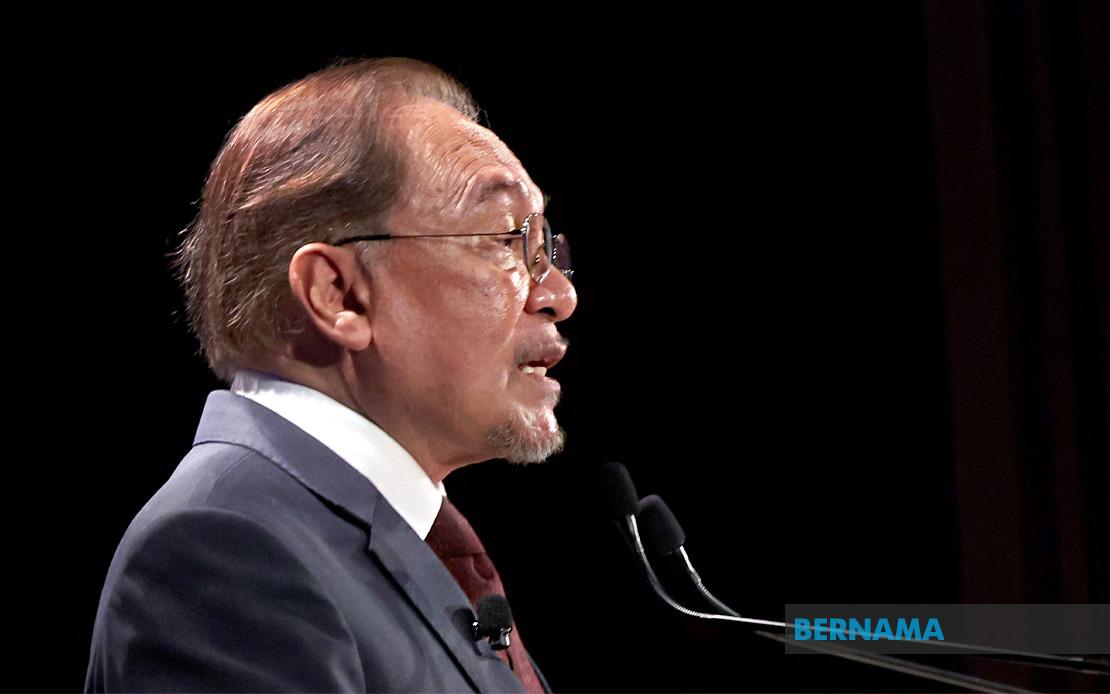
Prime Minister Datuk Seri Anwar Ibrahim will conclude his official visit to Turkmenistan with an intensive schedule of high-level diplomatic engagements across Ashgabat, the capital of this strategically important Central Asian nation situated along the Caspian Sea's eastern shores. The second and final day of his mission encompasses formal ceremonies, substantive bilateral discussions, and the signing of multiple bilateral instruments designed to elevate cooperation between Malaysia and Turkmenistan across multiple sectors.
The day begins with a ceremonial reception hosted by Turkmenistan President Serdar Berdimuhamedov at the Presidential Palace, where Anwar will be formally welcomed before the two leaders proceed to a private one-on-one meeting. This private engagement typically provides space for frank discussions on bilateral priorities and strategic concerns before broader formal talks commence. The formal bilateral meeting that follows will encompass a comprehensive review of the relationship's current state and identification of new opportunities for deepening engagement.
A cornerstone of the visit involves the signing of a joint statement and the exchange of several critical bilateral agreements that will reshape Malaysia-Turkmenistan cooperation. Among the key instruments being exchanged is an Air Services Agreement, which will facilitate enhanced connectivity between the two nations and support business travel and tourism flows. Additionally, an agreement between Malaysia's foreign affairs institute and its Turkmenistan counterpart will establish institutional channels for ongoing dialogue on diplomatic matters and regional affairs.
The bilateral agenda extends into specialized sectors with transport and scientific collaboration at the forefront. The Ministry of Transport and Turkmenistan's State Service will finalize a memorandum of understanding addressing transportation infrastructure and logistics cooperation. Meanwhile, the Academy of Sciences Malaysia and the Academy of Sciences of Turkmenistan will establish their own framework for research collaboration and academic exchange, creating opportunities for Malaysian and Turkmen scientists to work jointly on innovation initiatives relevant to both nations' development priorities.
Energy cooperation, particularly in oil and gas, represents a crucial dimension of the visit. Multiple documents in the petroleum sector will be exchanged, reflecting the substantial presence of Petronas, Malaysia's national oil company, in Turkmenistan's hydrocarbon industry. Since 1996, Petronas has accumulated total investments of RM52.73 billion in the country, making Turkmenistan one of the company's most significant upstream operations. These agreements signal continuing commitment to the energy partnership and potential expansion of Malaysian involvement in Turkmenistan's oil and gas development.
During their discussions, both leaders will address broader economic cooperation encompassing trade, investment, agriculture, commodities, energy, tourism, education, digital technology, and science and technology. The bilateral relationship has shown positive momentum, with Malaysia ranking as Turkmenistan's fourth largest trading partner among Central Asian nations in 2025. Total bilateral trade reached RM75.80 million, with Malaysian exports accounting for RM75.50 million and reflecting a robust nine percent year-on-year increase. This growth trajectory suggests untapped potential for further expansion, particularly in sectors where Malaysian expertise and technology could address Turkmenistan's development needs.
The leaders will also examine regional developments affecting both nations, particularly the trajectory of ASEAN and Central Asian affairs. For Malaysia, deepening engagement with Central Asia represents a strategic diversification of diplomatic and economic relationships, reducing reliance on traditional Indo-Pacific partners while accessing markets and investment opportunities in the continental interior. Turkmenistan, conversely, views Southeast Asian partnerships as avenues for technological transfer and access to dynamic market economies, particularly in the post-sanctions environment where economic diversification has become imperative.
Following the formal bilateral session and luncheon hosted by President Berdimuhamedov, Anwar will perform Friday prayers at the Turkmenbashi Ruhy Mosque, a gesture that underscores Malaysia's Islamic identity and cultural connection with predominantly Muslim Turkmenistan. This religious observance carries diplomatic significance, demonstrating respect for local customs and shared Islamic heritage between the nations. The spiritual component of the visit complements the transactional aspects, fostering deeper people-to-people and institutional connections.
The delegation will then jointly inaugurate the Malaysia-Turkmenistan Forum at the Chamber of Commerce and Industry of Turkmenistan, a platform designed to facilitate business-to-business interactions and commercial networking. This forum serves as a mechanism for private sector engagement, enabling Malaysian companies to explore investment and partnership opportunities in sectors ranging from energy to agriculture, while Turkmen businesses gain exposure to Malaysian capabilities in technology and services. The forum institutionalizes commercial dialogue beyond government channels, potentially generating sustained economic momentum.
Ashgabat itself carries symbolic weight in this diplomatic exercise. The capital, internationally recognized as the "White Marble City," holds the Guinness World Record for the highest concentration of white marble-clad buildings, featuring over 500 structures adorned with the material. The city's distinctive monumental architecture and gold-leaf embellishments reflect Turkmenistan's resource wealth and modernization aspirations. For a Malaysian delegation, the visit to this architecturally distinctive city provides insights into Turkmenistan's development model and national identity.
Geographically, Turkmenistan's position as a Central Asian crossroads bordered by Kazakhstan, Uzbekistan, Afghanistan, Iran, and the Caspian Sea renders it strategically significant for Malaysia's broadened regional engagement. The Caspian Sea, the world's largest inland water body and a technically endorheic basin with no natural outlets, has historically constrained regional connectivity but increasingly serves as a platform for economic cooperation and energy trade. Malaysia's growing presence in Turkmenistan reflects recognition of the country's hydrocarbon reserves and potential as a gateway to broader Central Asian markets.
Prime Minister Anwar's delegation includes Minister of Investment, Trade and Industry Datuk Seri Johari Abdul Ghani and Minister of Economy Akmal Nasrullah Mohd Nasir, positioning the visit squarely within an economic and commercial framework. The inclusion of senior economic ministers signals that commercial outcomes and investment facilitation rank among the visit's primary objectives, complementing traditional diplomatic functions. Their participation in bilateral discussions and forum activities will help translate political agreements into concrete business opportunities.
The concluding press conference with Malaysian media will provide an opportunity for Anwar to articulate the visit's outcomes and articulate Malaysia's strategic vision for Central Asian engagement. The timing and structure of this engagement reflect evolving Malaysian foreign policy under Anwar's leadership, emphasizing economic diversification, energy security through Petronas operations, and diplomatic positioning in regions historically peripheral to Southeast Asian focus. The Turkmenistan visit exemplifies this broader repositioning, placing Malaysia within an expanding network of strategic partnerships extending from Southeast Asia into Central Asia.

