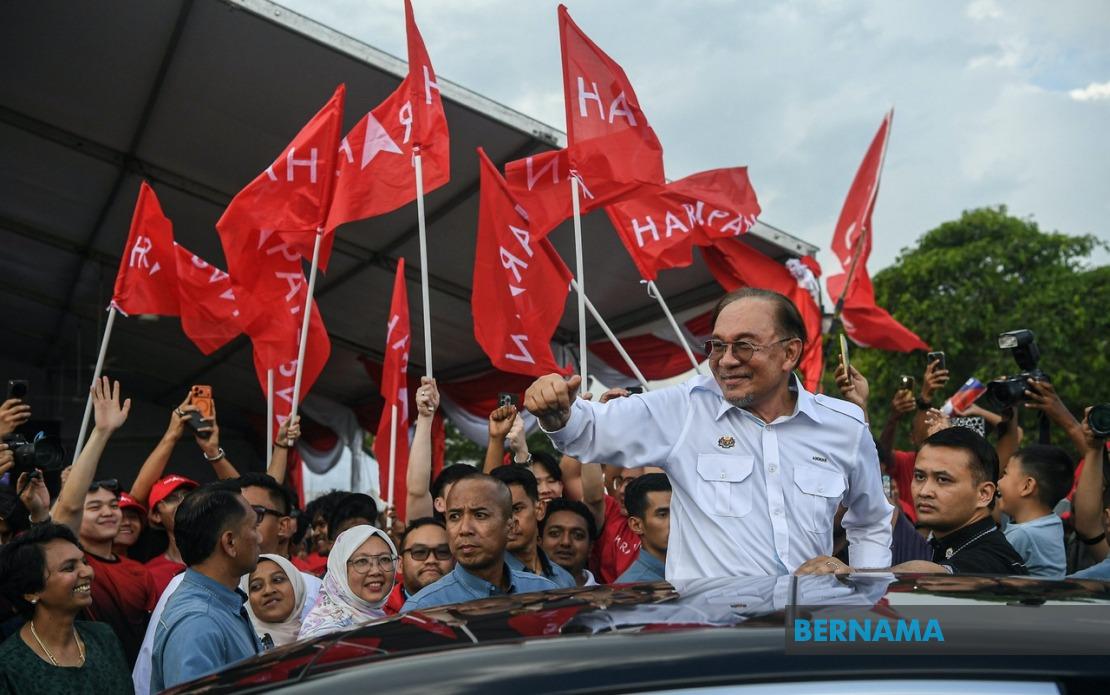
Prime Minister Datuk Seri Anwar Ibrahim's high-profile campaign appearances across Johor have generated considerable momentum for Pakatan Harapan ahead of the state election, with senior party figures attributing the coalition's improved prospects to his direct engagement with voters across the southern state.
Communications Minister Datuk Fahmi Fadzil, speaking in Johor Bahru as early voting commenced, highlighted the spontaneous and enthusiastic reception the Prime Minister has received during campaign stops in various constituencies. The minister emphasized that such organic grassroots support signals deeper voter interest in PH's election platform, extending beyond mere curiosity about the Prime Minister's presence to substantive engagement with the coalition's policy messaging.
Fahmi recounted specific instances of the public's eagerness to connect with the Prime Minister during recent campaign events. In Senggarang, an elderly resident reportedly transported his wife by trishaw specifically to greet Anwar, exemplifying the cross-generational appeal the PH chairman appears to command among Johor voters. These anecdotal observations, drawn from Fahmi's firsthand observations while accompanying the Prime Minister at campaign programmes in the Batu Pahat district, illustrate the personal connection political leaders can forge when engaging directly with communities rather than relying solely on media or institutional channels.
The PH Communications director, who also holds the position of PKR Information chief, suggested that the enthusiastic reception reflects broader voter sentiment toward the coalition's campaign narratives throughout the election period. Rather than dismissing the crowds as merely ceremonial gatherings, Fahmi interpreted the turnout as evidence of genuine community interest in the issues PH is raising during the electoral contest, implying that voter engagement could translate into substantive support at the ballot box.
To maximize this momentum, the Prime Minister undertook an unusually intensive campaign schedule across Johor over the weekend preceding the election. Between Saturday July 4 and Sunday July 5, Anwar attended 15 separate campaign programmes distributed across the state, strategically designed to reach diverse constituencies while bolstering the morale of PH candidates and party workers who would ultimately conduct grassroots mobilization efforts. This concentrated deployment of the Prime Minister's political capital reflects PH's recognition that his personal popularity and profile could influence outcomes in marginal seats.
The electoral stakes are significant for Pakatan Harapan, which is mounting a comprehensive campaign across all 56 State Legislative Assembly seats up for contest. This represents a considerable expansion of PH's footprint compared to previous state-level competitions, signalling the coalition's ambitions to consolidate control over Johor's political landscape. The breadth of PH's candidacy slate demonstrates confidence in its electoral positioning, though fielding candidates in every seat also exposes the coalition to potential losses in strongholds or swing districts where opposition parties maintain organizational advantages.
The broader political context surrounding this election deserves consideration for Malaysian and regional observers. Johor's 16th state election carries implications beyond the southern state's boundaries, as the outcome will signal the health of the federal coalition ahead of potential future national contests. For Pakatan Harapan, consolidating gains in Johor would strengthen Anwar's position domestically and demonstrate the coalition's capacity to win in economically significant states. Conversely, any significant setbacks could embolden opposition parties and potentially destabilize the carefully calibrated federal government arrangement.
The election itself is unusually competitive, with 172 candidates competing for the 56 seats—roughly three candidates per seat on average—indicating fragmented opposition and potentially unpredictable voting patterns. This candidate density suggests that the election could produce results that do not neatly align with pre-election polling or conventional expectations, as voters in individual constituencies may respond to localized issues, candidate personalities, or community relationships rather than broader national political trends.
Voting took place on July 7 for early voters, while the main polling day was scheduled for Saturday July 11, creating an extended electoral period that may affect campaign momentum and voter turnout calculations. The staggered voting process also provides the coalition additional days to refine its get-out-the-vote operations based on early voting participation rates and demographic patterns, allowing PH strategists to concentrate resources on constituencies where preliminary voting suggests particular opportunities or vulnerabilities.
Fahmi's emphasis on the positive reception Anwar received suggests that PH's campaign strategy has prioritized the Prime Minister's personal appeal as a central organizing principle. This approach reflects broader global trends wherein political leaders increasingly function as personified representations of their parties, particularly in contests where policy differences between major competing coalitions may appear marginal to average voters. However, this strategy also carries risks, as voter enthusiasm for a national leader does not always translate into support for state-level candidates or translate enthusiasm into actual votes.
For Malaysian observers, the Johor election represents an important barometer of voter sentiment toward the Anwar-led federal government approximately midway through its anticipated term. Public demonstrations of enthusiastic support provide encouraging signals to PH leadership while potentially discouraging opposition mobilization in a state where electoral outcomes could reshape regional political dynamics. The intensity of community response that Fahmi documented suggests that contrary to some earlier analytical predictions of voter fatigue with electoral processes, Johor residents remain engaged and willing to participate actively in democratic exercises.

