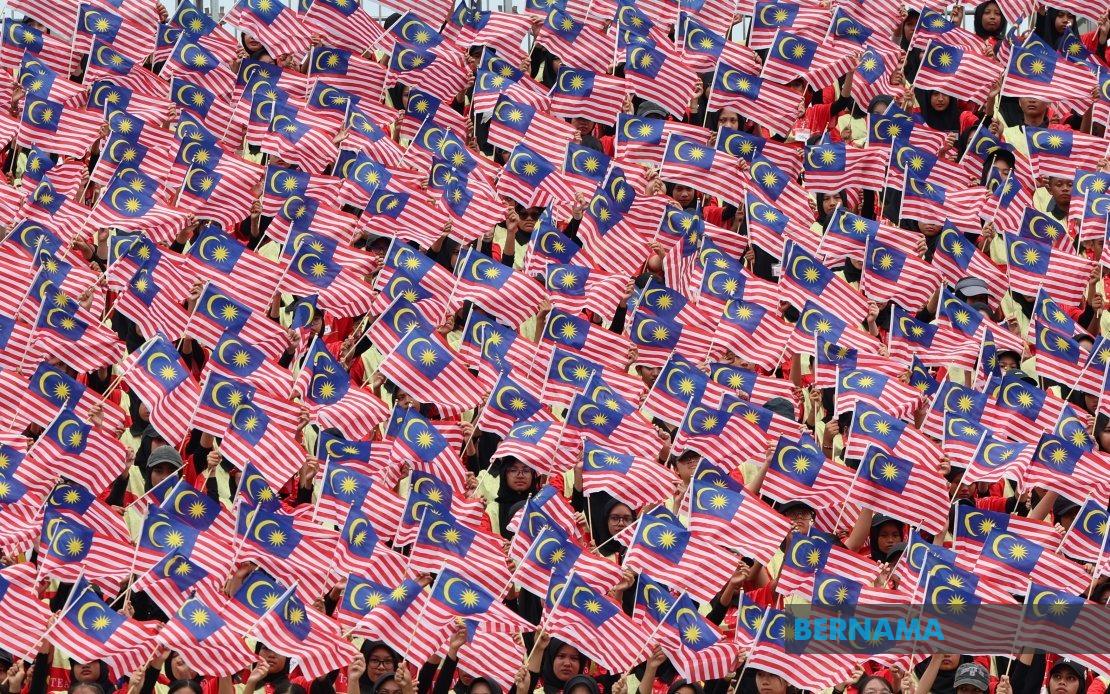
Prime Minister Datuk Seri Anwar Ibrahim will officiate the launch of the 2026 National Month and Fly the Jalur Gemilang Campaign on July 19 at the Sultan Azlan Shah Institute of Health Training in Tanjung Rambutan, Ipoh, with organisers anticipating approximately 3,000 participants. The event forms part of the broader National Day and Malaysia Day 2026 (HKHM2026) commemoration framework and will unite members of the MADANI Community alongside trainees and personnel stationed at the institute. Though attendance will be limited to invited guests and registered participants, the occasion carries significant symbolic weight as the government seeks to galvanise public enthusiasm for the upcoming national celebrations.
For those unable to attend in person, the ceremony will be transmitted across multiple official platforms, ensuring broad accessibility to Malaysian audiences. Radio Televisyen Malaysia and the Malaysian National News Agency will provide live coverage, while digital viewers can access proceedings through the official Facebook channels maintained by the Ministry of Communications and the Department of Information Malaysia. This multi-channel approach reflects the government's commitment to inclusive engagement, allowing citizens across the nation to participate vicariously in the ceremonial launch regardless of geographical constraints.
Central to the campaign messaging is an urgent appeal for public participation in the "1 Rumah 1 Jalur Gemilang" initiative, which seeks to position the national flag as a visible manifestation of patriotic sentiment throughout Malaysian households and public spaces. Perak State Government Corporate Division Principal Assistant Secretary Anita Amri emphasised that displaying the Jalur Gemilang represents more than mere symbolic gesture—it embodies collective national pride and commitment to the MADANI vision. The campaign recognises that sustained patriotic expression requires deliberate action from ordinary citizens, transforming private spaces into visible declarations of national affiliation.
An often-overlooked dimension of the flag campaign involves standards of presentation and maintenance. Officials have explicitly cautioned against the display of deteriorated flags, instructing Malaysians to retire worn, discoloured, or torn versions and replace them with fresh specimens treated with appropriate respect. This guidance suggests an underlying concern that careless flag display—however inadvertent—might undermine the dignified messaging the government intends to convey. The emphasis on proper flag stewardship reflects cultural protocols around national symbols and serves as a subtle reminder that patriotism encompasses attention to detail and conscientiousness in public representation.
Beyond household participation, organisers are mobilising community networks to amplify the campaign's reach. The strategy explicitly encourages individuals to leverage family connections, neighbourly relationships, and broader social circles to encourage widespread flag adoption. By framing patriotic participation as a social activity requiring collective effort rather than individual choice, officials hope to create momentum that extends beyond initial launch activities. This grassroots mobilisation approach acknowledges that sustainable national celebrations depend less on top-down directives and more on organic community enthusiasm.
Social media platforms feature prominently in the campaign's distribution strategy, with organisers actively soliciting digital content from citizens documenting their flag displays and celebratory activities. This approach capitalises on Malaysians' extensive social media engagement while creating shareable content that amplifies patriotic messaging through networks of personal connections. The underlying premise holds that peer influence and visual documentation of others' participation can motivate broader adoption than conventional advertising mechanisms. By transforming flag displays into potential social media moments, the campaign taps into contemporary cultural practices around documentation and sharing.
The 2026 celebrations will operate under the thematic banner of "Malaysia MADANI: Kesejahteraan Dinikmati," translated as "Malaysia MADANI: Shared Prosperity." Communications Minister Datuk Seri Fahmi Fadzil announced this selection as the overarching framework for national commemorations, with the accompanying Malaysia MADANI logo serving as the official visual identity for festivities extending through 2026. This continuity in branding reflects governmental emphasis on sustained messaging around the MADANI development philosophy, positioning national celebrations as opportunities to reinforce core policy narratives.
Plans for the principal National Day observance on August 31 envision a deliberately restrained scale at Dataran Putrajaya, representing a departure from potentially more elaborate festivities. The decision to maintain modest dimensions while preserving festive atmosphere suggests conscious calibration between budgetary constraints and public expectations for meaningful celebration. This approach may resonate particularly with Malaysian constituencies concerned about proportionate government expenditure, while organisers contend that authentic patriotic expression does not require lavish displays.
The timing of the Perak launch, three weeks ahead of the August 31 National Day proper, positions the July 19 ceremony as the initiating event for a sustained campaign period. By frontloading promotional activities and public mobilisation efforts, organisers create extended visibility for the Jalur Gemilang campaign and allow adequate preparation time for households and organisations to acquire and display flags. This sequencing reflects strategic thinking about campaign momentum, recognising that concentrated effort during the immediately preceding weeks typically generates peak public engagement.
The establishment of the Merdeka360 Portal as the centralised information platform represents an institutional innovation intended to combat information fragmentation. By aggregating celebration-related announcements, guidelines, and resources onto a singular digital location, the Ministry of Communications and JAPEN seek to ensure that Malaysians access consistent, authoritative information rather than navigating disparate official sources. This portal-based approach acknowledges digital-era expectations for consolidated information architecture and reflects sophistication in administrative communication practices.
From a regional perspective, Malaysia's flag campaign carries potential influence for other Southeast Asian nations navigating comparable questions about national commemoration and public participation in patriotic expression. The "1 Rumah 1 Jalur Gemilang" model offers a template for grassroots flag engagement that relies on household-level participation rather than exclusively state-sponsored displays, potentially demonstrating scalable approaches to distributed national symbolism across diverse urban and rural contexts throughout the region.

