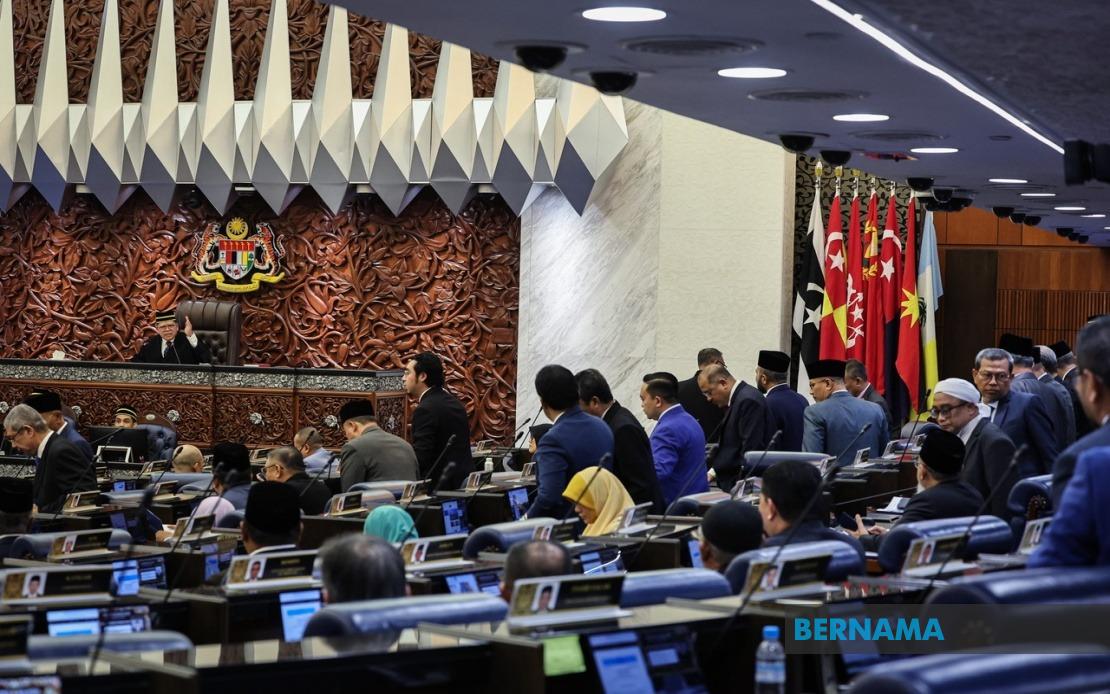
The Prime Minister's non-attendance at Parliament should not become a pretext for lawmakers to disengage from examining one of the country's most consequential inquiries into Islamic financial institutions, according to Tengku Datuk Seri Zafrul Tengku Abdul Aziz, Senior Political Adviser to the Prime Minister. His remarks came as opposition and coalition MPs departed from the Dewan Rakyat during a special sitting dedicated to discussing findings from the Royal Commission of Inquiry into Lembaga Tabung Haji, a move that Tengku Zafrul characterised as an abdication of parliamentary responsibility.
The Special Dewan Rakyat sitting on August 11 convened to allow members to examine and debate the 211-page RCI report covering TH's management and operations across the 2014 to 2020 period. The report, originally tabled by Minister in the Prime Minister's Department (Religious Affairs) Dr Zulkifli Hasan, had been released to the public on July 29 following a government decision to ensure transparency. The decision to make the findings public underscored the significance both administrations placed on bringing TH-related matters into the open, yet the parliamentary proceedings attracted walkouts that overshadowed substantive discussion.
Tengku Zafrul's intervention through social media sought to reframe the debate away from personalities and towards the fundamental stake at hand. He posed a pointed question to those who had departed: if the Prime Minister's absence justified their exit, did this reasoning not simultaneously suggest they were unwilling to engage with issues directly impacting the financial security of Malaysian Muslims across multiple demographic segments? The adviser's framing transformed what might otherwise have been viewed as a tactical parliamentary manoeuvre into a question about the nature of legislative duty itself.
The walkout included prominent figures from Perikatan Nasional, the opposition coalition. Opposition Leader Datuk Seri Hamzah Zainudin led the departures, joined by PN chief whip Datuk Seri Takiyuddin Hassan and PN chairman Datuk Seri Dr Samsuri Mokhtar. Their coordinated exit suggested a deliberate political stance rather than isolated absences, lending weight to Tengku Zafrul's criticism that such behaviour risked conveying indifference to constituents whose retirement and investment savings were administered through TH.
The Tabung Haji episode represents far more than an ordinary institutional scandal in Malaysian public discourse. As Tengku Zafrul emphasised, the TH matter ranks among the most significant controversies involving the Muslim and Malay economic sphere in the nation's history. The institution holds savings belonging not merely to an ideological faction but to Malaysians across ethnic and religious communities who have entrusted their capital to Islamic financial mechanisms. The scope of TH's operations and the breadth of its stakeholder base meant that any mismanagement touching the 2014 to 2020 period carried ramifications extending far beyond narrow political interest.
Tengku Zafrul's appeal centred on a conception of parliamentary efficacy grounded in substantive engagement rather than ceremonial attendance. He invited MPs to leverage the RCI findings as a platform for interrogation, debate, and accountability. If government actions warranted criticism, he reasoned, lawmakers possessed both the authority and obligation to voice dissent backed by evidence. Disagreement itself carried legitimacy; what mattered was whether such disagreement rested on factual foundations and contributed to public understanding of institutional failings.
The adviser's call for evidence-based contestation reflected an underlying tension within Malaysian politics regarding the relationship between executive leadership and parliamentary scrutiny. The Prime Minister's participation in specialized debates enhances their visibility and allows direct questioning, yet the absence of the chief executive should theoretically not diminish Parliament's capacity to examine matters of public consequence. If lawmakers organised their engagement around the presence or absence of specific personalities, institutional integrity could suffer as questions of governance became overshadowed by hierarchical considerations.
The RCI report itself represented a substantial investigative undertaking, examining nearly seven years of institutional conduct. Public release of the 211-page document signalled governmental commitment to transparency, yet the subsequent parliamentary debate threatened to become diminished by tactical political calculations. For Malaysian readers with savings held through TH mechanisms, the substantive findings warranted serious attention regardless of which cabinet members graced Parliament on any given day.
Tengku Zafrul's intervention also carried implicit messaging about expectations for opposition responsibility. Rather than condemning the walkout as betrayal, he framed it as a missed opportunity and a potential misreading of public sentiment. Constituents affected by TH operations likely cared more about whether their representatives engaged rigorously with available evidence and pursued accountability than about whether legislators remained physically present in their seats. A parliamentary debate on institutional mismanagement provided precisely the forum that opposition parties ostensibly sought—yet choosing to exit that forum required explanation beyond procedural objections.
The staging of the RCI report into Parliament created a rare institutional moment where comprehensive findings about TH management could be dissected in real time by elected representatives. The 2014 to 2020 period under review encompassed significant market movements, regulatory changes, and management decisions that merited parliamentary scrutiny. Lawmakers who engaged substantively with the report gained opportunity to extract details, pose questions, and build public records of their positions on institutional reform.
Moving forward, the TH controversy will likely remain contested political terrain, particularly given stakes involving Islamic financial governance and Malay-Muslim economic interests. How Parliament ultimately processes the RCI findings will influence public confidence in both the inquiry process itself and the institutions responsible for managing Muslim savings. Tengku Zafrul's rebuke suggested that the Prime Minister's office, at minimum, expected opposition parties to engage seriously with available evidence rather than use procedural objections as cover for avoiding substantive debate on an admittedly consequential matter.

