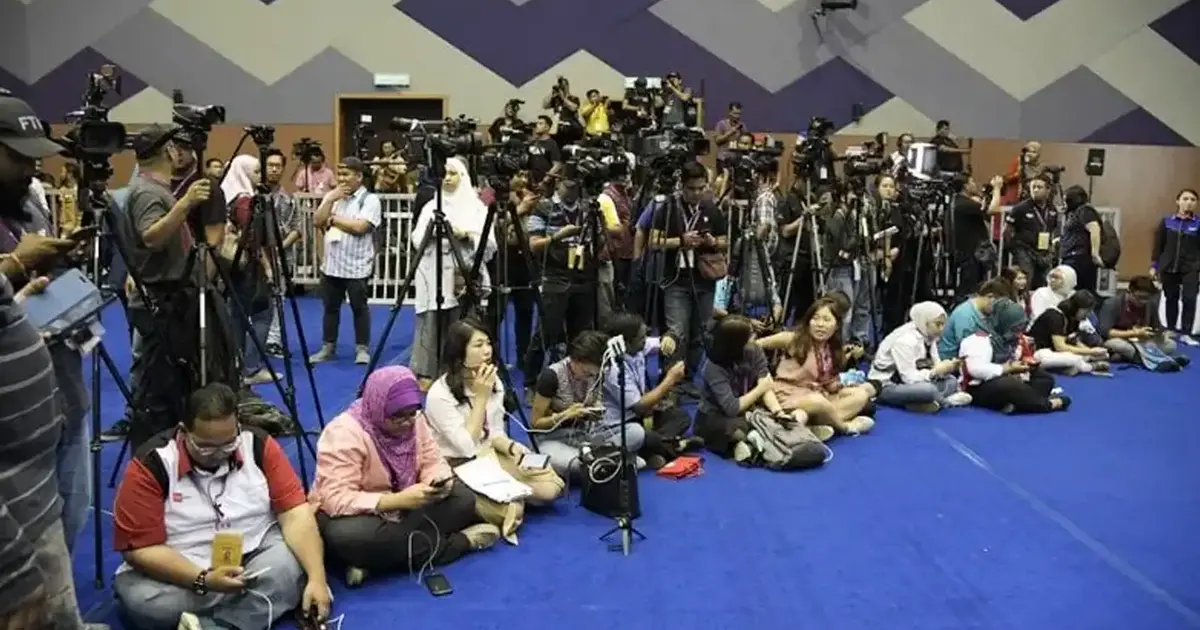
Prime Minister Anwar Ibrahim has clarified that any complaints filed against members of the media must be channelled through the Malaysian Media Council before proceeding to formal investigation or enforcement measures. This statement, articulated through the Malaysian Media Monitor (MMM), reflects the government's approach to balancing accountability with press freedom in the country's media landscape.
The mechanism appears designed to establish a filtering process that prioritises institutional oversight rather than direct government action against journalists. By routing complaints through the council—an industry body comprising media representatives, academics, and public figures—the government suggests it aims to embed professional standards review into the complaint procedure itself. This intermediary step potentially buffers the government from accusations of direct suppression while theoretically ensuring that complaints are assessed against journalistic ethics guidelines.
For Malaysia's media sector, such a framework carries significant implications. The country has faced periodic scrutiny over press freedom rankings, with international observers noting concerns about self-censorship and government pressure on newsrooms. A structured complaint mechanism could theoretically reduce arbitrary action, though its effectiveness depends heavily on the council's independence and resources. The Malaysian Media Council, established in 2009, has previously handled complaints regarding editorial content, accuracy, and fairness, lending institutional credibility to a preliminary screening process.
The government's emphasis on council involvement signals an attempt to address criticism that media regulation operates without transparent safeguards. By explicitly stating that investigations cannot commence without council referral, the administration seeks to demonstrate procedural restraint. However, the extent to which this protects journalists from subsequent government or enforcement agency action remains unclear. Critics may argue that the council serves as legitimation for decisions already made elsewhere, while supporters contend that mandatory council review genuinely constrains arbitrary enforcement.
Anwar's clarification arrives amid broader regional conversations about media regulation. Neighbouring countries have grappled with similar tensions between government accountability concerns and press freedom protections. Singapore, Thailand, and Indonesia have all implemented various complaint mechanisms, each with different levels of success in preserving editorial independence while addressing legitimate governance concerns. Malaysia's approach of channelling complaints through a semi-independent body rather than direct government intervention distinguishes it from more explicitly state-controlled systems, though observers note the practical distinction may narrow significantly if enforcement agencies ultimately disregard council recommendations.
The MMM's articulation of this policy suggests the media monitoring organisation views the mechanism as consistent with fair scrutiny principles. By emphasising that journalists receive structured review rather than unmediated complaint processing, MMM positions the framework as protective of media interests. This framing is politically significant, as MMM's perspective influences how the policy is perceived by media industry stakeholders, civil society, and international observers monitoring Malaysian press freedom.
For newsrooms across Malaysia, understanding this complaint structure becomes operationally important. If journalists comprehend that complaints will be evaluated initially by a council applying industry standards rather than immediately escalated to enforcement authorities, editorial decision-making may become less risk-averse. Conversely, if enforcement agencies routinely override council assessments or if the council itself faces government pressure, the protective function dissolves. The policy's actual impact therefore depends on implementation fidelity and the council's demonstrated willingness to reject complaints it deems unfounded or frivolous.
The announcement reflects evolving government attitudes toward media regulation since Anwar assumed office in 2022. The previous administration faced accusations of weaponising media complaints and defamation suits against critical journalists. By introducing this council-first requirement, the current government positions itself as reforming such practices. Whether this represents genuine institutional change or procedural theatre that ultimately preserves enforcement options remains a central question for media watchers and journalists navigating daily editorial choices.
International press freedom organisations will likely scrutinise how this mechanism functions in practice. Groups monitoring Southeast Asian media freedoms often assess not merely stated policies but their implementation, including whether council recommendations are binding, whether enforcement agencies comply with council decisions, and whether journalists face consequences despite council rejection of complaints. Malaysia's standing in global press freedom indices may partly hinge on demonstrable adherence to this framework across multiple test cases.
The emphasis on the Malaysian Media Council also reflects recognition that media self-regulation, when functioning effectively, can prevent more draconian government intervention. By investing legitimacy in council review, the government potentially avoids confrontation with the media industry and international observers who view council-based accountability as preferable to state-directed enforcement. This calculus suggests that policymakers view functional media self-regulation as safer politically than direct government action, even as they retain ultimate enforcement authority.
Looking forward, journalists and media organisations must assess whether this framework genuinely constrains government action or merely repackages existing enforcement capabilities. Transparency regarding complaint volumes, council determinations, and subsequent enforcement actions will be essential for establishing whether the mechanism protects editorial independence or simply procedurally disguises continued pressure on critical reporting. The coming months will likely produce test cases that reveal whether the council's role constitutes genuine institutional protection or performative oversight.

