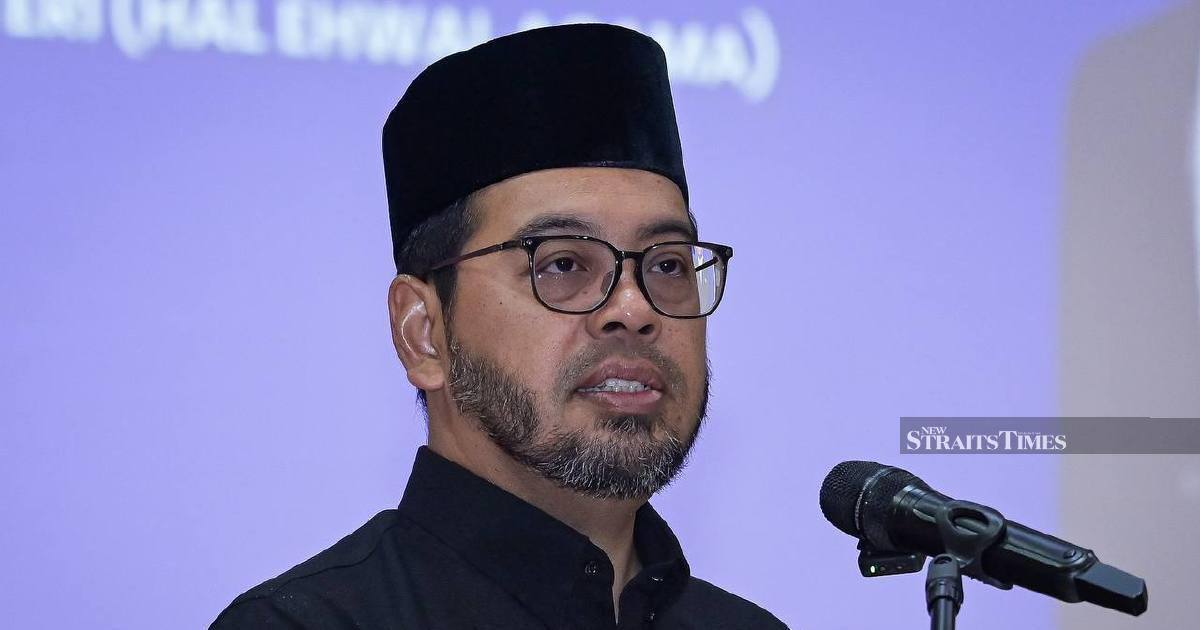
The Prime Minister's Department (Religious Affairs) has thrown its full weight behind the Royal Decree issued by His Majesty Sultan Ibrahim, King of Malaysia, calling for a sweeping investigation into the findings of the Royal Commission of Inquiry (RCI) on Lembaga Tabung Haji. The endorsement signals the government's commitment to addressing concerns raised in the commission's report with rigour and transparency, reflecting the seriousness with which authorities are treating the matter.
The timing of this show of support carries particular significance for Malaysia's Islamic institutions and the millions of pilgrims whose savings are entrusted to Tabung Haji. The RCI's findings have touched on governance structures, financial management, and operational practices within the Islamic pilgrimage fund, an organisation that holds deep religious and cultural importance across the country. By publicly aligning itself with the King's call for thoroughness, the PM's Department is signalling that no stone will be left unturned in examining the issues identified.
The emphasis on transparency in the investigation process addresses public concern about whether any probe would be conducted with genuine independence and accountability. In recent years, investigations into major Malaysian institutions have occasionally faced scrutiny regarding their impartiality and effectiveness. The reiteration of the transparency principle by the government department suggests an awareness of this perception and an intention to demonstrate that the inquiry will be open to public scrutiny and free from undue political interference.
The commitment to investigate without compromise implies that those responsible for any wrongdoing or mismanagement will face appropriate consequences, regardless of their position or connections. This language is particularly important in the Malaysian context, where concerns about selective enforcement and the protection of well-connected individuals have historically undermined public confidence in institutional accountability. The willingness to state explicitly that investigations will not be compromised suggests the government is attempting to rebuild trust in its institutions.
Tabung Haji's role in facilitating the hajj pilgrimage for Malaysian Muslims makes this inquiry especially consequential. The organisation manages the savings of hundreds of thousands of Malaysians who are building funds for one of Islam's five pillars. Any mismanagement or governance failures could directly affect the financial security of these pilgrims and their families. The religious dimension of the fund means that institutional integrity here carries both financial and spiritual weight for the Muslim community.
The RCI's work into Tabung Haji represents part of a broader government effort to examine and potentially reform key Islamic institutions. The inquiry has examined various aspects of the organisation's operations, and the findings appear to have prompted sufficient concern to warrant direct royal attention. The King's intervention underscores the importance placed on resolving these matters at the highest levels of governance.
For Malaysia's pilgrims and their families, the promised thorough investigation offers hope that systemic issues, if they exist, will be identified and remedied. However, the effectiveness of such an investigation ultimately depends on its resources, the cooperation of relevant parties, and the capacity to translate findings into meaningful reforms. The public backing from the PM's Department suggests that these investigations will receive adequate support and political backing to proceed without obstruction.
The regional context also matters. Southeast Asia has faced its share of financial scandals involving religious institutions and funds, making Malaysia's approach to investigating Tabung Haji noteworthy. A credible, transparent inquiry could set a positive example for governance standards across the region's Islamic institutions and demonstrate Malaysia's commitment to institutional accountability.
Moving forward, the actual implementation of the investigation will be scrutinised closely. The test of the government's commitment will come in how thoroughly potential issues are examined, how publicly findings are shared, and whether recommendations are acted upon decisively. The explicit backing from the PM's Department (Religious Affairs) has established clear parameters against which the investigation's success will be measured.
The statement also reflects broader governance considerations within Malaysia's federal system. The PM's Department's religious affairs portfolio occupies an important space in managing Islamic matters at the national level, and its public commitment to rigorous investigation signals coordination between different tiers of government and religious authorities. This unified approach may be necessary to ensure that the inquiry achieves its stated objectives and maintains the confidence of both the government and the Muslim community it ultimately serves.

