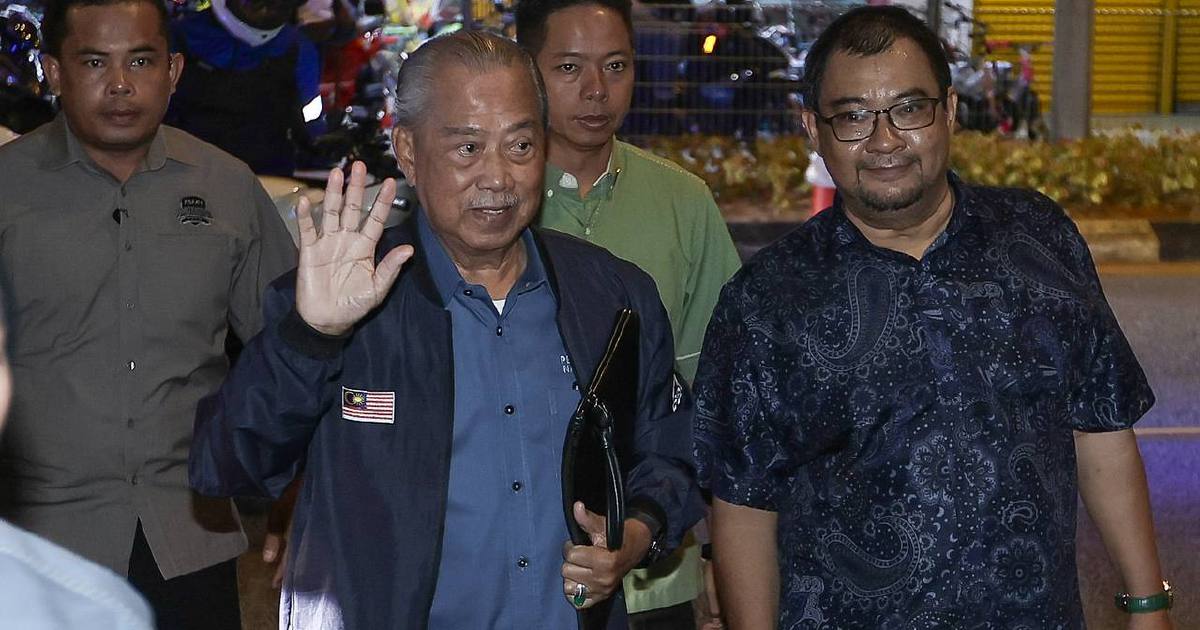
Perikatan Nasional convened an urgent Supreme Council gathering in Kuala Lumpur on Monday evening that dealt with broader coalition mechanics and potential recruitment of new members, yet sidestepped any substantive examination of Bersatu's own standing within the opposition alliance, according to statements from PN chairman Muhyiddin Yassin. The decision to avoid the contentious membership question suggests deliberate tactical management of internal sensitivities at a critical juncture for the three-year-old coalition.
The timing of the emergency session underscores mounting pressure on PN to clarify its direction and consolidate its political position ahead of what analysts expect could be a pivotal national campaign cycle. PN, which comprises Bersatu, PAS, and Perikatan component parties, has faced persistent questions about the durability of its partnership, particularly given Bersatu's previous switches between government and opposition. The coalition's ability to project unity while managing divergent party interests remains central to its credibility as a viable alternative political force.
Muhyiddin's clarification that Bersatu's internal position was not tabled for discussion suggests the leadership wished to avoid reopening debates that could fracture the already delicate consensus binding the coalition together. This approach reflects the challenge opposition blocs face in Southeast Asia when attempting to maintain cohesion across ideologically and strategically distinct partners. By focusing attention instead on welcoming fresh members, PN sought to project growth and momentum rather than acknowledge existing fault lines.
The emphasis on potential new membership carries particular significance for Malaysian political observers. Expanding PN's parliamentary representation through recruitment of independent assemblymen or defectors from other parties could materially strengthen its negotiating position should a federal election materialize. The coalition has previously benefited from such accretions, and the emergency session's concentration on expansion mechanics suggests this remains a priority channel for consolidating electoral advantage.
For Malaysian voters and regional observers tracking opposition dynamics, PN's strategic reorientation signals an evolution in how the coalition intends to compete. Rather than relitigating questions of permanence and commitment from existing members, the leadership appears to be betting that strategic growth and forward momentum can supersede doubts about reliability. This calculation depends partly on whether such expansion can occur without alienating core supporters skeptical of political expedience.
The decision to keep Bersatu's membership status off the agenda also reflects institutional learning within opposition movements across Southeast Asia. In jurisdictions where coalitions have fragmented due to internal disputes escalating into public disputes, maintaining deliberate separation between procedural matters and existential questions has sometimes bought time for consensus to develop away from media scrutiny. Whether such compartmentalization can succeed long-term remains an open question.
Bersatu's position within PN has warranted periodic speculation because of its history of tactical realignment. The party's transition from leading the Pakatan Harapan government to opposition status in 2020, then back toward the political mainstream in recent years, has left some observers questioning whether its opposition commitment reflects genuine programmatic conviction or tactical positioning. By avoiding the discussion entirely, PN's leadership may be attempting to prevent that narrative from crystallizing into formal challenge.
The Supreme Council meeting's narrow focus on coalition recruitment mechanics rather than foundational questions also suggests PN strategists believe their path forward depends less on settling internal disputes and more on demonstrating capacity to expand and capture previously unaligned political actors. This growth-oriented approach prioritizes demonstrating momentum over resolving contradictions—a common strategy for emerging or resurgent political blocs seeking to establish legitimacy and inevitability in voter consciousness.
For readers across Malaysia and Southeast Asia tracking opposition politics, the meeting's selective agenda-setting illustrates how modern political coalitions manage tensions that could prove destructive if fully ventilated. The coalition dynamics PN navigates—balancing PAS's Islamic orientation, Bersatu's centrist appeal, and various Perikatan components' regional interests—require constant recalibration. The decision to avoid Bersatu discussion while pursuing expansion suggests this recalibration continues behind closed doors.
Muhyiddin's explicit statement that membership issues were not discussed carries implications beyond internal PN dynamics. It signals to potential new members considering alignment with the coalition that PN remains open to recruitment despite questions about commitment from existing partners. It also sends a message to fence-sitters and undecided voters that PN possesses sufficient internal discipline to avoid self-destructive public squabbling, even when substantive disagreements persist.
The emergency meeting's outcome reflects the complex reality facing opposition movements in Malaysia's contemporary political environment. PN must simultaneously project stability to voters and partners, maintain flexibility to capitalize on political opportunities, and manage the divergent interests of member parties with different strategic horizons. The decision to focus on expansion while deferring Bersatu discussions represents one tactical response to this multifaceted challenge, though whether it proves sustainable depends on developments beyond the Supreme Council chamber.

