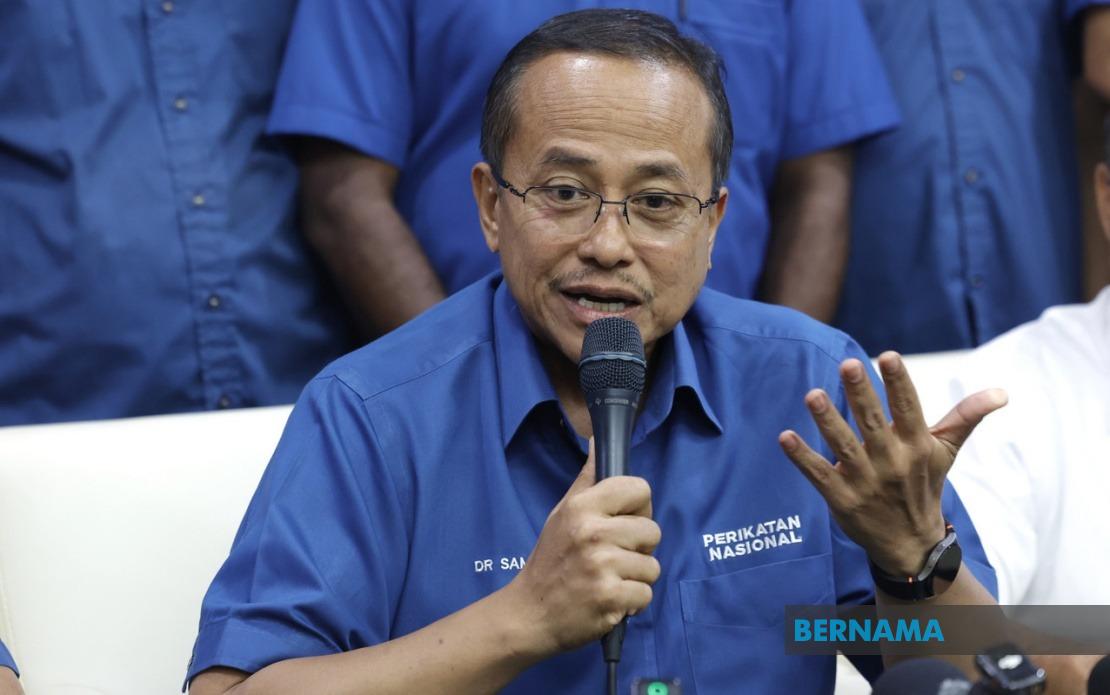
The Perikatan Nasional coalition has formally ratified its electoral strategy for the upcoming Negeri Sembilan state election, moving ahead with a unified campaign structure that unites PAS, Gerakan, Wawasan, and MIPP under a single organisational banner. The decision, endorsed through a special Supreme Council meeting held in Seremban on July 16, represents a consolidation effort that reflects the coalition's determination to present a coordinated challenge in one of Malaysia's key swing states. This development carries broader implications for opposition politics in the peninsula, signalling how coalitions are adapting their structures to maximise electoral efficiency whilst maintaining internal party identities.
Datuk Seri Dr Ahmad Samsuri Mokhtar, PN's chairman, articulated the coalition's reasoning behind the unified branding approach, emphasising that contesting under the Perikatan Nasional logo would better serve the coalition's stated objectives of advancing public welfare, accelerating economic development, and reinforcing communal cohesion across Negeri Sembilan's ethnically diverse communities. The framing reflects broader political calculations about voter perception, suggesting that PN leadership believes a consolidated organisational front projects greater credibility and institutional strength than fragmented party-based campaigns. This tactical choice carries significance for how opposition coalitions compete against established ruling structures, particularly in state-level contests where local economies and social issues dominate discourse.
The seat allocation framework approved during the meeting distributes the state's legislative constituencies among PN's component parties according to negotiated arrangements finalised through prior discussions. Dr Ahmad Samsuri's emphasis that all preliminary negotiations occurred under his explicit oversight as party chairman underscores the hierarchical decision-making processes within PN's upper echelons. By publicly reaffirming his knowledge of and approval for all inter-party discussions, he positioned himself as the central coordinator whose authority remained unchallenged during the technical negotiations that preceded formal council endorsement. This administrative clarity likely aimed to prevent future disputes over seat allocations by establishing that decisions flowed through established institutional channels.
The coalition's approach to candidate presentation and public communication reveals strategic thinking about how modern Malaysian electoral contests unfold. Rather than allowing each component party to campaign under distinct logos—a practice that fragments voter messaging and complicates turnout operations—PN has opted for visual and organisational unity that simplifies voter recognition whilst accommodating internal party concerns through discrete seat allocations. This balances the coalition's need for operational coherence against individual parties' desires to maintain organisational independence and claim credit for electoral victories within their respective voter bases.
However, the situation grew complicated by Tan Sri Muhyiddin Yassin's parallel announcement regarding Bersatu's position. The Bersatu president publicly stated that his party had received no meaningful involvement in PN's seat allocation discussions, particularly concerning any arrangements with Barisan Nasional. Muhyiddin's assertion that Bersatu chose independent contestation effectively signalled a rupture in the broader opposition coalition landscape, transforming what appeared to be a straightforward PN coordination into a more complex multi-layered political realignment. This development carries significance for understanding how opposition blocs function when component parties hold divergent strategic views about coalition mechanics and partnership structures.
The divergence between Bersatu and PN proper reflects deeper tensions within Malaysia's opposition ecosystem. Bersatu's independent candidacy in Negeri Sembilan represents a calculated distance from PN's strategic direction, potentially reflecting disagreements about partnership priorities or concerns that coalition arrangements disadvantaged Bersatu in the seat allocation process. For Malaysian observers tracking opposition politics, Bersatu's move signals that opposition coalitions remain fragile constructs held together by temporary strategic alignments rather than durable institutional commitments. The fact that Bersatu maintained sufficient organisational capacity to field independent candidates demonstrates that opposition alternatives to incumbent ruling coalitions remain decentralised and prone to periodic reorganisation.
For Negeri Sembilan specifically, the electoral configuration created by these developments fundamentally restructures voter choice. Rather than a conventional binary contest between ruling and opposition blocs, the state election will feature PN as a consolidated opposition force, Bersatu as an independent alternative, and potentially other competitors. This fragmentation could influence seat distribution outcomes, potentially creating circumstances where neither major bloc commands clear legislative majorities. Such scenarios force post-election coalition-building that can yield surprising governance arrangements, particularly when swing constituencies hold disproportionate power in determining which coalition commands the state government.
Dr Ahmad Samsuri's reference to championing welfare provision and state development reflects substantive policy positioning beyond mere electoral mechanics. By grounding PN's campaign in governance performance and economic delivery promises, the coalition attempted to shift electoral discourse from personalised leadership contests toward substantive assessment of policy competence. This rhetorical move carries implications for how opposition coalitions construct political legitimacy, particularly in state contests where local economic conditions and service delivery directly affect voter satisfaction. Negeri Sembilan's manufacturing-dependent economy and middle-income household composition create voter populations particularly sensitive to development investment and employment opportunities.
The unified logo strategy also addresses practical campaign considerations. Consolidating campaign infrastructure, message discipline, and volunteer coordination under single PN branding reduces duplication and maximises resource efficiency. Component parties retain internal autonomy and grassroots networks whilst PN provides overarching strategic direction and centralised resource allocation. This federal approach to coalition management allows smaller parties like Wawasan and MIPP to participate in state-level contests without requiring the independent organisational capacity that contesting under separate logos would demand. For these smaller parties, PN partnership provides critical infrastructure access that renders independent candidacy strategically unfeasible.
The candidate announcement promised during Dr Ahmad Samsuri's statement would subsequently reveal the specific individuals designated to contest under PN colours. These selections embedded political negotiations among coalition members, reflecting complex calculations about regional power distribution, demographic representation, and competitive viability. Candidate choices in Negeri Sembilan carried particular weight given the state's history as a competitive political arena where state-level contests generate outcomes distinct from national election results. The state's shifting demographic composition and economic development trajectory created opportunities for opposition forces capable of articulating compelling local development narratives.
Looking ahead, the PN configuration and Bersatu's independent stance created a distinctive electoral landscape requiring voters to navigate multiple opposition alternatives alongside incumbent structures. This complexity potentially advantaged established parties with deep voter familiarity and organisational networks. Yet it also created opening for opposition forces to communicate divergent policy visions and leadership alternatives, potentially energising distinct voter segments through tailored messaging. The divided opposition positioning reflected broader challenges facing Malaysian opposition politics—balancing electoral viability through coalition formation against preserving party autonomy and leadership differentiation that coalition partners view as essential to organisational identity.

