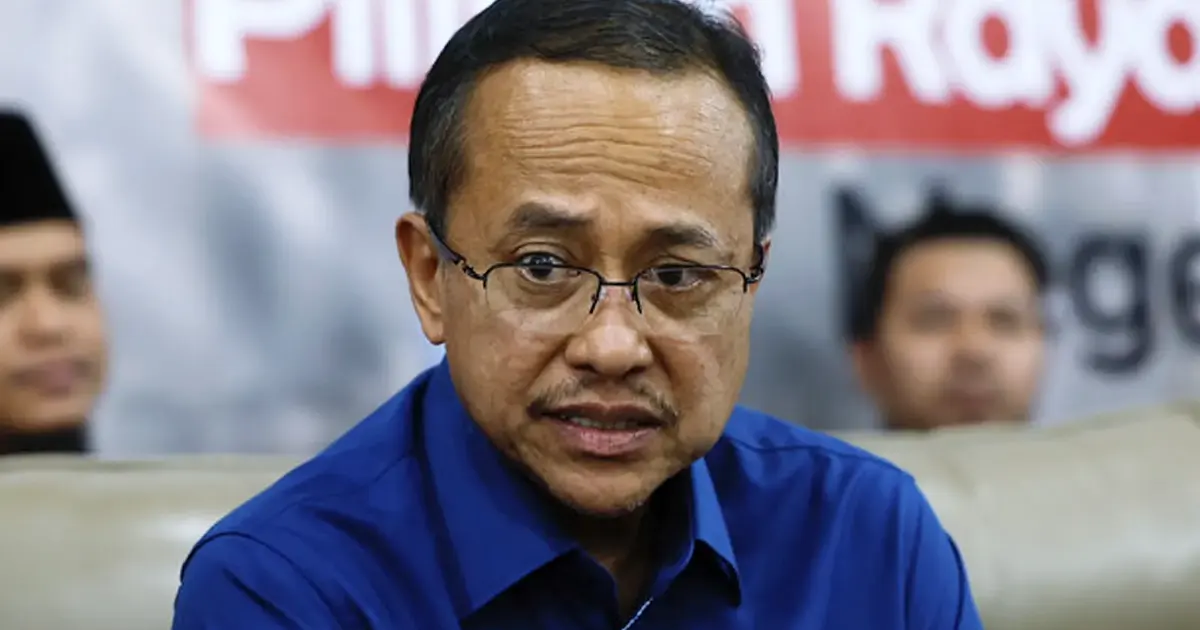
Coalition chairman Samsuri has moved to ease concerns that the Perikatan Nasional logo being used by both PAS and Bersatu could create confusion among voters at the ballot box, pointing to a carefully structured arrangement that keeps the two parties from fighting each other in the same constituencies.
The question of ballot clarity has emerged as a salient issue within Malaysia's fractured political landscape, where multiple parties operating under the same coalition banner could theoretically lead to muddled voter perceptions. Samsuri's reassurance addresses this practical concern head-on, suggesting that the internal mechanics of seat division have been sufficiently defined to prevent the kind of electoral gridlock that might confuse electors between the two major PN components.
PAS and Bersatu have maintained distinct party identities while leveraging the Perikatan Nasional branding at the broader coalition level, a structure that has become increasingly common in Malaysian electoral politics. This layered branding approach allows smaller or ideologically aligned parties to benefit from a coalition's combined campaign machinery and voter reach, while retaining their individual organisational structures and party symbols. The arrangement reflects a pragmatic compromise between parties seeking to project unified messaging without surrendering their separate institutional bases.
The allocation of electoral territories represents a crucial backstage negotiation within any multi-party coalition. By ensuring that PAS and Bersatu do not field candidates against each other in the same constituencies, the PN architecture prevents the scenario where voters in a given area encounter both parties on the ballot simultaneously, competing for the same votes under ostensibly the same coalition banner. This territorial demarcation effectively creates distinct electoral fiefdoms, with each party claiming primary responsibility for particular regions or constituencies.
Malaysia's electoral system, particularly its constituency-based approach to House of Representatives elections, creates structural opportunities for such arrangements. Unlike proportional systems where multiple parties fielding candidates in the same area might guarantee inter-coalition vote fragmentation, Malaysia's first-past-the-post model allows coalition partners to concentrate electoral resources by dividing candidate responsibilities geographically. This strategic arrangement has become a standard feature of how PN, Barisan Nasional, and other coalitions manage their internal dynamics.
The shared PN logo, however, does introduce symbolic complexity that is unlikely to be entirely erased by technical assurances about seat divisions. Voters in constituencies where only one PN-aligned party appears on the ballot may still experience some dissonance between the coalition identity being promoted in broader campaign materials and the specific party symbol they encounter in their voting booths. This psychological dimension of electoral branding operates somewhat independently of formal seat allocations.
For Malaysian voters, particularly those less immersed in high-level political mechanics, the distinction between party and coalition signage may not always register intuitively. The overlap between the Perikatan Nasional identity and its constituent parties creates an informational burden on electors expected to navigate these distinctions when voting. In emerging democracies and those with volatile party systems, such structural complexities around branding and party identity sometimes correlate with voter confusion and unintended outcomes at polling stations.
Samsuri's statement also serves a broader political function within PN itself. By publicly affirming that the shared logo arrangement operates without generating electoral confusion, the chairman reinforces the coalition's internal coherence at a moment when its stability has occasionally been questioned. Political observers have noted that multiparty coalitions in Malaysia can be fragile entities, vulnerable to defections, leadership disputes, and disagreements over resource allocation. A clear, confident assertion about the coalition's operational functionality helps project an image of stability and competence.
The PN coalition itself represents a relatively recent configuration in Malaysian politics, having emerged from the fallout of the 2018 general election and undergone various permutations since then. Unlike Barisan Nasional, which operated as Malaysia's dominant coalition for decades and developed institutional mechanisms for managing its numerous components, PN is still establishing its norms and working practices. Questions about how parties should brand themselves, coordinate campaigns, and divide electoral territories remain partly unsettled terrain for this coalition.
PAS, as an Islamic party with strong grassroots networks particularly in several northern and central states, brings distinctive ideological positioning to PN, while Bersatu, a younger party founded by former UMNO defectors, brings a different political genealogy and organisational structure. The necessity of accommodating both parties' interests while maintaining coalition unity explains much of the complexity around shared branding and electoral arrangements. Neither party could easily be sidelined, yet their coexistence requires careful institutional design.
The question of electoral clarity also carries implications for Malaysia's broader democratic health. Clear, unambiguous ballot presentations are considered foundational to well-functioning elections, allowing voters to express preferences with confidence and enabling electoral administrators to tabulate results without controversy. Any systemic features that introduce unnecessary confusion about which party a voter is actually supporting potentially undermines these democratic fundamentals, even if their practical impact remains limited by territorial seat allocations.
Moving forward, the PN arrangement will likely be tested in upcoming electoral contests, where real-world voter behaviour will demonstrate whether theoretical seat divisions translate into the absence of confusion Samsuri has pledged. The coalition's ability to manage this branding complexity while maintaining both individual party identities and collective electoral appeal represents an ongoing challenge for Malaysian coalition politics during a period of considerable political fragmentation.

