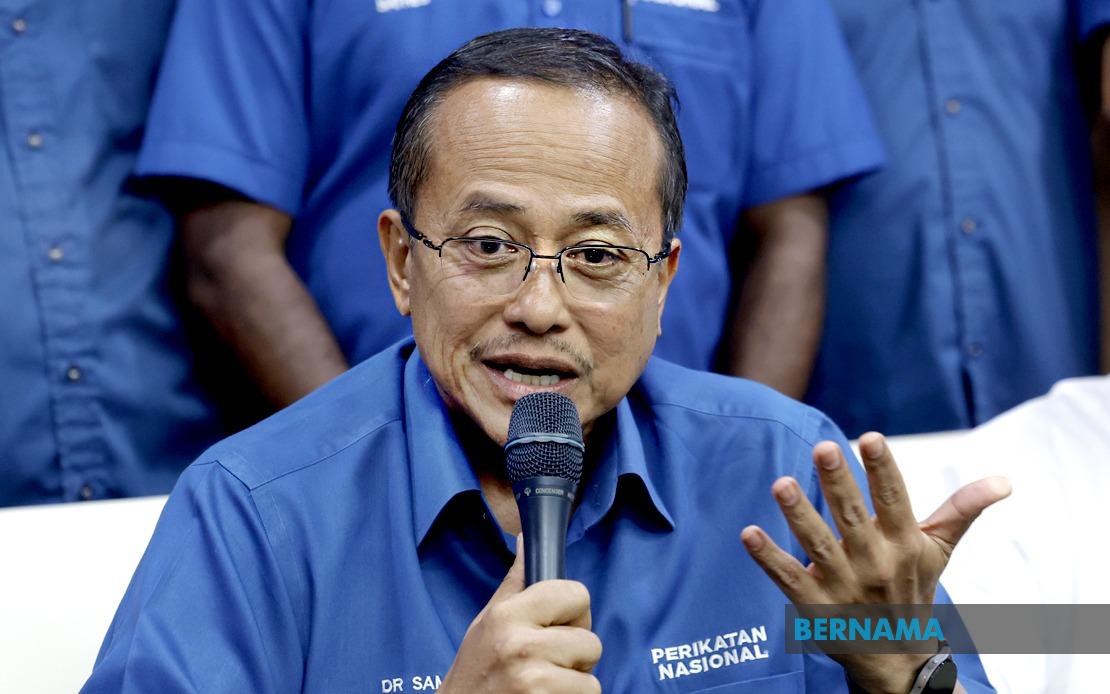
Perikatan Nasional has signalled its readiness to engage in negotiations with Barisan Nasional in advance of the upcoming Melaka state election, according to PN chairman Datuk Seri Dr Ahmad Samsuri Mokhtar. While emphasising that no formal discussions between the two major coalitions have yet commenced, he indicated that the window for productive talks remains open provided the Melaka State Legislative Assembly has not yet been dissolved.
Ahmad Samsuri made these remarks during his address at the 23rd Perak PAS Convention in Taiping, where he outlined his assessment of the political landscape facing both coalitions. The timing of his statement carries significance, as it comes at a juncture when speculation continues to mount regarding the dissolution timeline for the Melaka assembly and the subsequent electoral process. His willingness to engage suggests that PN recognises potential strategic advantage in pursuing a coalition arrangement rather than contesting independently against BN's entrenched electoral machinery.
In his analysis presented to party delegates, Ahmad Samsuri projected that a coordinated effort between PN and BN could yield substantial electoral gains, estimating roughly a 75 per cent likelihood of successfully forming the next state government. This assessment reflects PN's strategic calculation that while it currently operates as the opposition in Melaka, a structured alliance could fundamentally alter the political trajectory in the state. The precision of this figure suggests internal party polling or electoral modelling has informed PN's strategic thinking on the matter.
However, Ahmad Samsuri tempered his optimism by acknowledging the considerable obstacles that would need to be navigated in pursuit of such cooperation. Drawing an apt metaphor, he described the path forward as anything but straightforward, cautioning that negotiators should anticipate numerous challenges requiring careful judgment, substantial forbearance, and patient diplomacy. This candid assessment reflects the complexity of coalition mathematics in Malaysian state politics, where competing territorial interests, seat allocations, and ideological considerations frequently complicate negotiations between established political blocs.
The conditional nature of Ahmad Samsuri's openness warrants careful examination. His insistence that talks should ideally occur before the assembly's dissolution underscores the strategic imperative for pre-election coalition arrangements, which can be more easily formalised when electoral mechanisms have not yet been triggered. Once an election is called, the negotiating environment becomes considerably more fluid and volatile, with individual candidates and lower-level party structures potentially asserting greater autonomy in their electoral positioning.
For Malaysian political observers, this development illuminates PN's recognition of its limitations in Melaka's electoral arithmetic. The coalition's current opposition status suggests insufficient strength to mount a credible challenge to BN incumbency through independent contest. By exploring a partnership with BN, PN appears to be pursuing a pragmatic course that prioritises electoral viability over ideological purity or organisational autonomy, a calculation increasingly common across Malaysian coalitional politics.
The broader context of federal and state coalition dynamics adds another dimension to this development. The relationship between PN and BN has experienced considerable volatility nationally, with cooperation efforts at federal level yielding mixed results. The Melaka situation presents a potentially lower-stakes opportunity to test or refine coalition mechanisms in a single-state context, offering lessons that could prove applicable in other electoral contests across Malaysia.
For BN, Ahmad Samsuri's overture creates both opportunity and strategic dilemma. Coalition arrangements typically demand seat-sharing concessions that might alienate established incumbents, while the potential additional votes secured through PN participation could provide electoral insurance against fractionalisation or voter drift. The decision whether to engage seriously with PN's negotiating signals will likely involve careful calculation of BN's own internal strength within Melaka and assessment of electoral risks.
The Southeast Asian dimension of Malaysian coalition politics also merits consideration. Malaysia's plural society and competitive democratic system have necessitated the development of sophisticated coalition management mechanisms over decades. The Melaka scenario reflects broader regional trends where multiparty systems increasingly feature complex pre-electoral arrangements designed to maximise vote efficiency and translate voter support into meaningful government formation.
Ahmad Samsuri's statement that "how we become the government under this new form of cooperation is a story for another time" suggests that PN is leaving negotiation details deliberately vague at this stage. This measured approach allows for preliminary soundings without premature commitment to specific arrangements, preserving flexibility as the political situation evolves and as responses from BN leadership materialise. The coming weeks will prove critical in determining whether these signals translate into substantive engagement or remain rhetorical positioning ahead of the electoral contest.
Ultimately, the Melaka state election represents a significant test case for Malaysian coalition politics post-pandemic and in the context of evolving voter preferences. Whether PN and BN can successfully navigate the complexities Ahmad Samsuri himself acknowledged will provide important indicators for future electoral arrangements across Malaysia and contribute to ongoing recalibration of the country's political landscape.

