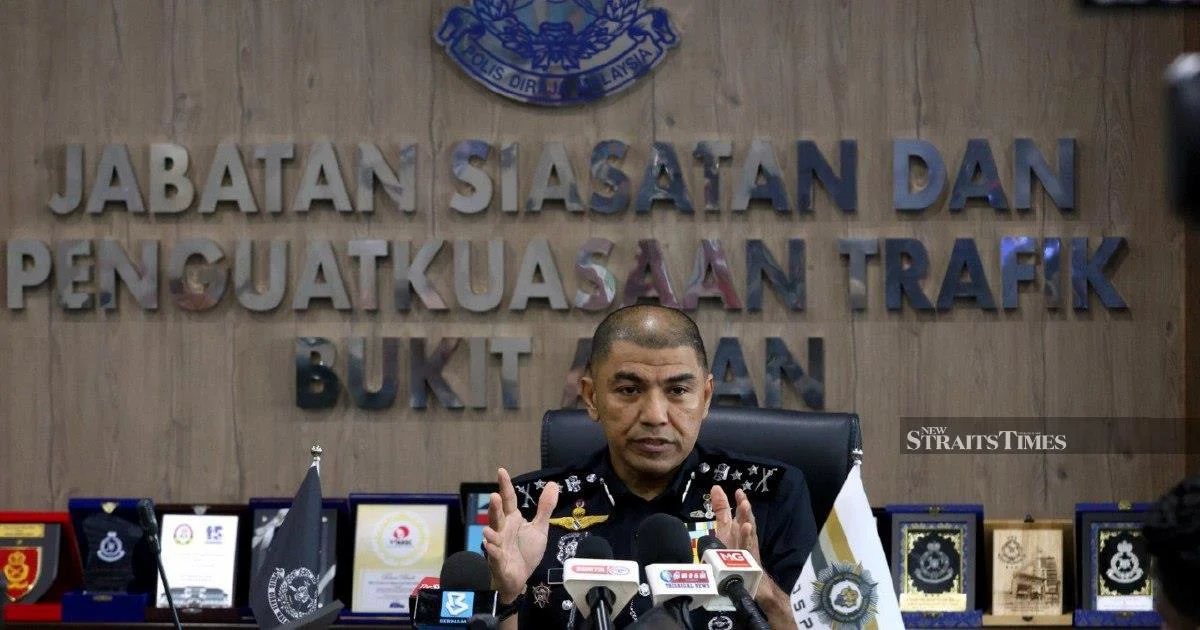
The Royal Malaysian Police concluded a three-month integrated enforcement operation that resulted in the arrest of 121 commercial vehicle drivers suspected of driving while impaired by drugs, underscoring escalating concerns within law enforcement and road safety authorities about narcotic use among operators of heavy vehicles across the country.
The scale of the operation reflects police recognition that drug-impaired driving among professional drivers operating lorries, buses, and other commercial vehicles represents a critical public safety issue. Heavy vehicles present unique hazards when piloted by impaired operators—their size, weight, and the volume of passengers or cargo they carry mean that a single accident involving a drug-affected driver can cascade into tragedy affecting multiple other road users and communities along major transport corridors.
Commercial vehicle operations form the backbone of Malaysia's supply chain and public transport networks. From long-haul freight services connecting manufacturers to ports to intercity bus services ferrying commuters between states, these drivers shoulder enormous responsibility. The three-month concentrated enforcement action suggests that authorities have identified particular vulnerability within this occupational group regarding substance misuse, prompting the decision to deploy integrated resources across multiple jurisdictions simultaneously rather than conducting ad hoc roadside checks.
The drivers arrested face serious legal consequences under Malaysia's drug-related offences frameworks. Beyond the immediate charges, conviction can trigger loss of commercial driving licenses, imprisonment, and substantial fines—consequences that extend beyond individual drivers to affect their families' livelihoods and the operational capacity of transport companies reliant upon their services. This cascading impact underscores why law enforcement has intensified focus on prevention and enforcement within this sector.
The enforcement operation's integrated nature signals coordination among various police units and possibly other agencies concerned with road safety and drug trafficking. Such coordinated approaches typically involve highway patrols, roadside check teams, and intelligence units working in concert to maximize detection while concentrating resources efficiently. The sustained three-month duration suggests this was not a limited campaign but rather a structured, resource-intensive initiative requiring significant commitment from police forces nationwide.
The underlying causes driving drug use among commercial drivers merit examination. Long working hours, economic pressures, and the demands of maintaining schedules across extensive distances create conditions where drivers might view stimulants or other substances as functional aids to sustain alertness. Understanding these motivational factors is essential for developing prevention strategies that address root causes rather than relying solely on punitive enforcement. Transport companies themselves play a role through fatigue management policies, reasonable scheduling, and workplace cultures that discourage substance dependency.
For Malaysian commuters and logistics customers, the operation carries reassuring implications about law enforcement commitment to road safety. Buses carrying families, lorries transporting goods through residential areas, and tanker vehicles moving hazardous materials are inherently high-risk if operated by impaired drivers. Each arrest during the crackdown represents one fewer potentially dangerous vehicle on Malaysia's highways and urban roads, though authorities acknowledge that sustained, ongoing vigilance remains necessary rather than expecting any single operation to eliminate the problem entirely.
The enforcement results also highlight the effectiveness of concentrated, multi-agency initiatives compared to routine individual checkpoint operations. When police coordinate across regions and deploy specialized resources toward a specific objective over an extended timeframe, detection rates improve significantly. The 121 arrests achieved through three months of integrated effort suggest that general road safety operations may be missing substantial numbers of impaired drivers who operate vehicles during periods of less intensive enforcement.
For transport industry stakeholders, the crackdown carries both cautionary and operational implications. Companies whose employees face drug-related arrests may experience disruption to services, regulatory scrutiny, and reputational damage. Simultaneously, the enforcement operation creates competitive advantage for companies maintaining rigorous substance abuse prevention programs and employee wellness initiatives. Insurance costs and liability exposure also factor into industry calculations regarding workplace drug prevention policies.
Looking forward, authorities must balance enforcement intensity with targeted prevention initiatives. Educational campaigns within the transport industry, mandatory drug testing protocols as industry standards, and workplace support programs for drivers struggling with substance dependency could complement enforcement operations. The three-month crackdown demonstrates police capability and commitment; sustaining that effort through permanent structural changes in industry practices and regulatory oversight represents the longer-term challenge.
Regional context matters too. Southeast Asian countries collectively address significant challenges regarding commercial vehicle safety, with drug trafficking networks, inadequate rest facilities along major routes, and limited interstate regulation coordination creating conditions where impaired driving flourishes. Malaysia's enforcement action may influence broader regional approaches as neighboring countries consider similar initiatives addressing this shared road safety threat.

