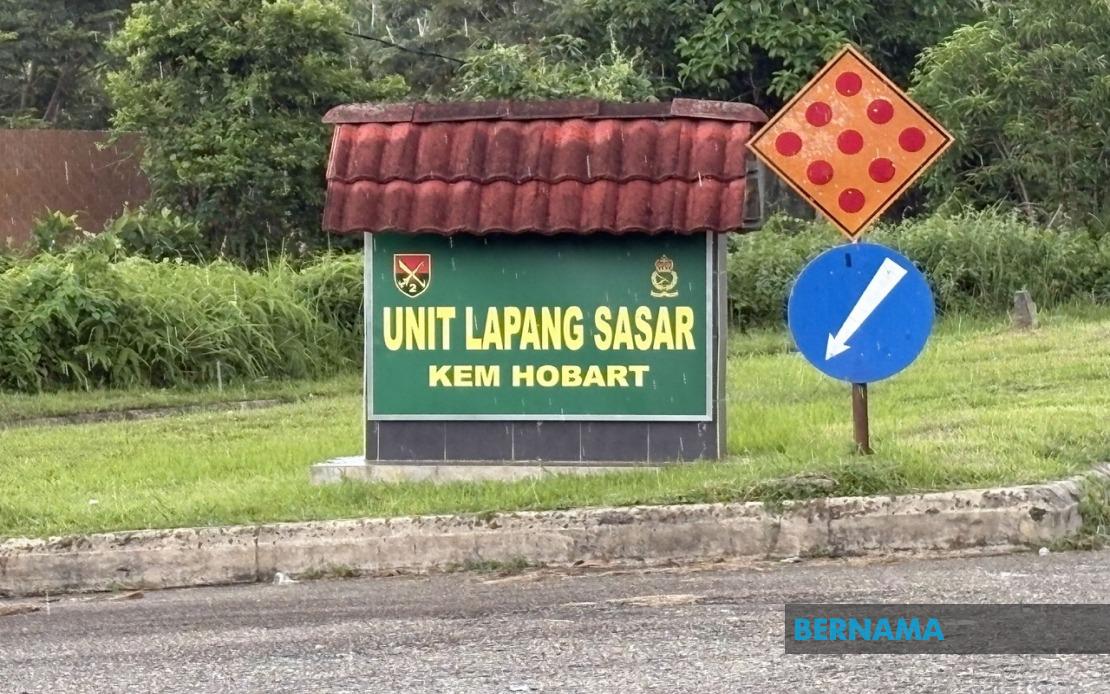
A routine training exercise at Hobart Camp in Gurun descended into tragedy on June 16 when an explosion claimed the lives of two Malaysian Army personnel during a grenade-throwing drill. The incident, which occurred at approximately 10.57 am, has prompted Kuala Muda police to launch a formal investigation with statements being collected from witnesses who were present at the scene.
The explosion happened during a Combat Enhancement Training programme run by the First Squadron of the Royal Malaysian Engineers Regiment (RAJD) under the Second Infantry Division. The two victims, Corporal Norazmi Abu Bakar from the Sixth Battalion of the Royal Malay Regiment (RAMD) and Private Siti Khadijah Sungip from the First Squadron RAJD, were conducting heavy weapons training as part of their regular military curriculum. Both sustained severe blast injuries during what should have been a controlled and supervised exercise.
ACP Hanyan Ramlan, the Kuala Muda police chief, confirmed that authorities have classified the incident as a sudden death report (SDR) investigation. Speaking to reporters at the Forensic Department of the Sultan Abdul Halim Hospital (HSAH) in Sungai Petani, Ramlan outlined the police department's approach to determining the circumstances surrounding the explosion. The investigation will be comprehensive, encompassing forensic analysis, scene examination, and comprehensive witness testimony.
Response teams quickly transported both victims to HSAH following the blast, but despite medical intervention, neither personnel survived the journey to hospital. The severity of the injuries sustained from the explosion meant that immediate treatment could not prevent the fatalities. Subsequently, the remains were transferred to Sultanah Bahiyah Hospital in Alor Setar for post-mortem examinations, which are standard procedure in sudden death cases and will help establish the precise cause of injury and death.
The Malaysian Army's formal acknowledgement of the incident emphasized that the explosion occurred during what is considered a fundamental component of military training. Grenade-throwing exercises are conducted across all military forces globally as part of combat readiness programmes, yet accidents during such training remain exceptionally rare when proper safety protocols are followed. The fact that this incident occurred during a controlled training environment at an established military facility raises questions about what factors may have contributed to the tragedy.
Witness testimony will prove crucial to the investigation's success, as personnel present at the training ground would have observed the circumstances immediately preceding the explosion and the precise sequence of events. Police will be seeking detailed accounts from fellow trainees, supervising officers, and any instructors who were overseeing the grenade-throwing exercise. These statements will help establish whether any procedural violations, equipment failures, or unforeseen circumstances contributed to the explosion.
For the Malaysian military community, this incident represents a sobering reminder of the inherent risks associated with weapons training, regardless of how stringent safety measures are implemented. The death of a female personnel, Private Siti Khadijah Sungip, also highlights the increasing integration of women into combat roles within the Malaysian Armed Forces, a trend that has expanded opportunities but also exposes female service members to the same occupational hazards as their male counterparts.
The investigation's progress will likely influence future training protocols at military facilities across the country. Beyond the immediate investigation at Hobart Camp, military leadership may conduct broader reviews of grenade-throwing procedures, equipment maintenance schedules, and safety distance requirements. Such reviews are standard practice following fatal training incidents and help prevent similar tragedies in the future.
Family members of both victims will be awaiting answers from investigators regarding how the incident occurred and whether any negligence or equipment malfunction played a role. The post-mortem examinations at Sultanah Bahiyah Hospital will provide medical evidence regarding the nature and extent of injuries, which forensic experts can correlate with physical evidence collected from the training ground.
Police cooperation with the Malaysian Army will be essential, as military personnel and facilities fall within overlapping jurisdictions. The Army's internal investigation may run parallel to the police inquiry, with both organizations sharing findings to establish a comprehensive account of events. Such coordination ensures that no aspect of the incident is overlooked and that accountability mechanisms function properly.
The incident underscores the demanding nature of military service and the sacrifices personnel make in training to defend the nation. While fatal training accidents are statistically uncommon, their occurrence in any military context carries profound implications for operational procedures and safety culture. The full findings from police and military investigations may take several weeks to complete, but witness statements will be prioritized to gather fresh recollections before details become unclear.