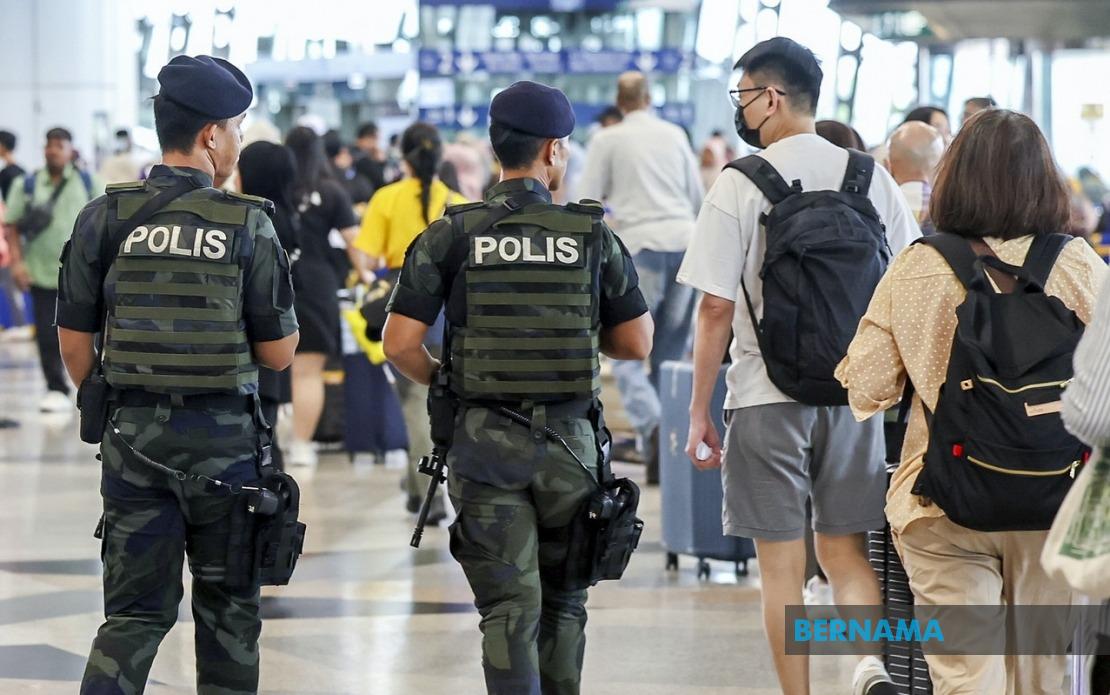
The Malaysian government is taking swift action to reinforce security at its airports by integrating Royal Malaysia Police officers into Aviation Security divisions across the country. Communications Minister Datuk Seri Fahmi Fadzil announced the measure during a press briefing in Putrajaya on August 5, explaining that both the Home Ministry and Transport Ministry had recommended the overhaul following security concerns revealed by a recent high-profile case involving a Malaysian aviation professional.
The catalyst for this security upgrade stems from the detention of a 39-year-old Malaysian pilot by Indonesian authorities at Soekarno-Hatta International Airport's Terminal 3. The pilot was apprehended on suspicion of attempting to smuggle narcotics out of the country. Upon inspection, officials discovered 15 packages containing approximately 70,114 capsules of ecstasy and methamphetamine, with a street value estimated at RM45 million according to Indonesian market valuations. The incident has raised serious questions about lapses in Malaysia's own airport security protocols and the vetting procedures for aviation personnel.
Currently, Malaysia's Aviation Security units rely on auxiliary police personnel to conduct screening and monitoring operations. This reliance on lower-trained support staff has apparently created vulnerabilities that the government now deems unacceptable. By transitioning these critical security roles to full Royal Malaysia Police officers, authorities believe they can significantly enhance the professionalism, training standards, and accountability within airport security divisions. The move represents a recognition that aviation security—given its importance to national safety and international commerce—demands the highest caliber of personnel.
Beyond deploying trained police officers, Malaysia Aviation Group has been instructed to undertake a comprehensive review of its background screening and health assessment procedures for pilots and co-pilots. This represents a broader institutional response to the smuggling incident, acknowledging that individual incidents often reflect systemic gaps. The airline industry faces particular pressure in this area because pilots occupy positions of significant trust and access, making their vetting procedures crucial to preventing potential security breaches or criminal activity.
Parallel to these immediate measures, the Royal Malaysia Police and the Malaysian Border Control and Protection Agency have been tasked with conducting a thorough examination of airport security systems to identify any weaknesses or exploitable gaps. This investigative approach seeks to move beyond reactive measures and toward a more comprehensive security architecture. The agencies are expected to provide recommendations on how existing protocols can be strengthened and whether new safeguards are necessary to prevent similar incidents from occurring in future.
Fahmi acknowledged that the government is still evaluating whether to establish a dedicated investigation team to probe the Malaysian pilot's involvement in the smuggling operation. He noted that while preliminary oral briefings have been received from relevant ministers, the full written reports are still under review. Given that the case remains active within the Indonesian legal system, Malaysian officials are taking a cautious approach to avoid interfering with the Indonesian investigation while ensuring they gather sufficient information to understand any potential domestic angles or accomplices.
The Communications Minister emphasized that authorities need time to examine comprehensive documentation before determining appropriate follow-up actions and identifying whether other individuals may have been complicit in the smuggling attempt. This measured approach reflects awareness that rushed conclusions could compromise investigations or overlook important details. Nevertheless, Fahmi made clear that the government's overarching commitment is ensuring those responsible face justice and that security loopholes are systematically closed.
For Malaysia, this incident carries significant implications beyond the immediate case. The country relies heavily on its reputation for operational efficiency and safety in maintaining its position as a regional aviation hub. Any perception of lax security at Malaysian airports could affect international travel and cargo operations, potentially impacting airlines' routing decisions and business confidence. The incident also underscores the broader challenge facing developing and middle-income nations in balancing the operational demands of modern air transport with comprehensive security screening.
The deployment of professional police personnel to aviation security represents a policy shift that acknowledges previous resource or training constraints within the auxiliary police system. It signals that Malaysian authorities view aviation security as sufficiently critical to warrant full policing resources, rather than relying on less extensively trained auxiliary staff. This decision may have budget implications and could influence how other airport functions are staffed or prioritized.
The case also highlights vulnerabilities in cross-border law enforcement and the importance of coordinated international responses to aviation security threats. The fact that the smuggling attempt was detected in Indonesia rather than Malaysia raises questions about what screening occurred at Malaysian airports before the pilot's departure. This reality has likely prompted deeper reflection within Malaysia's civil aviation authority and security agencies about screening effectiveness and potential blind spots in current procedures.
Looking forward, the government's response will be closely monitored by international aviation bodies and partner countries assessing Malaysia's commitment to maintaining rigorous security standards. The integration of police personnel into airport security units, combined with enhanced vetting procedures for pilots and systematic examination of security gaps, demonstrates a serious institutional response to the revelations. Whether these measures prove sufficient may depend on their implementation quality and whether underlying resource or training issues are adequately addressed across Malaysia's various airport facilities.

