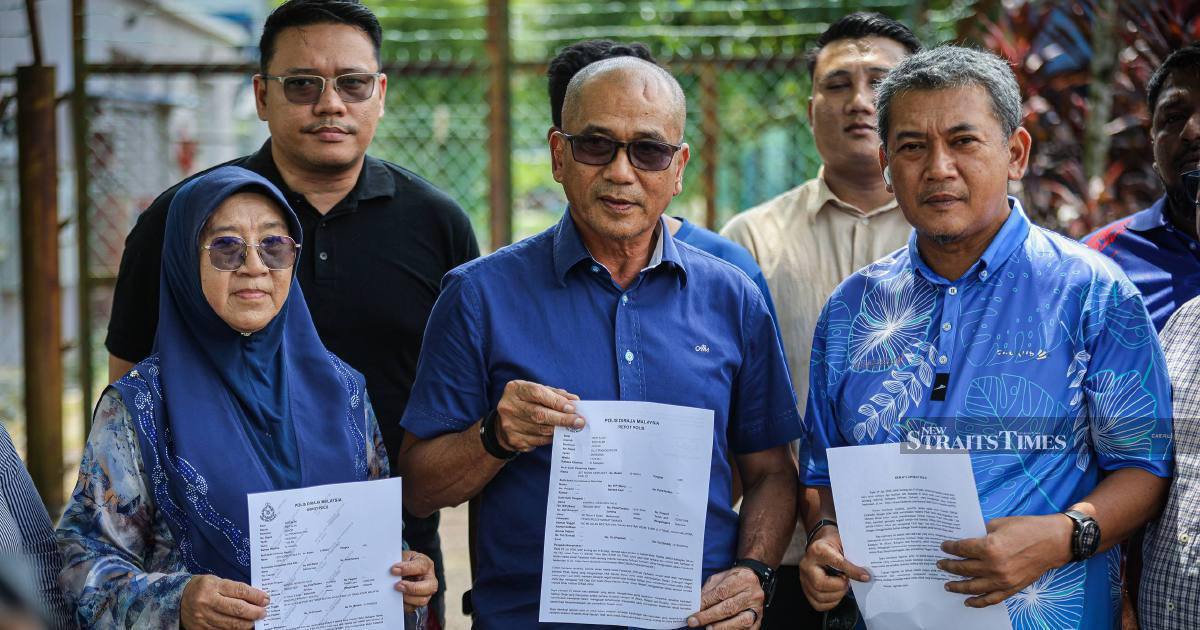
Tensions within Johor's political establishment have escalated dramatically following serious allegations made by Datuk Dr Mohd Puad Zarkashi, a former member of Umno's supreme council. Multiple officials from the Johor branch of Barisan Nasional have taken the formal step of lodging police reports against Puad in response to his claims about palace interference in the state's political affairs. The move underscores the sensitive nature of his assertions and signals a hardening stance from within the ruling coalition's state machinery.
The exact nature of Puad's allegations remains a point of contention, but they centre on what he characterises as inappropriate involvement by Johor's royal institution in party politics at the state level. In Malaysia's constitutional framework, the role of constitutional monarchs has traditionally been circumscribed, though their influence in matters touching on the state government and party leadership remains an area of considerable sensitivity. Accusations of palace interference in party politics strike at the heart of Malaysia's constitutional balance and have historically proven deeply divisive within political circles.
Puad's former position within Umno's supreme council suggests his statements carry weight within party circles, despite his no longer holding an active role in that governing body. His willingness to make such public claims, knowing they would likely provoke a strong response, indicates either profound conviction about the substance of his allegations or a deliberate strategy to place pressure on current state leadership. The response from Johor BN members indicates they view his statements as sufficiently damaging to warrant formal escalation through the police complaints system.
The decision to lodge formal police reports rather than simply issuing public denials carries significant implications. It suggests that those filing reports view Puad's allegations as potentially defamatory or as constituting an attempt to undermine lawful authority. Under Malaysian law, statements that cast aspersions on the monarchy or suggest improper influence over state administration can potentially expose speakers to legal consequences. By initiating police action, Johor BN figures are signalling their intention to pursue all available remedies against what they view as misconduct on Puad's part.
For Malaysian and regional observers, this episode illuminates persistent fault lines within Umno and the broader BN coalition. The party has faced repeated internal divisions over questions of leadership legitimacy, state governance, and the appropriate boundaries between royal prerogative and party politics. These recurring tensions suggest that disagreements over fundamental constitutional relationships remain unresolved within the coalition's ranks, occasionally erupting into public confrontations such as this.
The involvement of multiple BN members in filing reports indicates this is not merely a personal dispute between Puad and individual rivals. Rather, it represents a coordinated institutional response by state-level party structures. This collective action suggests senior figures within Johor BN have made a deliberate assessment that Puad's claims required formal legal response rather than ignoring them. The strategy carries risks, however, as police investigations into allegations regarding royal institutions typically proceed with considerable caution and heightened awareness of constitutional sensitivities.
Regionally, such domestic political frictions within Malaysia's dominant coalition are viewed with interest by neighbouring governments and observers assessing the stability of Malaysian politics. Umno and BN have faced questions about their capacity to manage internal disagreements without public acrimony, and incidents like this reinforce perceptions of institutional tensions. Johor specifically carries symbolic importance as a traditional BN stronghold and as home to the Johor sultanate, whose political role and relationships with federal and state party leadership have periodically generated controversy.
Puad's background as a former supreme council member suggests he possesses detailed knowledge of party decision-making processes and potentially confidential discussions about state governance matters. His transition from insider to public critic may reflect changing calculations about political advantage or protection, or alternatively genuine concerns about institutional direction. Those filing reports against him appear to interpret his public statements as representing a breach of party solidarity and institutional loyalty that warrants escalation.
The pathway forward remains uncertain. Police investigations into such matters typically take considerable time and require careful navigation of constitutional principles. Should proceedings advance, they could establish important precedents regarding permissible criticism of royal involvement in state affairs and the boundaries of acceptable political speech within Malaysia's constitutional framework. The cases outcome could influence how other politicians calculate the risks and benefits of making similar allegations in future.
For Malaysian political observers, this episode reflects the continuing challenge of balancing democratic discourse, institutional loyalty, and constitutional respect. The incident also demonstrates how allegations involving monarchy can rapidly escalate disputes within political parties, transforming internal disagreements into matters of formal legal process. As investigations proceed, the broader question of how Malaysian politics accommodates legitimate debate about royal influence on government remains unresolved.

