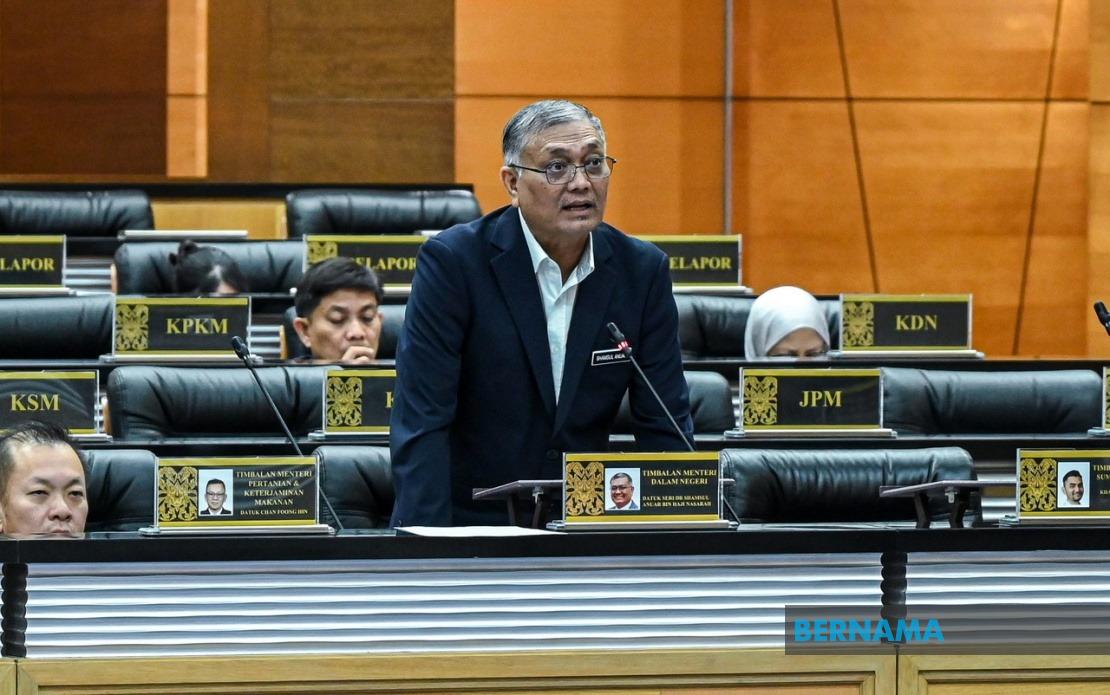
Malaysia's Deputy Home Minister Datuk Seri Dr Shamsul Anuar Nasarah has sought to reassure the public that the Royal Malaysian Police (PDRM) maintains stringent professional standards when handling sensitive investigations, regardless of the political stature or connections of those implicated. Speaking in the Dewan Rakyat Special Chamber on July 15, Shamsul Anuar stated categorically that no individual receives special protection or preferential treatment based on their position or political affiliation, addressing persistent public concerns about the impartiality of law enforcement in cases involving prominent figures.
The statement came in response to questions from Datuk Wan Saifulruddin Wan Jan, an opposition member representing Tasek Gelugor under Perikatan Nasional, who pressed the government for updates on multiple high-profile investigations. The Deputy Home Minister's emphasis on transparency and fairness reflects ongoing scrutiny of the police force's handling of cases attracting significant public attention, particularly those involving former or current government officials and their associates.
Among the cases referenced was the investigation into an intimate video recording that circulated online in 2019 and became linked to a former Cabinet member. Shamsul Anuar revealed that enquiries into this matter remain actively pursued, with investigators working to locate the original footage alongside all electronic devices and equipment potentially involved in its creation or distribution. The complexity of digital forensics and the passage of time since the material first emerged online have presented investigative challenges that continue to be addressed, he indicated.
The investigation into the 2019 intimate recording is being conducted under multiple legislative provisions, reflecting the layered nature of the offences involved. Authorities are applying Section 292, Section 377B and Section 504 of the Penal Code, which address obscene publications and defamation respectively, alongside Section 233 of the Communications and Multimedia Act 1998, which covers offensive content transmitted through digital networks. This multi-statute approach underscores the intersection of traditional criminal law and modern communications regulations that contemporary cases often require.
Shamsul Anuar also addressed a distinct investigation involving the son-in-law of former Prime Minister Tan Sri Muhyiddin Yassin, noting that this matter falls outside police jurisdiction. Instead, the Malaysian Anti-Corruption Commission (MACC) has assumed investigative authority, having already issued an arrest warrant against the individual concerned. The Deputy Home Minister declined to elaborate further, citing the ongoing nature of the MACC's enquiries and the need to respect the independence of the anti-corruption body's operations. This delegation of responsibility demonstrates how different agencies exercise jurisdiction over specific categories of alleged misconduct.
The reference to the Muhyiddin connection represents a sensitive political dimension, given that the former Prime Minister's administration encountered repeated questions about governance and potential conflicts of interest during his tenure. That investigations continue into individuals with family ties to former premiers suggests that no political lineage provides immunity from scrutiny, though observers note that the pace and outcomes of such investigations often become subjects of political debate. The willingness of MACC to pursue cases involving high-ranking figures' relatives is presented as evidence of institutional independence, though critics occasionally question whether investigations progress with equal vigour across all cases.
Beyond domestic matters, Shamsul Anuar also addressed Malaysia's extradition capabilities, noting that the country currently maintains formal extradition treaties with eleven nations. These bilateral arrangements establish legal frameworks allowing for the return of individuals facing criminal charges in foreign jurisdictions, provided that proper procedures are followed and the alleged offences meet specified thresholds. Malaysia has additionally ratified the ASEAN Extradition Treaty, binding the nation to cooperative arrangements with neighbouring members of the regional bloc.
The Deputy Home Minister indicated that Malaysia remains receptive to negotiating additional extradition agreements with countries lacking formal treaties, viewing such arrangements as integral to regional and international criminal justice cooperation. This openness reflects Malaysia's commitment to combating transnational crime and ensuring that geographic borders do not become refuges for individuals fleeing prosecution. However, extradition matters remain governed strictly by the Extradition Act 1992, which establishes procedural safeguards and conditions under which individuals may be surrendered to foreign authorities. The requirement for formal legal processes protects against arbitrary transfers and ensures that diplomatic convenience does not override individual rights.
The broader context of Shamsul Anuar's parliamentary statements reflects persistent public concern in Malaysia regarding the consistency and impartiality of law enforcement, particularly in cases involving politically connected individuals. Investigative agencies have faced accusations from various quarters that investigations into prominent figures proceed at different speeds or with varying intensity depending on political circumstances. The Deputy Home Minister's explicit reassurance that position and political affiliation do not influence investigative decisions appears designed to counter such perceptions, though the statement's persuasiveness likely depends on how concrete cases ultimately conclude.
Malaysia's experience with high-profile investigations serves as a case study in the tensions between institutional independence and political pressure. When cases involve former government officials or their relatives, investigations inherently acquire political dimensions regardless of law enforcement intent. The public scrutiny of such cases, amplified through social media and news coverage, creates pressure on investigating agencies to demonstrate both thoroughness and impartiality. Shamsul Anuar's parliamentary statement represents an attempt to reinforce public confidence in institutional professionalism at a time when trust in governance structures remains contested across Malaysian society.
Looking forward, the outcomes of the cases referenced—particularly regarding the 2019 intimate recording investigation and the MACC's examination of the Muhyiddin relative—will likely prove more influential than rhetorical assurances in shaping public perception of investigative impartiality. Malaysia's law enforcement agencies face the ongoing challenge of demonstrating through action rather than statement that investigations proceed uniformly according to legal standards rather than political convenience. The Deputy Home Minister's comments represent the government's current position, but sustained public confidence ultimately depends on the credibility of results.

