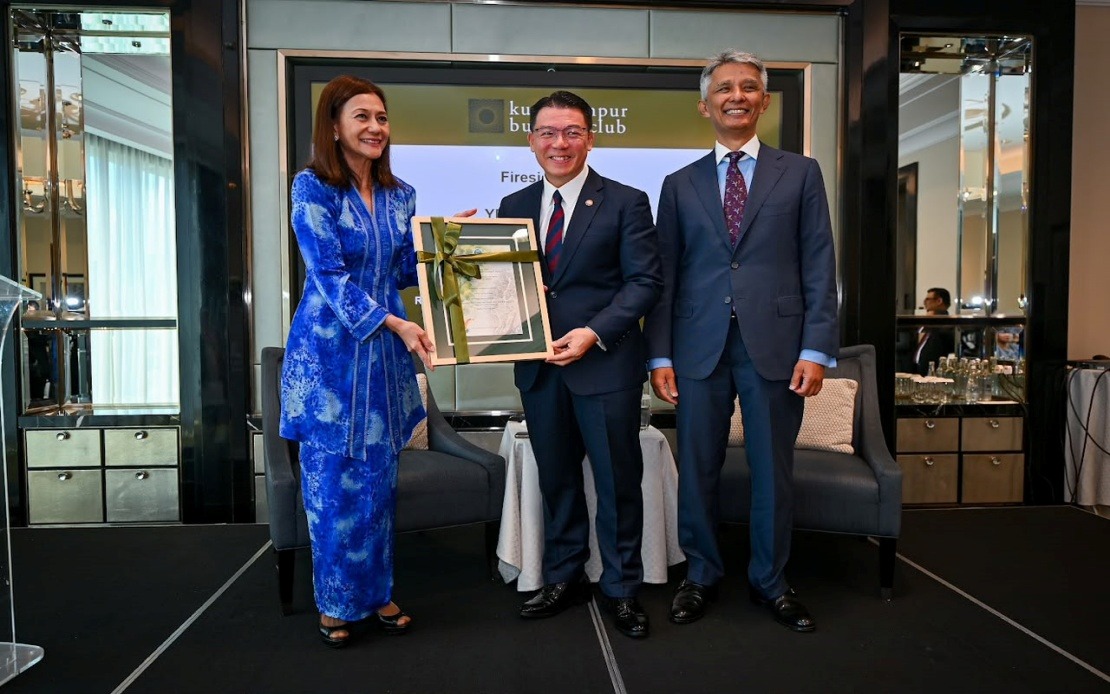
Housing and Local Government Minister Nga Kor Ming has underscored the necessity of maintaining consistent policy direction under the MADANI framework as Malaysia seeks to translate its economic reform agenda into tangible, sustainable gains. Speaking after a fireside discussion hosted by the Kuala Lumpur Business Club, Nga argued that unwavering governance standards and a stable reform trajectory are fundamental to preserving investor confidence while positioning the nation to compete effectively in an increasingly volatile global environment.
The minister's remarks came during a session dedicated to exploring the intersection of urban development and economic expansion, bringing together prominent business figures and key stakeholders to examine Malaysia's longer-term development pathway. Dubbed "Future Cities, Future Growth: How MADANI Reforms Are Reshaping Malaysia's Urban Economy," the dialogue reflected growing emphasis among policymakers on linking structural urban transformation with broader macroeconomic objectives. For Malaysia's business community, such forums serve as important barometers of official economic direction and the government's commitment to institutional reform.
Nga contended that securing a renewed mandate would furnish Prime Minister Datuk Seri Anwar Ibrahim's administration with the political strength and timeframe necessary to deepen institutional restructuring, enhance bureaucratic capacity, and achieve the full implementation of sweeping economic plans already in motion. The linkage between electoral stability and reform momentum represents a recurring theme in Malaysian governance discourse, reflecting the reality that major structural changes often require multi-year timelines extending beyond typical election cycles. Such continuity, he suggested, directly influences whether Malaysia can cement its competitive edge as regional economies increasingly vie for capital inflows and skilled talent.
The MADANI government has documented progress across several domains that traditionally concern foreign investors and international credit rating agencies. Nga highlighted Malaysia's strengthened standing among investment seekers, attributing this partly to the government's articulation of clear policy frameworks, solid macroeconomic fundamentals, and the political stability that has characterised the administration's tenure. In a region where policy uncertainty frequently undermines capital formation, Malaysia's relative predictability has become a marketable asset, particularly as multinational enterprises reassess their supply chain vulnerabilities and regional hub strategies.
Another significant achievement cited by the minister involves Malaysia's improved performance on the Corruption Perceptions Index, a metric closely tracked by international investors and development institutions. Sustained improvements in transparency and governance standards enhance a nation's attractiveness to institutional investors, particularly those bound by environmental, social, and governance mandates. Enhanced CPI rankings signal to foreign firms that their investments are less vulnerable to unethical practices and administrative capture, reducing perceived risk premiums on Malaysian assets relative to competing destinations.
Malaysia's credit ratings environment has similarly benefited from what Nga characterised as prudent fiscal stewardship. International rating agencies have responded to the government's demonstrated commitment to fiscal sustainability and institutional reform by maintaining or upgrading Malaysia's sovereign ratings, a development that directly influences borrowing costs for both the government and domestic corporations. For Malaysian enterprises seeking overseas financing, improved national credit metrics translate into more favourable lending terms and broader access to international capital markets, stimulating investment and expansion.
The minister also emphasised the strategic partnership concluded with Turkmenistan, valued at RM52.73 billion, alongside emerging energy collaboration frameworks with Russia. These agreements underscore Malaysia's expanded engagement with non-traditional economic partners, a diversification strategy that reduces dependence on conventional trading blocs while opening new avenues for technology transfer, energy security, and trade expansion. For Southeast Asia, Malaysia's diplomatic activism in cultivating such partnerships carries regional implications, potentially influencing bilateral relations and investment patterns throughout the broader Asia-Pacific neighbourhood.
Beyond bilateral deals, Nga stressed that Malaysia's foreign policy architecture now incorporates strategic partnership principles and mutual prosperity frameworks. This ideational shift reflects an understanding among policymakers that simple transactional relationships are insufficient to anchor long-term economic engagement. By positioning Malaysia as a reliability-conscious partner willing to invest in institutional linkages and shared development objectives, the government aims to differentiate itself from regional competitors while constructing a more resilient foundation for international economic participation. Such positioning becomes increasingly important as geopolitical fractures reshape global trade flows and investment patterns.
The consistency narrative advanced by Nga speaks to a broader concern within Malaysia's business elite: that episodic policy shifts or governance crises undermine the institutional memory and implementation capacity necessary for complex economic reforms to yield intended results. Infrastructure initiatives, regulatory modernisation, and human capital development programmes all demand sustained bureaucratic effort and private sector coordination spanning multiple years. Sudden policy reversals or leadership instability disrupt this delicate orchestration, imposing transition costs and delaying benefits that investors anticipated when making medium to long-term commitments.
For Malaysian readers and regional observers, Nga's framing suggests that the current administration views its development agenda not as a collection of discrete initiatives but as an integrated, mutually reinforcing transformation process. From digitalisation of government services to structural economic rebalancing, these endeavours require time and political capital to mature. The minister's emphasis on continuity thus functions simultaneously as a defence of the government's tenure and an explanation for why long-term economic competitiveness demands stable policy environments.
The business community's receptiveness to such messaging reflects genuine commercial interest in predictable governance frameworks. Multinational enterprises and domestic conglomerates alike require reasonably transparent policy environments in which to formulate strategy and allocate capital. Frequent institutional turbulence or inconsistent reform implementation raises business planning horizons and increases risk perceptions, ultimately dampening investment enthusiasm. Malaysia's apparent success in maintaining political stability relative to neighbouring economies has become a competitive advantage that stakeholders wish to preserve.
Looking forward, Nga's commentary illuminates an implicit bargain the MADANI administration is proposing to both domestic and international business constituencies: sustained electoral support will enable the government to consolidate its reform achievements and accelerate the transition to a higher-value, more resilient economic model. Whether this narrative resonates sufficiently to translate into concrete political outcomes remains contingent on whether Malaysia's citizens and investors perceive tangible improvements in living standards, employment quality, and institutional functioning. The minister's emphasis on policy continuity thus represents not merely a governance principle but a strategic communication about Malaysia's future trajectory and its implications for stakeholder interests throughout the region.

