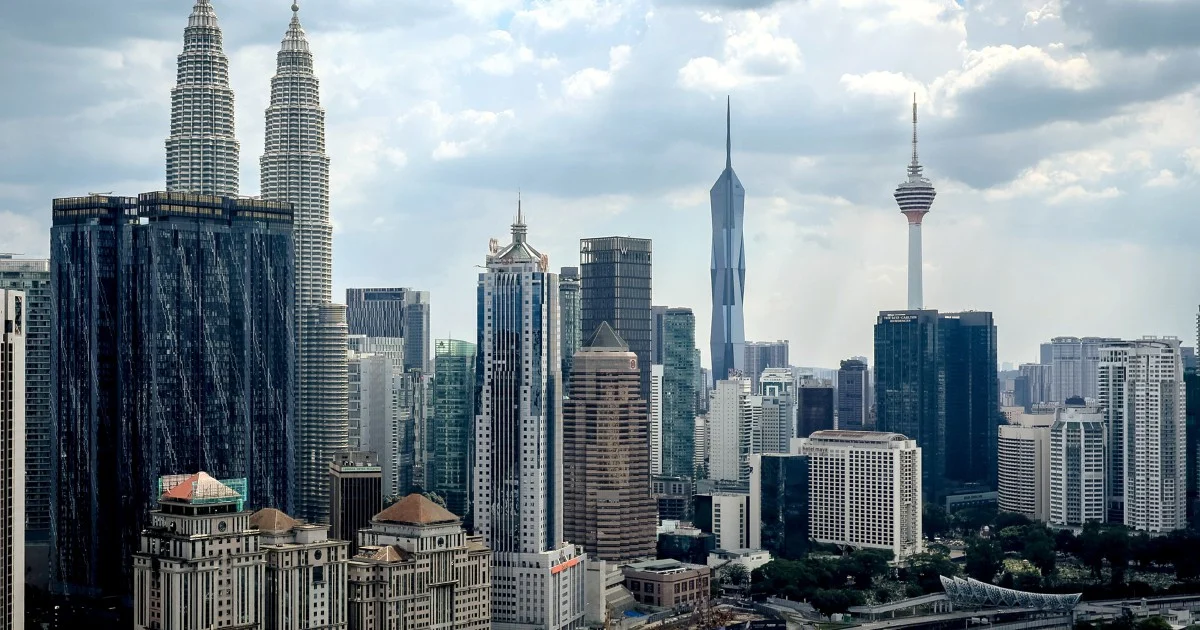
Foreign investors weighing Malaysia as a destination for capital deployment are not being deterred primarily by speculation about the 16th general election or broader political discourse, the Ministry of Investment, Trade and Industry has indicated, offering reassurance to policymakers concerned about the potential economic fallout from heightened electoral uncertainty. While the investment climate does hinge on political stability as one factor among several, the ministry's assessment suggests that concerns about imminent electoral contests and attendant political maneuvering have not become decisive barriers to inflows of foreign direct investment into the country.
This statement carries significant implications for Malaysia's broader economic narrative at a time when many regional economies are grappling with investor caution tied to geopolitical tensions, currency volatility, and global growth headwinds. By separating the impact of electoral speculation from the underlying requirement for stable governance, MITI appears to be signalling that international fund managers and multinational corporations view Malaysia through a more nuanced lens than simple headlines about political drama might suggest. The distinction is particularly important because it implies that businesses operating with medium to long-term investment horizons have confidence in the country's institutional frameworks and policy continuity despite periodic shifts in political leadership.
The timing of this clarification matters considerably. GE16 could occur at any point before June 2025 given that Malaysia's parliament was dissolved in late 2022, and speculative commentary about election dates and potential power transitions has become a fixture of local discourse. That such speculation apparently does not feature prominently in foreign investors' decision matrices suggests they have either compartmentalized electoral uncertainty from operational risk assessments, or they possess sufficient confidence in Malaysia's economic management and regulatory environment to proceed with investment plans regardless of which coalition controls government after the next poll. This interpretation aligns with the reality that Malaysia remains an established manufacturing hub, financial centre, and trade nexus within Southeast Asia, attributes that transcend electoral cycles.
Foreign investors typically evaluate destination countries using multifactorial frameworks that encompass labour costs and availability, infrastructure quality, logistics networks, trade agreements, regulatory clarity, and access to regional supply chains. Political stability figures within these frameworks primarily as a check on the risk of policy reversals or institutional breakdown that could disrupt operations or erode property rights. However, stability in Malaysia's context has been demonstrated across multiple government transitions and electoral periods, with the civil service, judiciary, and regulatory agencies maintaining functional independence. This institutional resilience appears to be what foreign investors are assessing when they evaluate Malaysia, rather than fixating on the electoral calendar itself.
The ministry's position also indirectly reflects confidence that Malaysia's competing attractions for foreign capital remain sufficiently robust to withstand electoral commentary. These include the country's integration into regional trade networks, its position as a gateway to Southeast Asia, and the presence of established industrial clusters in semiconductor manufacturing, petrochemicals, and digital technology services. Investors already operating in Malaysia and those considering expansion have tangible operational experience demonstrating that political transitions do not automatically translate into investment-hostile environments. The absence of dramatic policy lurches after previous electoral changes reinforces this perception.
It bears noting that MITI's framing does not diminish the importance of political stability as an investment criterion; rather, it contextualizes that criterion within a broader spectrum of factors. Foreign investors almost certainly do conduct due diligence on governance quality, rule of law, and institutional predictability. The ministry appears to be arguing that Malaysia continues to satisfy minimum thresholds on these dimensions such that election-year anxiety does not become a dominant narrative in investment decision-making. This distinction allows policymakers to communicate that while political disruption would obviously harm investor sentiment, normal electoral processes and associated speculation need not trigger capital flight or investment hesitation.
For Malaysia's economic policy establishment, this messaging offers a degree of latitude. It permits senior officials to engage in political dialogue and electoral positioning without fearing that each public disagreement or power struggle will materially impact foreign investment flows. However, this latitude has implicit limits: should actual political dysfunction emerge—such as institutional breakdown, policy paralysis on fundamental economic questions, or corruption scandals affecting governance—investor sentiment would likely shift markedly. The current assessment seems premised on the assumption that Malaysia's political system, despite its complexities and occasional turbulence, continues to function as a coherent vehicle for economic administration and policy implementation.
The regional context further illuminates this dynamic. Within Southeast Asia, investors face political and electoral uncertainty across multiple markets including Thailand, the Philippines, and Myanmar. Malaysia's relative institutional stability and predictable electoral frameworks, while imperfect, compare favourably to several regional peers. Foreign capital may therefore gravitate toward Malaysia not because the country is perfectly politically insulated, but because it offers a superior risk-adjusted profile compared to alternatives within the region. This comparative advantage persists even as GE16 draws closer on the horizon.
Looking forward, MITI's position suggests that the ministry and broader government are confident that Malaysia can retain and attract foreign investment through the electoral period and beyond, provided that fundamental policy commitments remain intact and institutional functioning is preserved. This confidence, whether justified or aspirational, will be tested if electoral uncertainty intensifies, if policy signals become contradictory, or if political rivals begin articulating divergent economic visions that might trouble investors. For now, the ministry's assessment reflects an optimistic reading that Malaysia's brand as an investment destination has sufficient weight to weather electoral cycles without material damage.

