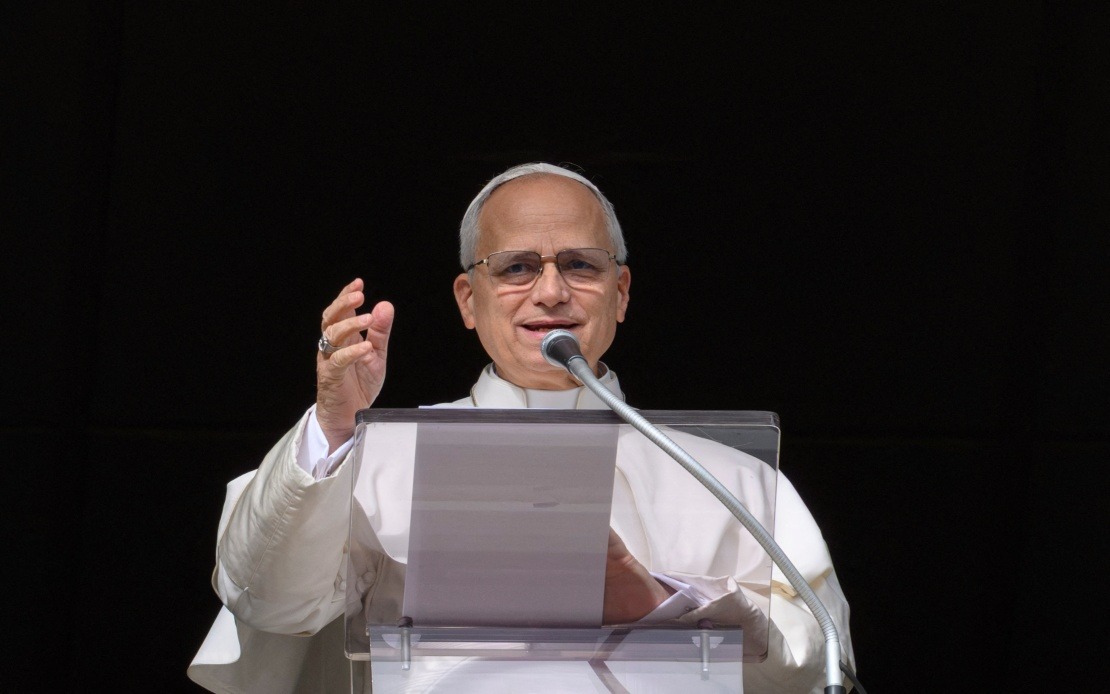
Pope Leo XIV has issued a stark warning about the dangers of treating artificial intelligence as a neutral technology, arguing instead that the systems shaping our digital future inherently embody specific moral frameworks and visions of humanity. Speaking through his social media presence on Thursday, the pontiff challenged the widespread assumption that technology operates independently of ethical considerations, a perspective that has gained traction among tech companies and policymakers seeking to distance themselves from the consequences of their creations.
The Pope's intervention arrives at a critical juncture in the global debate over AI governance. As machine learning algorithms increasingly influence consequential decisions—from loan approvals and hiring decisions to criminal sentencing and medical diagnoses—the question of who bears responsibility for algorithmic outcomes has become more pressing. The pontiff's assertion that moral neutrality is a fiction rather than a fact provides a philosophical counterweight to industry arguments that algorithmic bias and harmful outcomes are merely technical glitches rather than symptoms of deeper value choices embedded in system design.
Central to the Pope's argument is the observation that artificial intelligence systems cannot escape the intentions of their creators. Every dataset selected for training, every feature engineered into a model, and every optimization target chosen by developers represents a deliberate prioritization that advantages certain outcomes over others. When a facial recognition system performs worse on darker skin tones, or when a hiring algorithm discriminates against women, these are not accidents but rather expressions of the data, priorities, and assumptions baked into the system from inception. The pontiff's framing thus rejects the notion that technology developers can claim innocence through appeals to unintended consequences or technical neutrality.
The theological and philosophical implications of this stance are significant for how Malaysian institutions and Southeast Asian societies might approach AI regulation and adoption. As the region accelerates digital transformation—from financial services to healthcare, education, and governance—the question of whose values should be embedded in these systems becomes urgent. Will AI systems deployed across Southeast Asia reflect the ethical frameworks, cultural norms, and social priorities of the region, or will they import wholesale the value systems embedded by Western technology companies?
The Pope emphasized that ethical scrutiny of AI must extend far beyond examining how a system is ultimately used. Instead, he argued, accountability must be traced backwards through the entire development pipeline. This means interrogating the source and composition of training data, questioning the design philosophies of engineers, and examining the incentive structures that motivated particular technical choices. For a Malaysian or Southeast Asian perspective, this implies that when adopting foreign AI systems—whether in banking, healthcare, or public administration—policymakers should demand transparency about the values and assumptions embedded in these systems rather than accepting them as purely technical tools.
The Pope articulated a vision in which responsibility for AI outcomes cannot be diffused across multiple actors or obscured behind claims of technical complexity. Instead, he called for clear delineation of accountability at each stage: designers and developers must account for their choices, deployers and implementers must justify their decisions, and oversight bodies must possess genuine power to monitor systems and mandate remediation when harm occurs. This framework challenges the current reality in many sectors, where AI systems operate with minimal oversight and where responsibility tends to evaporate somewhere between the developer's code and the user's decision.
For developing economies in Southeast Asia, the pontiff's emphasis on defined responsibility carries practical implications. Many nations in the region are still establishing regulatory frameworks for AI, and the Pope's argument suggests that these frameworks should prioritize clarity about who is accountable rather than allowing responsibility to fragment among hardware manufacturers, software developers, system integrators, and end users. Malaysia's own emerging approach to AI governance could benefit from adopting this principle, ensuring that when algorithmic systems make consequential decisions affecting citizens, there is a clear path for accountability and remediation.
The Pope's intervention also implicitly addresses the democratic deficit in AI governance. If every AI system embeds a vision of humanity and society, then those visions should reflect democratic deliberation and public values rather than merely the profit maximization algorithms of technology corporations. This is particularly acute in Southeast Asia, where many nations have committed to digital inclusion and e-government initiatives that could either empower citizens or concentrate power in the hands of those who control the algorithms. The Pope's argument suggests that the design phase of these systems is where democratic values must be asserted, not after deployment when technical complexity makes change difficult.
The pontiff's call for systems that respect human dignity and serve the common good represents a counternarrative to Silicon Valley's move-fast-and-break-things culture. In the Southeast Asian context, where social cohesion and communal values remain important, the Pope's emphasis on the common good rather than individual choice or corporate profit resonates with existing philosophical traditions. Yet realizing this vision requires that institutions in the region develop sufficient technical literacy and regulatory authority to meaningfully evaluate and potentially reject AI systems that do not align with local values and social priorities.
Looking forward, the Pope's position suggests that moral responsibility in AI cannot be contracted away or outsourced to technical experts and corporate compliance teams. Instead, it requires ongoing vigilance from civil society, religious institutions, policymakers, and citizens themselves. For Malaysia and Southeast Asia, this implies that as the region becomes increasingly dependent on AI systems for critical functions, building public understanding of how these systems work and why particular design choices matter becomes essential infrastructure for democratic governance and human dignity.

