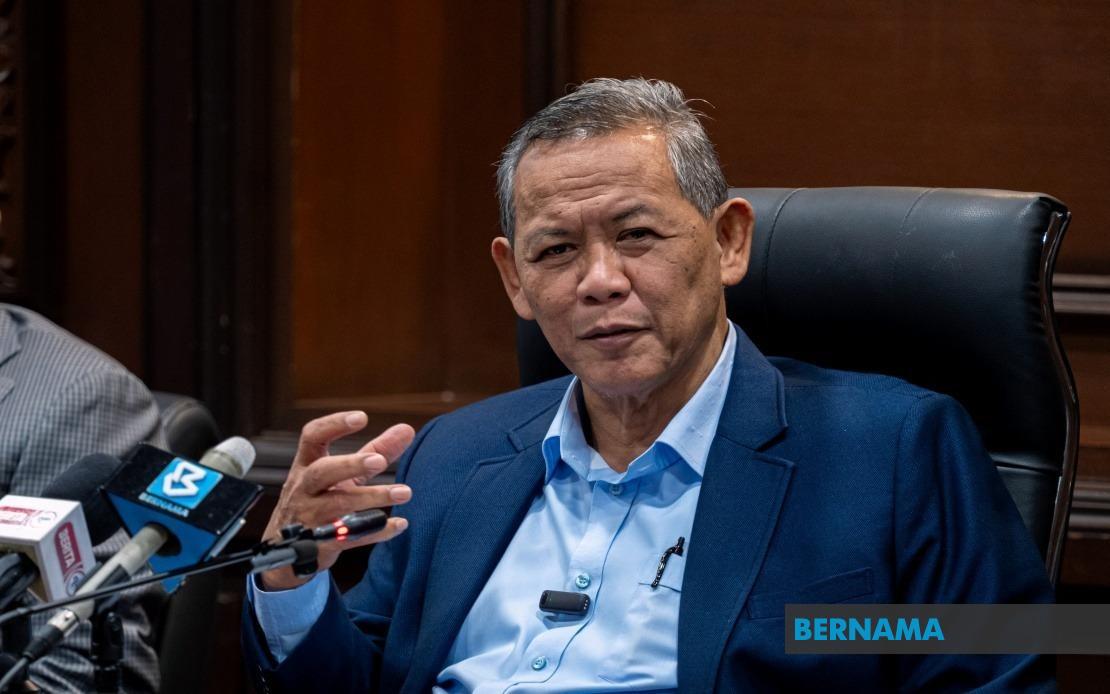
Negeri Sembilan Menteri Besar Datuk Seri Aminuddin Harun has moved to quell mounting public concerns about the proposed AI-powered Smart Port in Port Dickson, asserting unequivocally that the megaproject will proceed without displacing any villages or requiring additional land purchases. The clarification comes as misconceptions about the development's footprint have circulated among local communities and civil society groups worried about potential encroachment on their livelihoods and ancestral properties.
Aminuddin, speaking through a video statement released to Facebook, categorically rejected allegations that approximately 566 hectares of land—encompassing residential settlements, forest reserves, customary holdings, industrial parcels, farmland, and village areas—would need to be seized for the initiative. He characterised such claims as baseless and without factual foundation, emphasising that the state government remains committed to protecting the interests of Malay-owned landholdings and local populations dependent on natural resources.
The Menteri Besar stressed that the entire project will unfold on real estate already controlled by Tanco Holdings Berhad and its subsidiary Midports Holdings Sdn Bhd, which collectively possess approximately 202 hectares specifically designated for port-related operations. This ownership arrangement sidesteps the politically fraught and time-consuming process of compulsory land acquisition, a mechanism that historically has generated significant friction between state authorities and rural communities across Malaysia. By anchoring development to private holdings, the state government appears positioned to accelerate implementation while reducing administrative and legal hurdles that might otherwise impede progress.
The initial phase of the undertaking carries an estimated investment value of RM3.4 billion and is framed as a transformative initiative poised to catalyse broad-based economic expansion throughout Port Dickson. State officials anticipate that the port will emerge as a duty-free commercial nucleus capable of attracting regional traders, logistics operators, and maritime businesses seeking competitive operational advantages. The prospect of such economic dynamism carries particular significance for peripheral communities such as Linggi and Pasir Panjang, which have historically struggled with limited employment opportunities and industrial development.
Aminuddin's reassurance extends specifically to fishing communities and riverine populations concerned that maritime infrastructure development might compromise traditional livelihoods centred on the Linggi River. He clarified that the Smart Port project maintains geographic and operational separation from Kampung Tanjung Agas, Kampung Sungai Raya, and the Linggi River system itself, meaning that subsistence and commercial fishing activities can proceed undisturbed. The Menteri Besar attributed lingering confusion partly to the existence of a distinct port initiative—the Kuala Linggi International Port (KLIP)—positioned at the Negeri Sembilan–Melaka frontier under Melaka's administrative jurisdiction. By distinguishing between these two separate enterprises, he sought to dispel anxieties that might stem from conflating different development projects.
Prime Minister Datuk Seri Anwar Ibrahim endorsed the Midport venture on July 14, positioning it as instrumental to elevating Malaysia's credentials as a preeminent digital and maritime hub within the Asia-Pacific region. Ibrahim characterised the AI-integrated port not merely as incremental infrastructure enhancement but rather as a strategic imperative befitting a maritime nation situated along the Strait of Malacca, one of the planet's most heavily trafficked shipping conduits. This framing reflects broader recognition among Malaysian policymakers that port modernisation and automation represent critical competitive differentiators in an environment where neighbouring jurisdictions across Southeast Asia pursue parallel technological upgrades and infrastructure investments.
The emphasis on AI integration distinguishes this Port Dickson venture from conventional port expansions, signalling an orientation towards automating cargo handling, streamlining vessel scheduling, optimising berth allocation, and enhancing supply-chain visibility through digital connectivity. Such technological sophistication theoretically positions Port Dickson to capture market share from neighbouring ports struggling with legacy systems and labour constraints. For Malaysia's broader economic agenda, a modernised and digitally advanced port facility represents an asset capable of supporting higher-value trade flows and attracting multinational enterprises seeking seamless maritime logistics networks.
Aminuddin's repeated assurances regarding the protection of Malay-owned land and indigenous interests reflect the delicate political calculations underlying major development initiatives in Negeri Sembilan. Rural constituencies and indigenous communities represent influential voter blocs, and heavy-handed land acquisition campaigns or inadequate compensation for displaced populations risk triggering electoral backlash and reputational damage to the state administration. By anchoring the project to pre-existing private holdings and explicitly ruling out forced acquisition, the Menteri Besar attempts to neutralise opposition narratives whilst maintaining forward momentum on a flagship economic initiative.
The Smart Port project carries implications extending beyond Negeri Sembilan's borders, potentially influencing maritime trade patterns, port competition dynamics, and logistics infrastructure development throughout Malaysia and the broader Strait of Malacca region. If successfully implemented with promised efficiency gains and AI-driven operational advantages, the facility could reposition Port Dickson from a relatively modest regional player into a significant transhipment and container handling nexus. However, realising such ambitions hinges on securing sustained investor confidence, addressing lingering community concerns through transparent stakeholder engagement, and delivering on infrastructure quality and service reliability benchmarks that justify the RM3.4 billion capital outlay.
Moving forward, the state government's task involves translating reassurances into concrete outcomes demonstrating that local populations indeed benefit from port-related economic activity without bearing disproportionate environmental, social, or livelihood costs. Establishing transparent mechanisms for community feedback, ensuring that promised employment opportunities materialise for local residents, and maintaining environmental stewardship standards will prove essential to maintaining public acceptance throughout the development and operational phases. The success or failure of the Smart Port initiative will likely shape public perception of future megaprojects within Negeri Sembilan and across Southeast Asia.

