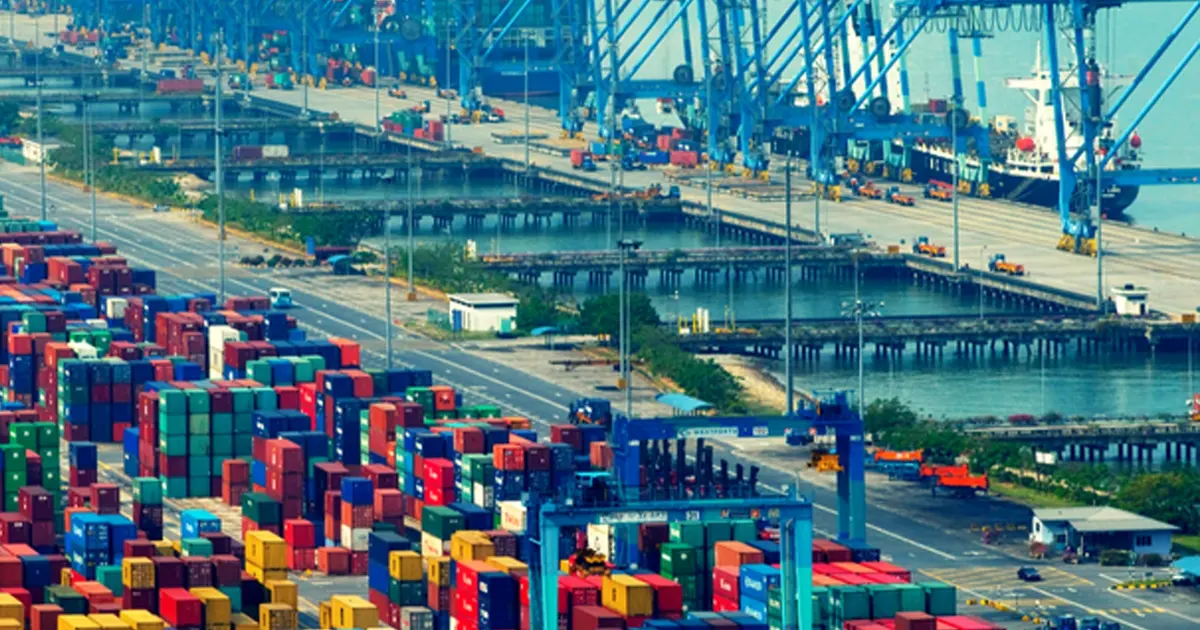
The Port Klang Free Zone (PKFZ) has recorded RM108 million in revenue as its operational reactivation programme advances towards completion, with Transport Minister Loke Siew Fook characterising the performance as a vindication of recovery efforts spanning the past 18 months. The achievement represents a tangible turnaround for the sprawling logistics facility, which has weathered significant challenges stemming from past mismanagement and underutilisation that left it as a symbol of white elephant projects in Malaysia's infrastructure landscape.
The reactivation milestone of 86 per cent signals that the majority of PKFZ's operational capacity is returning to productive use after years of dormancy and suboptimal performance. This recovery trajectory reflects sustained efforts by management and stakeholders to rehabilitate tenant relationships, modernise facilities, and reposition the zone as a competitive regional logistics hub. The percentage figure demonstrates tangible progress rather than mere rhetorical commitment, providing concrete evidence that interventions undertaken by the Transport Ministry have begun yielding measurable outcomes.
Revenue generation at RM108 million within the specified timeframe establishes a foundation upon which PKFZ can build sustainable commercial operations. For context, this figure becomes more significant when measured against the zone's operational capacity utilisation rates in previous years, though the full extent of improvement requires understanding the baseline from which recovery commenced. The revenue stream encompasses various port services, warehousing operations, and logistics-related activities that tenants conduct within the free zone's infrastructure.
Loke's assessment of steady, encouraging growth carries particular weight given the political and economic scrutiny surrounding PKFZ's historical performance. The port facility, situated strategically within Malaysia's busiest port complex, possesses inherent advantages through proximity to shipping lanes and established maritime infrastructure. Yet these geographical advantages remained substantially underexploited for years, representing lost economic potential for the nation's logistics sector and wider port ecosystem.
The recovery programme's success depends fundamentally on restoring confidence among logistics operators and international trading companies that PKFZ provides reliable, competitive services compared to alternative regional hubs. The 86 per cent reactivation rate suggests that tenant businesses have responded positively to operational improvements and service enhancements, though sustaining this momentum requires maintaining service standards and addressing any remaining operational bottlenecks that prevent full capacity utilisation.
For Malaysian businesses engaged in import-export activities, particularly those in manufacturing, electronics, and trade-dependent sectors, PKFZ's rehabilitation carries immediate relevance. A functional, efficient free zone reduces logistics costs and processing times for goods transiting through Klang, translating to competitive advantages across supply chains. The facility's recovery contributes to Port Klang's broader ecosystem health and Malaysian port competitiveness against rivals like Singapore and Bangkok.
The 18-month timeframe specified by Minister Loke establishes a clear reference point for measuring recovery progress. This duration suggests that systematic interventions—whether involving debt restructuring, facility upgrades, management restructuring, or tenant support programmes—have been implemented with deliberate intent rather than ad-hoc reactive measures. The specific timeline also indicates that performance tracking mechanisms exist to monitor progress against established benchmarks.
Reactivation programmes at underperforming port facilities require simultaneous attention to multiple operational dimensions: addressing physical infrastructure deficiencies, simplifying customs procedures, reducing bureaucratic impediments, and rebuilding trust with logistics operators who may have experienced service failures during periods of decline. PKFZ's advancement to 86 per cent reactivation suggests coordinated execution across these fronts, though the remaining 14 per cent reflects challenges that warrant examination as the recovery effort proceeds toward completion.
The RM108 million revenue figure gains significance when contextualised within national port performance metrics. Malaysia's total port throughput and associated service revenues face competitive pressures from regional competitors investing heavily in infrastructure modernisation and operational efficiency improvements. PKFZ's recovery contributes incrementally to sustaining Malaysia's position within regional logistics networks, particularly for value-added services that generate higher margins than basic containerised cargo handling.
Looking forward, sustaining the reactivation momentum depends on several factors including maintenance of competitive pricing structures, technology investments in port operations, and continued attention to regulatory efficiency. Minister Loke's public endorsement of the recovery trajectory signals political commitment to maintaining supportive policies, though long-term success ultimately rests on commercial viability and operational excellence that attract and retain tenant businesses seeking regional logistics solutions.
The recovery trajectory also carries symbolic importance for Malaysia's broader infrastructure governance narrative. PKFZ's chequered history featured prominently in criticisms of project management and financial oversight within the public sector. Demonstrating that even troubled facilities can be rehabilitated through sustained management attention and strategic repositioning provides a counternarrative to perceptions of systemic infrastructure underperformance, though sceptics note that sustained improvement remains prerequisite for fully restoring the facility's credibility.

