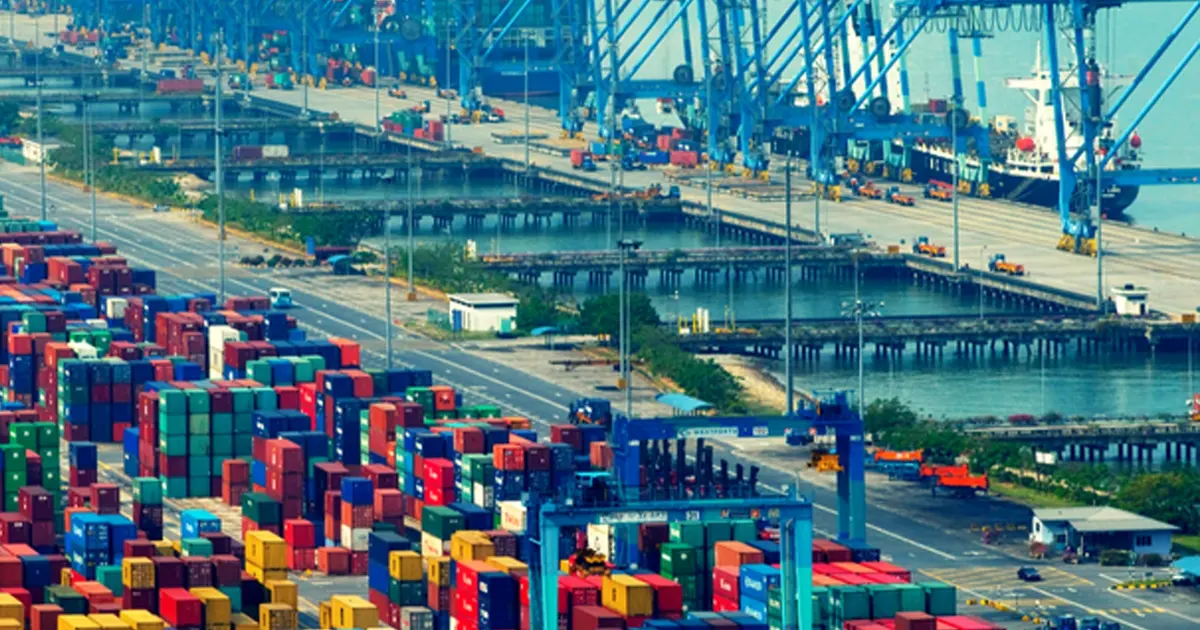
Port Klang Free Zone has logged RM108 million in revenue whilst achieving an 86 per cent reactivation rate, marking a notable turnaround for the embattled logistics hub following years of operational challenges. Transport Minister Loke Siew Fook highlighted the consistent improvement trajectory over the preceding 18 months, positioning the facility as a critical asset for Malaysia's trade infrastructure amid regional competition.
The Port Klang Free Zone's path to recovery has been a significant undertaking, given the facility's troubled history. The sprawling complex, once envisioned as a game-changer for Malaysia's port operations, had fallen into disrepair and underutilisation following financial scandals and management failures in the mid-2000s. The reactivation programme represents an attempt to rehabilitate the zone's reputation and economic viability, with authorities tasking themselves with attracting new tenants and rationalising operations across the site.
Reaching 86 per cent operational capacity signals that the reactivation efforts have gained meaningful traction. This metric is particularly relevant for stakeholders in Malaysia's logistics and trade sectors, where efficiency and reliability directly influence supply chain costs. As regional ports in Singapore, Thailand, and increasingly Vietnam compete for transshipment volumes and value-added services, a functioning Port Klang Free Zone becomes essential to Malaysia's competitive positioning in Southeast Asian trade corridors.
The RM108 million revenue figure, whilst modest relative to the zone's intended scale, nonetheless reflects renewed business activity within the facility. This income stream supports operational expenses and capital maintenance whilst providing the ministry with tangible evidence of the turnaround narrative. For traders and logistics operators eyeing Malaysia as a distribution hub, steady revenue growth offers assurance that the zone is stabilising as a viable location for warehousing, processing, and re-export operations.
Loke Siew Fook's characterisation of the performance as "steady, encouraging growth" reflects cautious optimism rather than transformative success. The minister's language suggests awareness that the zone's recovery, whilst positive, remains a work in progress. This measured tone is appropriate given Malaysia's broader port sector dynamics, where container volumes at Port Klang itself have fluctuated with regional trade cycles and the post-pandemic shipping environment.
The 18-month window cited by the minister captures a period of intensifying focus on port infrastructure as part of Malaysia's broader economic recovery strategy. The government has positioned Port Klang and its free zone components as critical infrastructure requiring sustained investment and operational discipline. This commitment reflects recognition that port efficiency directly impacts export competitiveness for Malaysian manufacturers and traders, from semiconductors to palm oil products to petrochemicals.
For regional observers, the Port Klang Free Zone's recovery trajectory holds lessons about infrastructure rehabilitation in Southeast Asia. The zone's initial underperformance resulted from a combination of management lapses, external economic shocks, and governance challenges that plagued it throughout the 2010s. The incremental progress now evident suggests that focused administrative oversight and gradual tenant recruitment can yield results, though rapid expansion remains unlikely given the facility's market position.
The 86 per cent reactivation metric warrants scrutiny regarding actual utilisation patterns. Reactivation rates measure the proportion of available space or facility components that are operational, not necessarily the intensity or profitability of their use. A warehouse that is technically active but operating at partial capacity contributes differently to revenue generation than one running at full efficiency. The RM108 million revenue figure offers context, but understanding the underlying occupancy rates and lease terms would clarify the zone's genuine economic momentum.
International trade flows continue to present both opportunities and risks for the Port Klang Free Zone. Geopolitical tensions affecting supply chains, shifting manufacturing patterns within the region, and digitalisation of trade documentation all influence demand for physical free zone services. The zone's recovery depends not only on internal operational improvements but also on its ability to position itself effectively within broader Southeast Asian trade networks that increasingly link Malaysia to supply chains spanning India, China, Vietnam, and beyond.
The ministry's oversight of the zone's reactivation programme represents a shift toward more hands-on port authority management compared to earlier privatisation models that yielded disappointing results. This approach aligns with regional trends in which governments reassert direct control over critical infrastructure. For businesses operating within Malaysian trade frameworks, this suggests greater stability and strategic coordination, though it also implies that future expansion will follow government priorities rather than purely commercial imperatives.
Looking ahead, sustaining the reactivation momentum will require attracting higher-value tenants and services beyond basic warehousing. The zone's long-term viability depends on its capacity to offer integrated logistics solutions—customs clearance, value-added processing, consolidation services, and digital platforms—that differentiate it from competitors. The current 86 per cent operational status provides a platform for such enhancement, but realising that potential requires continued investment in facilities, technology, and human capital.
The Port Klang Free Zone's reported performance arrives as Malaysia positions itself within restructured regional supply chains and endeavours to reclaim trade throughput lost to rival ports. The RM108 million revenue and 86 per cent reactivation rate represent progress worth acknowledging, yet they also underscore the substantial distance remaining before the facility can be considered a flagship component of Malaysia's port infrastructure. Sustained focus and adaptive strategies will determine whether this recovery becomes the foundation for genuine competitive advantage or remains a modest stabilisation of a previously troubled asset.

