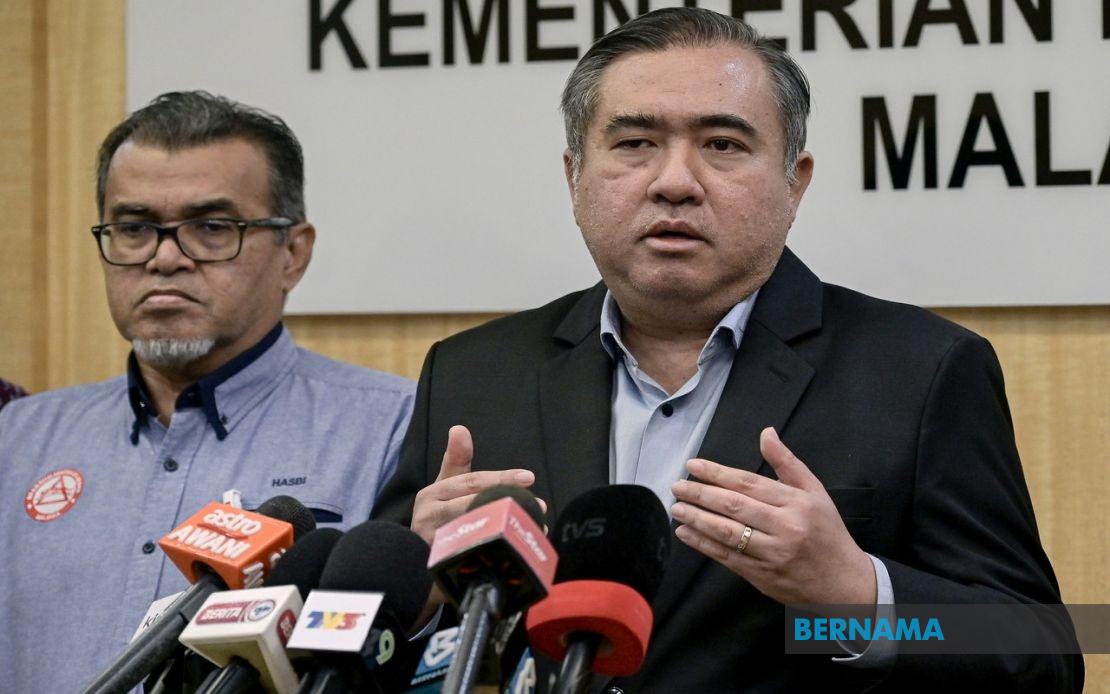
Malaysia's government maintains a hands-off approach to management appointments at port operating companies, according to Transport Minister Anthony Loke, who stressed that regulatory oversight focuses solely on ownership structures rather than personnel decisions. Speaking at a press conference in Putrajaya on July 17, Loke drew a clear distinction between the government's role in safeguarding national interest through equity requirements and its non-involvement in corporate governance matters that fall within the purview of individual companies and their boards.
The minister's comments came in response to international media coverage regarding the appointment of Sultan Ahmed Sulayem, former chairman and chief executive of Dubai-based DP World, to the position of executive chairman at MMC Ports Holdings Bhd, Malaysia's largest port operator. This leadership transition followed the immediate resignation of group chief executive officer Azman Shah Mohd Yusof, an internal corporate development that had attracted scrutiny from observers seeking to understand the extent of government involvement in such decisions.
Loke articulated the government's core regulatory framework with precision, emphasizing that the administration's primary concern centres on maintaining Malaysian control of strategic national assets through minimum ownership thresholds. Under current policy, companies holding concessions or operating strategic infrastructure such as ports must retain at least 51 per cent Malaysian ownership, a requirement that Loke described as non-negotiable. This threshold ensures that critical national infrastructure remains under domestic financial stewardship, a principle that reflects broader governmental concerns about maintaining sovereignty over essential economic assets.
However, the minister made explicit that the government's oversight does not extend into the selection and appointment of management personnel, whether these individuals are Malaysian nationals or foreign professionals. This delineation between ownership governance and operational management reflects a pragmatic approach that distinguishes between questions of national control and questions of corporate expertise. The government's position acknowledges that port operations require specialized technical and commercial expertise that may not always be available domestically, and that importing such expertise through expatriate executives represents a legitimate business practice.
To illustrate this principle in practice, Loke pointed to existing precedent within Malaysia's port sector itself, citing the Port of Tanjung Pelepas as an example of a facility led by a foreign national chief executive officer. This reference demonstrates that the appointment of international maritime professionals to senior operational positions is neither unprecedented nor contrary to government policy, provided the underlying ownership structure satisfies regulatory requirements. The coexistence of foreign management with Malaysian majority ownership reflects a balanced approach to economic governance that prioritizes both national interest and operational effectiveness.
The appointment of Sultan Ahmed Sulayem represents a noteworthy development in Malaysia's port sector given his extensive background in global maritime logistics and his previous stewardship of one of the world's largest port operators. His transition to the Malaysian port industry brings significant international experience and potentially signals strategic ambitions for MMC Ports Holdings Bhd in the regional and global context. The appointment may position Malaysia's port sector more competitively within regional supply chain networks, though the full strategic implications remain to be understood as the new leadership implements its vision.
Regarding broader questions about changes in shareholding structure, Loke clarified that any modifications to ownership patterns must be formally communicated to the government through established channels, including the Public-Private Partnership Unit (UKAS). This notification requirement ensures governmental awareness of ownership transitions and maintains transparency in the administration of strategic assets. However, Loke noted that as of his press conference statement, the ministry had received no notification from either MMC Ports Holdings Bhd or its concessionaires regarding any alterations to share ownership patterns, indicating that any leadership changes remain confined to management restructuring rather than fundamental shifts in corporate control.
The minister's remarks reflect a nuanced regulatory philosophy that distinguishes between different dimensions of corporate governance. By restricting government involvement to ownership verification while explicitly disclaiming interference in management selection, the policy framework seeks to balance legitimate national security concerns with recognition of the operational autonomy that corporate entities require to function effectively. This approach acknowledges that competitive advantage in the global port industry depends partly on the ability to attract and retain world-class management talent, regardless of nationality.
For Malaysian stakeholders in the shipping and logistics sectors, the clarification provides reassurance about the predictability and consistency of government policy regarding foreign participation in operational roles. Investors and port users can expect that appointments of international professionals will not trigger governmental intervention, as long as the fundamental ownership structure remains compliant with existing regulations. This clarity reduces uncertainty around the strategic direction of major port operators and may facilitate continued attraction of global expertise to Malaysia's maritime infrastructure.
The distinction articulated by Loke also carries implications for how Malaysia positions itself within regional and global maritime networks. By permitting foreign executives to lead major port operations while maintaining Malaysian ownership, the policy framework enables the country to benefit from international best practices and networks without surrendering economic control. This pragmatic approach contrasts with more protectionist models that might restrict foreign participation more comprehensively, and it reflects confidence in Malaysia's ability to maintain national interests through carefully calibrated ownership requirements.
Looking forward, the government's stated position suggests that further appointments of international professionals to senior positions within Malaysia's port sector would not require governmental approval or intervention, provided ownership structures remain unchanged. This signals a relatively liberal approach to executive recruitment within the constraints of ownership regulations, and it may encourage major port operators to pursue global talent acquisition strategies that enhance operational efficiency and competitiveness. The framework thus aims to reconcile national economic sovereignty with the practical requirements of managing internationally competitive maritime infrastructure.

