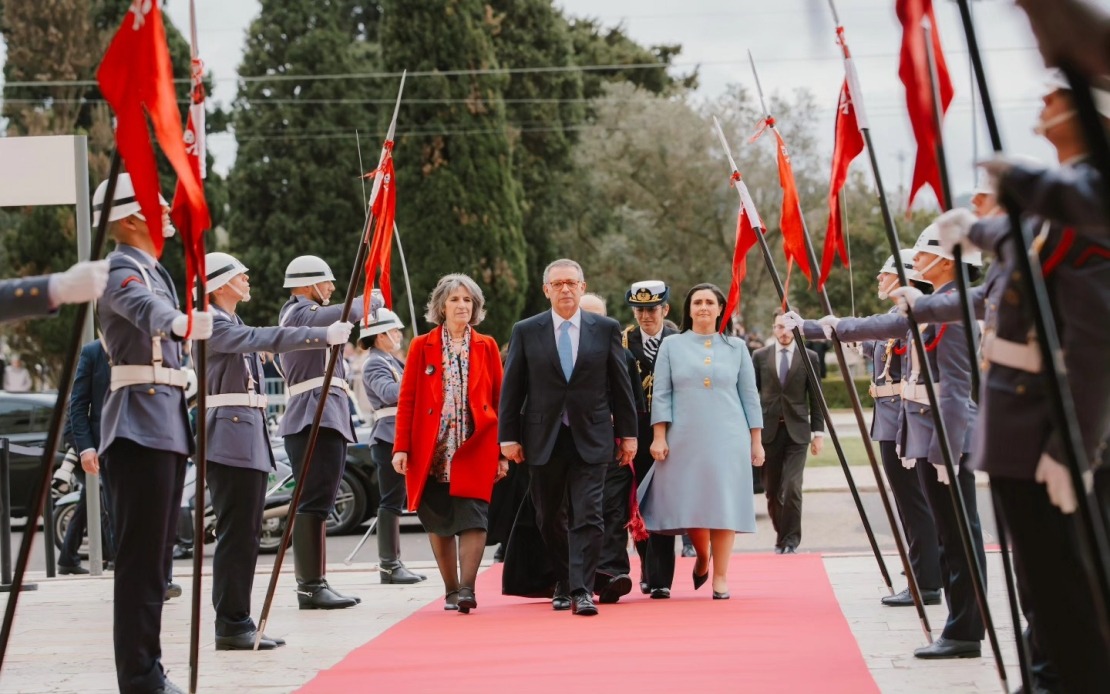
Portugal has joined a growing list of European democracies restricting face coverings in public following President Antonio Jose Seguro's approval of the controversial measure this week. The Portuguese head of state, acting on a proposal initially brought forward by the right-wing Chega party, signed the legislation after determining that parliamentary amendments had adequately addressed his concerns. His decision represents a significant moment in European debates over religious freedom, integration, and national identity that have intensified over the past two decades.
In his statement endorsing the law, Seguro framed the ban as addressing matters of profound social and cultural import to Portuguese society. He grounded his reasoning in three pillars: facilitating social cohesion among citizens, preventing discrimination within the community, and maintaining public security standards. The president also referenced precedents established by the European Court of Human Rights when discussing face coverings, suggesting that judicial guidance from the continent's highest human rights body supported his position.
The presidential rationale hinges on what officials describe as the foundational role of facial visibility in building trust and enabling genuine human connection. According to the statement released from Belem Palace, Portugal's presidential residence in Lisbon, an uncovered face represents an essential element binding Portuguese society together. This philosophical argument holds that daily interactions depend on people recognizing one another and establishing direct, unmediated relationships—a concept the government views as incompatible with practices obscuring facial identity.
A secondary argument embedded in the government's position addresses gender equality concerns, though critics argue this reasoning itself contains problematic assumptions. Officials contend that requiring only women to conceal their faces creates an inherent asymmetry contradicting European values of parity and equal dignity. They frame facial covering as incompatible with the gender-neutral principles underpinning democratic societies across the continent. This framing attempts to position the ban as protective of women's rights rather than restrictive of religious practice.
Seguro's endorsement also draws on the concept of a "common experience" within free societies—the notion that shared civic space requires citizens to navigate rules permitting all persons to live authentically while maintaining collective cohesion. Administration officials cited European Court jurisprudence supporting this balancing act, suggesting that restricting face coverings represents a legitimate exercise of state authority rather than an infringement on fundamental freedoms.
However, human rights organizations have swiftly challenged this interpretation. Amnesty International Portugal has declared the law discriminatory, asserting that it disproportionately impacts Muslim women who voluntarily adopt face coverings as part of their religious practice and personal identity. The organization contends that the measure threatens fundamental rights of religious expression and self-determination, particularly affecting a vulnerable minority population. This criticism highlights the tension between abstract principles of social cohesion and concrete protections for religious minorities in pluralistic societies.
Portugal's decision places it alongside France, Belgium, Austria, Denmark, and the Netherlands—five nations maintaining full or partial prohibitions on public face coverings. France pioneered this regulatory approach in 2011, implementing one of Europe's strictest bans, while other nations have adopted more nuanced frameworks permitting exceptions in specific contexts. The spread of such legislation across diverse European democracies suggests broader continental anxieties regarding immigration, religious identity, and social integration, though the practical impacts and enforceability of these laws remain contested.
For Southeast Asian observers, Portugal's move demonstrates how wealthy democracies are navigating tensions between multiculturalism and social cohesion in ways that critics argue privilege majority cultural norms. Malaysia, with its Muslim-majority population and constitutionally protected religious freedoms, represents a fundamentally different legal and social context. Yet the Portuguese precedent illustrates how even established liberal democracies may adopt restrictions on religious practice when framed through security and integration narratives.
The timing of Portugal's decision reflects broader European political currents, particularly the electoral gains of right-wing nationalist parties mobilizing around cultural identity concerns. That the original proposal originated from Chega—a party known for strong positions on immigration and cultural conservatism—underscores how such legislation often emerges from populist political movements before achieving mainstream acceptance. The presidential signature transforms a partisan proposal into state policy, potentially legitimizing similar measures across the continent.
The ban's implementation will test whether European courts ultimately vindicate the government's reasoning or sustain challenges from rights advocates. Legal experts anticipate potential appeals to the European Court of Human Rights, which will require the tribunal to weigh competing interests: state authority to regulate public conduct, religious freedom protections, gender equality principles, and minority rights. These cases will shape the jurisprudential foundations for face-covering restrictions across Europe and potentially influence how other democracies approach similar questions.
For religious minorities within Portugal and across Europe, the law signals shifting boundaries of acceptable cultural practice within liberal democratic frameworks. While the Portuguese government presents the ban as culturally neutral and universally applicable, critics observe that it primarily restricts practices associated with Islam, raising questions about whose traditions receive protection and whose face recognition duties in shared civic spaces. These dynamics underscore how ostensibly secular regulatory measures can produce disparate impacts along religious lines.

