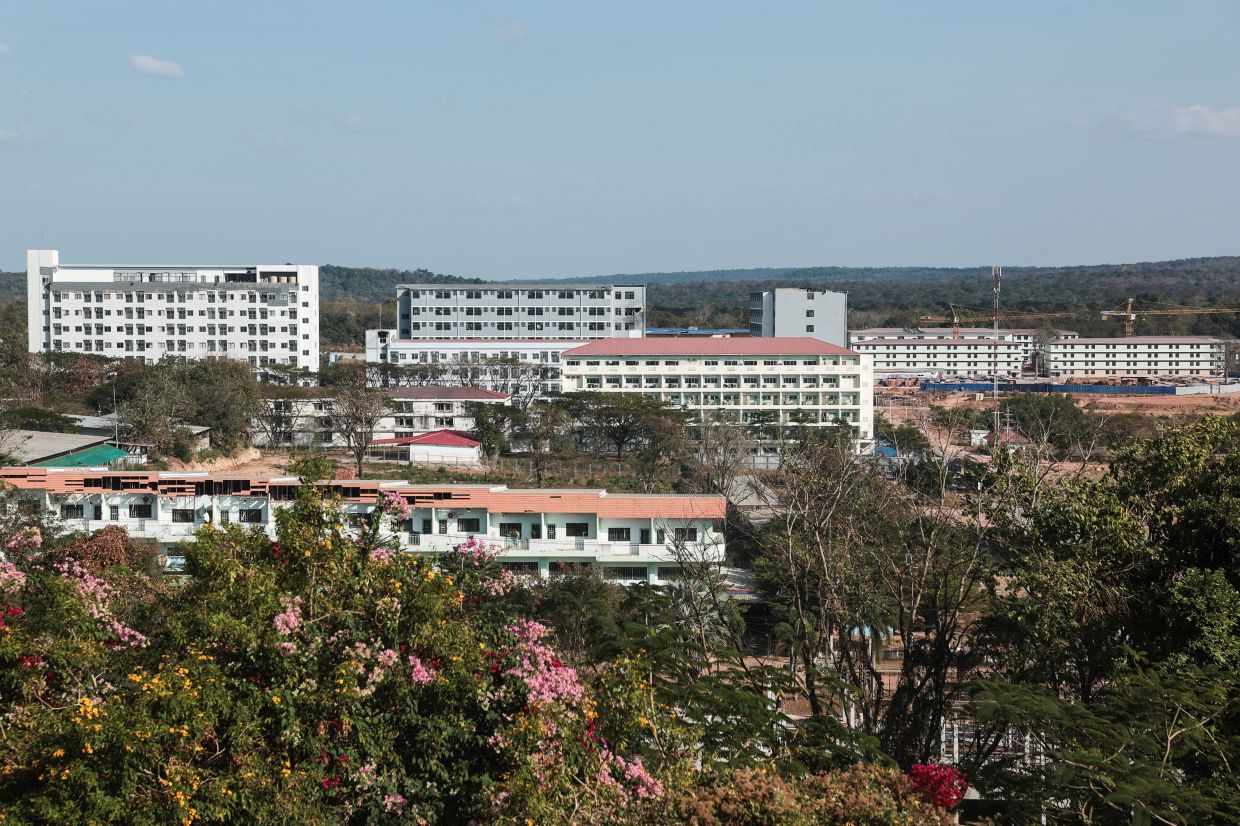
A sprawling casino controlled by one of Cambodia's most prominent businessmen served as landlord to criminal networks orchestrating some of Southeast Asia's most sophisticated fraud schemes, according to a Reuters investigation that exposes the murky intersection of gambling, organised crime, and political connections in the region. The Lim Heng Group, which owns the Royal Hill casino at O'Smach on the Thai-Cambodian border, leased buildings within its compound at substantially inflated rates to operators who transformed the structures into convincing replicas of international police stations and banking institutions. These elaborate mock-ups functioned as operational bases for industrial-scale scamming campaigns that victimised people across multiple continents, with evidence gathered from interviews with Thai military personnel, former compound workers, and on-site visits documenting the extent of the criminal infrastructure.
A rental agreement dated March 2024, obtained by Reuters, demonstrates the commercial arrangement between the casino owner and the criminal enterprise. The contract shows that three buildings within the Royal Hill compound were leased for two years at US$200,000 monthly to a Chinese national, a sum that represents a dramatic premium over normal market rates for properties in a remote border region. For comparison, a similarly sized mixed-use building in Phnom Penh's upscale district was advertised in May for just US$25,000 per month, highlighting how vastly inflated the Royal Hill rental terms were. This pricing disparity raises questions about whether the landlord understood the nature of the tenants' operations, though Reuters found no evidence that the Lim Heng Group directly participated in the trafficking or fraud itself.
Inside these leased structures, investigators discovered an astonishing array of fake institutional settings. Police station mockups featured authentic-looking interrogation rooms and detention areas, complete with uniforms and equipment designed to deceive victims into believing they were interacting with law enforcement. Bank office replicas were similarly detailed, equipped to handle telephone romance scams and police impersonation fraud targeting individuals worldwide. The sophistication of these operations underscores how Southeast Asia has become a primary hub for organised transnational cybercrime, with the United States government estimating that American victims alone lost US$10 billion to regional fraudsters in 2024. Multiple criminal groups have established such facilities across Cambodia, Laos, and Myanmar, frequently integrating them with casino operations that provide convenient mechanisms for laundering illicit proceeds.
The discovery carries significant implications for understanding how organised crime networks leverage Cambodia's permissive business environment and weak enforcement mechanisms. Jason Tower of the Global Initiative against Transnational Organized Crime has noted that casino operators frequently partner with scamming syndicates precisely because gaming establishments offer plausible cover for moving large sums of suspicious money through legitimate-appearing transactions. An Amnesty International investigation, based on gambling regulator records and witness testimony, identified at least a dozen Cambodian scam centres operated directly by casino owners, though Reuters has not independently verified these figures. The pattern suggests that the integration of casinos with fraud operations has become a standard business model within transnational criminal networks operating in the region.
Lim Heng himself occupies a rarefied position within Cambodian society, enjoying both wealth and powerful political connections that may shield him from accountability. He holds a royal title equivalent to a duke, has been photographed with senior military generals at social functions, and donated US$20,000 to Cambodia's military last year according to records from a business association listing him as a member. According to Sophal Ear, a political scientist at Arizona State University studying Cambodia, casino ownership in the kingdom typically concentrates among individuals with direct ties to the political elite, a pattern that blurs the line between business and state power. This proximity to government authorities makes it unlikely that Lim Heng would face serious consequences, despite evidence that his company profited from criminal operations conducted on his property.
The Lim Heng Group's legal response to exposure has so far involved suppressing media coverage rather than cooperating with investigations. In September 2024, a company representative filed legal complaints against two Cambodian publishers whose outlets had reported the detention of foreign nationals at Royal Hill, claiming incitement to discrimination. Court summonses dated September 16 and reviewed by Reuters did not specify which claims in the articles the company objected to, suggesting the legal action aimed primarily at intimidating journalists rather than addressing factual inaccuracies. Penn Nuon, one of the targeted publishers, confirmed receiving the complaint and stated his reporting was accurate, but ultimately removed his article after obtaining legal advice. Neither the company nor the Phnom Penh court responded to Reuters inquiries about whether the complaints were subsequently dropped.
The Royal Thai Police, which is leading investigations into cyberfraud at the compound, have confirmed Chinese criminal groups orchestrated the scamming operations. General Thatchai Pitaneelaboot told journalists visiting the facility that Chinese gangsters perpetrated the fraud schemes, though he did not provide specific details about the perpetrators' identities. Thai security agency reports prepared in 2024 and reviewed by Reuters explicitly identified Lim Heng's ownership of the site, establishing that Thailand has independently confirmed the business connection. The Thai military occupied Royal Hill following a brief border conflict in December when it bombed the casino, claiming Cambodian forces had commandeered the buildings for military purposes including drone and sniper operations. Thailand stated it targeted the site on grounds that its troops had reported the casino structures were being used for attacks, blurring the line between fighting an incursion and perhaps conveniently seizing a known criminal facility.
Cambodia's official response to the scandal reveals the government's reluctance to confront the reality of scam operations integrated into the gambling industry. Despite images of the fake police stations and banking facilities being broadcast internationally, Cambodian authorities have persistently described Royal Hill as merely a hotel rather than acknowledging its documented role in facilitating massive fraud schemes. The government has made some gestures toward combating scamming, including extraditing casino owner and alleged scamming kingpin Chen Zhi to China and passing legislation directly targeting scammers. However, these measures appear targeted at individual bad actors rather than addressing the systemic corruption that allows casino owners with political connections to operate with impunity. Chhay Sinarith, a senior minister tasked with combating online fraud, stated in response to Reuters questions that Cambodia remains committed to international cooperation on the issue, but asserted that Thai security forces should return custody of the seized locations to facilitate Cambodian investigations.
The broader context of this case illuminates why Southeast Asia has become the epicentre of global fraud operations. Romance scams and police impersonation schemes originating from the region exploit the linguistic and cultural distance between perpetrators and victims, allowing criminals to maintain convincing false identities while operating with relative impunity from poorly resourced law enforcement. The region's casinos serve as magnets for Chinese criminal organisations seeking to establish fraud factories, taking advantage of Cambodia's weak regulatory environment and the availability of large numbers of trafficked workers coerced into conducting scams. Pornpen Aimhun, a Thai woman who described herself as a trafficked worker at Royal Hill, provided testimony about the conditions inside the compound, though details of her experience have not been fully disclosed. The Cambodian Human Rights Action Coalition and legal scholar Piseth Duch have noted that prosecutors could theoretically charge landlords with supporting trafficking if investigations demonstrate they knew about criminal use and permitted it to continue, yet such charges have proven extraordinarily rare in practice.
The implications for Malaysian regional observers extend beyond the immediate criminality documented at Royal Hill. As Southeast Asian nations compete to attract casino investment and foreign revenue, Cambodia's experience demonstrates the risks of insufficient regulatory oversight and the corrosive effects when business elites enjoy unaccountable political connections. Malaysia's own gaming industry, while more heavily regulated, faces similar pressures from international criminal networks seeking operational bases. The Royal Hill case exemplifies how transnational organised crime networks exploit jurisdictional gaps and local political patronage to establish regional criminal infrastructure with devastating global consequences. For Malaysia and other regional governments, the case underscores the necessity of robust anti-corruption measures, transparent casino licensing, and genuine international cooperation mechanisms that transcend diplomatic courtesy and political relations.
Moving forward, the Royal Hill investigation remains incomplete and fragmented across multiple jurisdictions with divergent interests. Thailand controls the physical site and has publicised evidence of criminal operations, yet lacks the legal authority to prosecute within Cambodian territory. Cambodia nominally retains sovereignty but appears reluctant to pursue accountability for a politically connected businessman. The fundamental question of whether Lim Heng knowingly facilitated transnational crime or allowed his property to be exploited by criminal tenants without direct knowledge may never be definitively answered through official channels. The case ultimately reflects the persistent challenge facing Southeast Asia as it confronts organised crime networks that have become deeply embedded within legitimate business structures, particularly the gambling industry, which simultaneously attracts foreign investment while providing ideal cover for money laundering and criminal operations.

