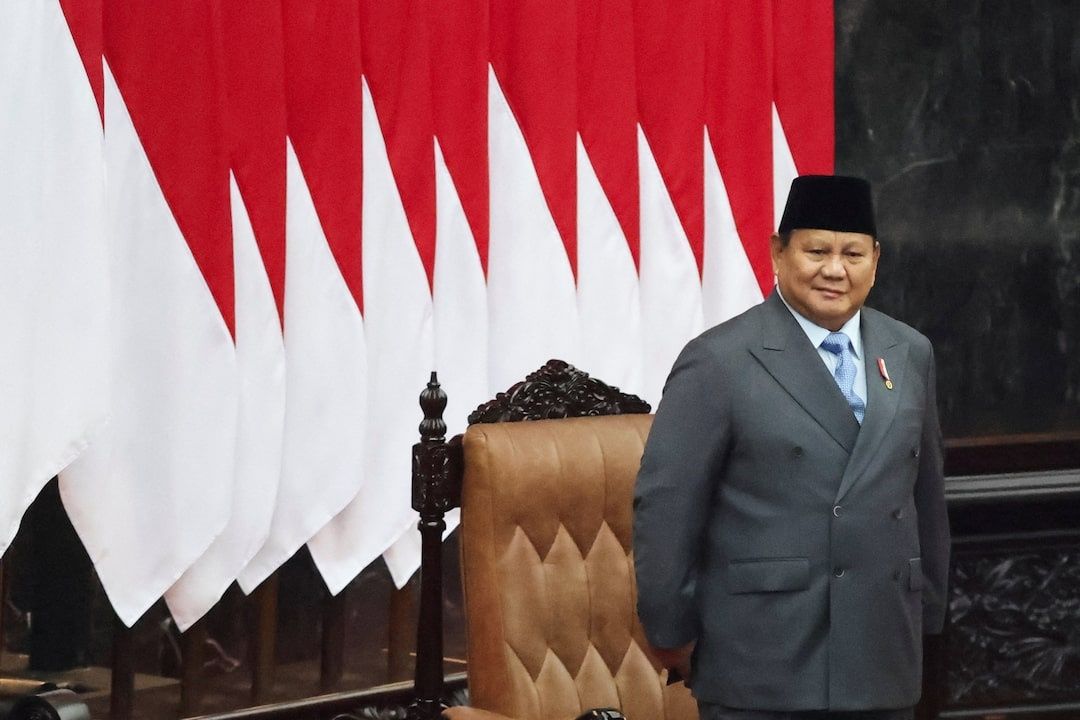
Indonesian President Prabowo Subianto faces a critical moment as he prepares to present his 2027 budget proposals on Friday, August 14, with his political standing significantly weakened by economic headwinds and implementation challenges that have undermined the ambitious platform that swept him to power in October 2024. The former special forces commander entered office with a commanding electoral mandate built on pledges to eliminate systemic corruption, accelerate gross domestic product growth from 5% to 8%, and introduce a sweeping food assistance programme for children—promises that resonated with voters seeking transformative change. Yet the intervening months have exposed the gap between campaign rhetoric and governing realities, as currency depreciation, tepid equity market performance, and emerging questions about fiscal responsibility have conspired to erode both public confidence and international investor enthusiasm.
The erosion of Prabowo's political capital has been swift and pronounced. Recent polling data indicates his approval rating has contracted by 30 percentage points across just eight months, settling at 51% according to surveys from last month. Multiple factors have contributed to this decline, with analysts pointing to deteriorating economic conditions as the primary driver, alongside widespread frustration with the effectiveness and conduct of law enforcement agencies. The compression of public support carries particular weight given that Prabowo entered office with an exceptionally strong electoral foundation, suggesting that initial goodwill has dissipated faster than typical for newly inaugurated leaders. This trajectory raises questions about whether the president retains sufficient political capital to navigate the contentious policy decisions that lie ahead, particularly regarding fiscal consolidation and commodity sector reforms.
The economic backdrop to Friday's budget presentation remains decidedly unfavourable. The Indonesian rupiah has depreciated meaningfully against major currencies, creating inflationary pressures and complicating the central bank's policy stance. Simultaneously, the Jakarta stock exchange has underperformed market expectations, reflecting investor wariness about economic fundamentals and policy direction. These developments have crystallised concerns among both domestic and international observers regarding the government's commitment to sound macroeconomic management, particularly as fiscal discipline has come under scrutiny. Economists note that Indonesia's fiscal deficit currently sits around 2.8% of gross domestic product, positioning the nation dangerously close to the constitutionally mandated 3% ceiling, which constrains the government's fiscal flexibility even as pressure mounts to finance ambitious development and social programmes.
One flagship initiative that has become emblematic of implementation challenges is the free meals programme for schoolchildren, a centrepiece of Prabowo's electoral platform. The scheme has encountered significant headwinds, including budgetary retrenchment and documented cases of mismanagement that have generated negative headlines and fuelled public scepticism about government capacity. Rather than delivering the transformative impact promised during campaigning, the programme's stumbling rollout has instead become a symbol of the gap between presidential ambition and administrative capability. This perception problem extends beyond the meals initiative itself, creating broader doubts about whether Prabowo's administration possesses the institutional competence and political will to execute its policy agenda effectively.
A particularly contentious element that will likely dominate investor attention during the budget presentation concerns Prabowo's May announcement regarding the centralisation of critical natural resource exports under a new state-owned enterprise, Danantara Sumberdaya Indonesia. That pronouncement sent shockwaves through international commodity markets, as investors feared the mechanism could morph into an effective export monopoly, potentially disrupting trade flows and imposing price controls that would damage competitiveness and fiscal returns. Since the initial announcement, various government officials have suggested the entity will function primarily as a supervisory body rather than assuming direct operational control, yet the ambiguity surrounding its actual mandate and authority continues to unsettle market participants. The precise architecture of this arrangement remains opaque, and commodity traders—particularly those engaged in the significant palm oil sector—will scrutinise any additional information Prabowo provides regarding Danantara Sumberdaya Indonesia's intended scope and powers.
International observers and regional analysts recognise that the 2027 budget presentation represents far more than routine fiscal planning; it constitutes what economists describe as a critical credibility checkpoint for global investors evaluating Indonesia's economic trajectory and policy consistency. The window for investor patience has narrowed appreciably after consecutive years of market-rattling policy announcements and reversals that have tested confidence in government decision-making processes. Irman Faiz, an economist at Bank Danamon, characterised the moment as pivotal, noting that tolerance for policy uncertainty has materially deteriorated among market participants who have experienced repeated surprises. The 2027 budget therefore offers Prabowo an opportunity to signal renewed commitment to fiscal responsibility, structural economic reform, and transparent policy-making—or risk further erosion of international confidence and capital inflows critical to financing development objectives.
Prabowo's presentation unfolds within a ceremonial framework that amplifies its symbolic importance. The morning address, delivered on Indonesia's Independence Day, will allow the president to articulate his broader policy vision and reconnect with nationalist sentiment, while the afternoon budget presentation affords technical opportunity to demonstrate fiscal discipline and thoughtful resource allocation. However, observers from the Center for Strategic and International Studies and other analytical institutions recognise that Prabowo confronts a profoundly difficult task. The confluence of economic headwinds, implementation challenges with signature programmes, and mounting investor scepticism over commodity sector policies creates a scenario where no single policy adjustment or rhetorical flourish can easily restore confidence. The president must simultaneously address concerns about macroeconomic management, clarify ambiguous policies that continue to unsettle markets, and articulate a credible pathway toward the ambitious growth objectives he outlined during campaigning—a balancing act of exceptional complexity.
For Malaysia and other Southeast Asian economies, the significance of Indonesia's budget announcement extends beyond Indonesia's borders. As the region's largest economy and a major trading partner, Indonesia's policy direction influences regional investment flows, currency stability, and commodity market dynamics that affect Malaysia's export-dependent sectors, particularly palm oil and energy. If Prabowo's budget fails to restore investor confidence and the rupiah depreciation accelerates, regional currency pressures could intensify, affecting Malaysian asset valuations and trade competitiveness. Conversely, credible fiscal consolidation and policy clarification could stabilise the region and restore investor appetite for emerging market assets across Southeast Asia, benefiting regional growth prospects and cross-border investment activity.
The substantive content of the 2027 budget itself—expenditure allocations, revenue projections, deficit targets, and financing mechanisms—will signal whether Prabowo genuinely intends to impose fiscal discipline or whether political pressures will drive continued expansionary spending despite macroeconomic constraints. Particular attention will focus on allocations toward infrastructure investment, social programmes, and debt servicing, as well as assumptions about economic growth, inflation, and commodity prices embedded in revenue forecasts. Market participants will scrutinise whether the government projects fiscal consolidation that moves toward lower deficit levels or whether deficit projections drift upward, potentially triggering ratings agency concern and capital flight. The gap between stated policy objectives and budgeted resources will reveal the authenticity of government commitment to economic stabilisation.
Beyond the discrete numbers, the 2027 budget presentation offers Prabowo an occasion to address fundamental questions about his administration's economic philosophy and competence. After months of unforced errors, policy reversals, and implementation setbacks, investor sentiment has shifted from initial optimism toward cautious scepticism. Restoring confidence requires not merely impressive rhetoric but tangible evidence of institutional capacity, policy coherence, and commitment to orthodox macroeconomic management. Whether the president can deliver a budget framework that simultaneously finances transformative social programmes, accommodates infrastructure investment, maintains fiscal sustainability, and clarifies murky commodity sector policies remains an open question—but one upon which Indonesia's medium-term economic prospects substantially depend.

