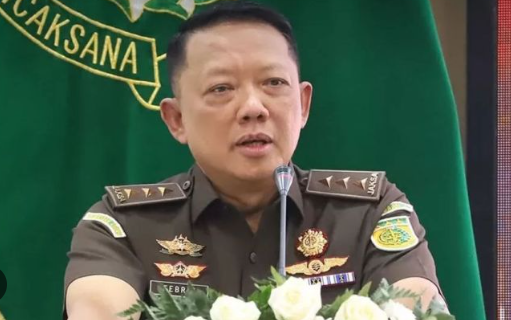
President Prabowo Subianto entered office with a robust anti-corruption platform, repeatedly urging government officials to reform themselves preemptively or face investigation. Yet the probe into Febrie Adriansyah, the nation's most senior anti-corruption prosecutor until his recent departure, has transformed campaign rhetoric into complex institutional reality. The case represents perhaps the stiffest challenge to Prabowo's graft-fighting credentials, forcing uncomfortable questions about institutional impartiality when the accused holds significant influence within the law-enforcement apparatus itself.
Febrie's position as deputy attorney general for special crimes placed him at the apex of Indonesia's anti-corruption machinery. During his tenure, he directed investigations into major corporations including Pertamina, Timah, and Garuda Indonesia, and scrutinised prominent government initiatives including Prabowo's signature free-meals programme and the ministry overseen by former Education Minister Nadiem Makarim. His investigative reach extended across the country's most politically sensitive files, making him simultaneously central to the state's corruption-fighting efforts and potentially vulnerable to institutional pressures that come with such influence.
Police operations last week seized approximately US$26 million in cash alongside gold bars from a property Febrie owns, subsequently naming him a suspect in cases involving alleged money laundering. The dramatic nature of the raids, which included armed soldiers deployed around his South Jakarta residence, underscored the gravity with which authorities approached the investigation. Yet questions immediately surfaced regarding procedural propriety: Febrie remained free despite the severity of allegations, while another suspect in connected cases was arrested on July 10. Police have neither publicly justified Febrie's continued liberty nor clarified the legal rationale for maintaining his freedom during the investigative phase.
The most contentious decision emerged when police transferred three related cases to the Attorney General's Office—the same institution where Febrie built his entire career. Officials justified the transfer as a coordination mechanism to strengthen inter-agency cooperation, but this explanation has generated substantial backlash among legal scholars and constitutional experts. Former Constitutional Court Chief Justice Mahfud MD publicly questioned whether Indonesia's criminal procedure code actually authorised such transfers from active police investigations. Legal experts warn the manoeuvre could expose the case to pretrial challenges that might ultimately undermine prosecution efforts.
Zaenur Rohman, an anti-corruption specialist at Gadjah Mada University, characterised the transfer as fundamentally problematic from a governance perspective. He argued it represented "a political settlement aimed at easing tensions" between competing law-enforcement agencies rather than a legally defensible investigative strategy. The arrangement creates an inherent conflict of interest: prosecutors investigating a former colleague and institutional peer introduces structural incentives against aggressive prosecution. Rohman contended that Indonesia's independent Corruption Eradication Commission, operating within the executive branch but deliberately separated from law-enforcement hierarchies, would provide more credible investigative independence.
Indonesian lawmakers responded to institutional concerns by establishing a working group to monitor the case's progression. Several legislators advocated for the Attorney General's Office to assemble a dedicated investigative team specifically isolated from normal prosecutorial chains of command, theoretically insulating the inquiry from collegial pressures. Coordinating Minister Yusril Ihza Mahendra defended the transfer on administrative grounds, claiming enhanced investigative efficiency. Yet Yusril simultaneously acknowledged public perception risks, invoking the colloquial Indonesian expression "oranges eating oranges"—essentially meaning one institution protecting its own—to demonstrate his awareness of credibility concerns.
Yusril's public remarks suggested Prabowo personally intervened in the transfer decision, meeting separately with both the national police chief and attorney general to provide "directions" on managing the case handover. This presidential involvement, intended to demonstrate leadership commitment to the investigation, paradoxically raised additional questions: whether Prabowo's intervention signalled genuine commitment to thoroughgoing accountability or reflected strategic management of institutional tensions. Such ambiguity undermines public confidence in investigative impartiality regardless of ultimate findings.
The case exposes deeper structural tensions within Indonesia's law-enforcement ecosystem. Police, the Attorney General's Office, and the Corruption Eradication Commission maintain overlapping jurisdictions over corruption investigations, generating competition for institutional visibility, resource allocation, and political influence. Successive Indonesian presidents have deliberately balanced these competing agencies, resisting concentration of investigative power in any single institution. Prabowo has maintained this equilibrium while introducing military dimensions absent under predecessors: a 2025 military law revision permits active-duty officers to serve in the Attorney General's Office without retirement, and contemporaneous reforms expanded the prosecutor's office authority to request military protection previously provided exclusively by police.
These institutional adjustments reflect broader shifts in investigative power dynamics. Jacqui Baker, a Southeast Asian politics specialist at Murdoch University, emphasises that control over corruption investigations represents far more than procedural jurisdiction—these powers constitute the "core of their political and economic power" within Indonesia's governance structure. Agencies fiercely contest such authority because corruption investigations determine institutional prestige, funding priorities, and political access. Prabowo's leadership philosophy emphasises balance rather than dominance, yet the Febrie investigation demonstrates how institutional equilibrium becomes precarious when investigating senior figures embedded within enforcement hierarchies.
Aditya Perdana, a political analyst at the University of Indonesia, observes that while individual events may not explicitly demonstrate institutional conflict, their sequential pattern tells a revealing story. Police raids deployed military units; prosecutors subsequently assumed jurisdiction; the Attorney General's Office simultaneously curtailed investigations into Prabowo's meals programme following discovery of police involvement. These developments suggest underlying institutional negotiations that may not reflect transparent legal procedure but rather behind-scenes accommodation between competing powers.
Febrie's departure as deputy attorney general occurred amid these investigations, though he maintains several defences. He acknowledged owning the raided property but denied ownership of seized assets, claiming the currency and precious metals discovered belonged to others. Immigration authorities have prohibited his departure from Indonesia for twenty days at police request, effectively confining him during the investigative phase despite his unarrested status. Public disclosures regarding his whereabouts have remained minimal, contrasting sharply with the highly publicised initial raids.
Prabowo's anti-corruption campaign has otherwise proceeded aggressively, generating high-profile investigations across state-owned enterprises and prominent officials. Authorities repeatedly showcase seized assets during televised press conferences, creating public perception of vigorous graft-fighting. Yet the Febrie investigation introduces credibility complications: institutional handling of this particular case will substantially influence how observers evaluate Prabowo's broader anti-corruption sincerity. If investigation proceeds transparently and reaches conclusions independently justified by evidence, public confidence strengthens. Conversely, perceived institutional protection of a prominent prosecutor would suggest corruption-fighting rhetoric masks selective enforcement against politically marginal targets.
The investigation ultimately reflects fundamental governance tensions facing any leader committed to combating institutional corruption. Prabowo lacks obvious methods for investigating powerful law-enforcement officials without depending on competing agencies with their own institutional interests. The Febrie case demonstrates how anti-corruption campaigns, regardless of presidential commitment, encounter structural obstacles when investigating entrenched power-holders. Whether Indonesia's overlapping law-enforcement agencies can conduct a credible investigation into one of their most influential members remains uncertain, with substantial implications for public perception of Prabowo's anti-corruption agenda across Southeast Asia.

