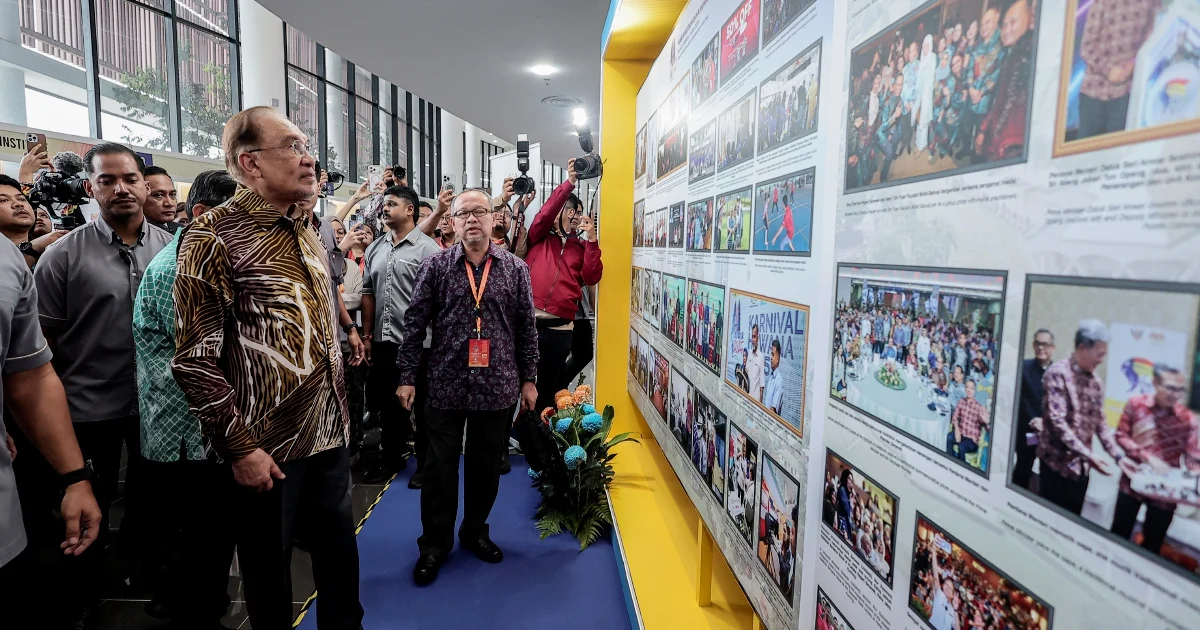
Prime Minister Datuk Seri Anwar Ibrahim has committed RM1 million in government funding to Tabung Kasih@Hawana 2026, signalling a renewed focus on supporting the livelihoods of Malaysian journalists and broader media sector development. The announcement, made in Permatang Pauh, underscores the government's recognition of journalism's critical role in maintaining public discourse and democratic institutions during an era of rapid technological change and evolving information landscapes.
The allocation to Tabung Kasih@Hawana 2026 represents a tangible investment in journalist welfare at a time when the media industry faces considerable pressures from digital disruption, declining advertising revenues, and shifting audience consumption patterns. This financial commitment acknowledges the practical challenges faced by journalists working across traditional and digital platforms, many of whom have experienced wage stagnation and reduced job security over the past decade. By channelling resources directly into a welfare fund, the government aims to provide crucial support mechanisms for media professionals navigating career uncertainties and personal financial difficulties.
Anwar's statement extends beyond immediate financial relief, positioning the RM1 million injection as part of a broader governmental strategy to modernise and strengthen Malaysia's media ecosystem. This holistic approach reflects international best practice in supporting journalism at a time when trusted news sources face existential threats from misinformation, artificial intelligence-generated content, and reader disengagement. The Hawana 2026 framework appears designed to create sustainable structures that can adapt to evolving industry needs rather than offering temporary palliatives.
The timing of this announcement carries particular significance for Malaysia's media landscape. The country has experienced considerable consolidation in newsroom staffing over recent years, with various publications streamlining operations or transitioning business models. For journalists, these structural changes have often translated into job losses, compressed editorial teams, and increased workloads among remaining staff. A dedicated welfare fund provides a safety net during industry transitions, potentially enabling greater focus on quality journalism rather than immediate financial survival.
For regional Southeast Asian context, Malaysia's commitment to journalist welfare aligns with broader regional conversations about press freedom, media sustainability, and government support for democratic institutions. While public funding mechanisms for journalism can sometimes raise questions about editorial independence, welfare funds that target individual journalists rather than publications themselves typically avoid such concerns. This structure allows support to reach practitioners regardless of their employing organisation or editorial stance.
The RM1 million allocation also signals the government's acknowledgment of journalism's public good value—a perspective not universally held in markets where media is increasingly viewed as purely commercial enterprise. By investing in journalist welfare, the administration tacitly recognises that vibrant, independent journalism requires systemic support beyond market forces alone. This philosophical stance has implications for how Malaysia positions itself within emerging discussions about balancing press freedom with industry sustainability.
Hawana 2026, presumably a reference to a media industry conference or framework scheduled for 2026, appears to represent a formal governance structure for media sector development. By tying the welfare fund specifically to this initiative, the government creates accountability mechanisms and establishes broader policy conversations around journalism's future. Industry stakeholders will likely view this as an opportunity to participate in structured discussions about career development, training, and profession-wide standards alongside discussions about immediate financial relief.
The welfare fund mechanics deserve scrutiny from both journalist associations and civil society observers. Questions remain regarding eligibility criteria, application processes, disbursement mechanisms, and governance oversight. Transparency in these operational aspects will be crucial for establishing public confidence that funds reach intended beneficiaries equitably. Malaysian journalist organisations will play a vital role in ensuring the fund serves its stated purpose effectively and without political conditionality.
International media development organisations have increasingly emphasised that journalist welfare, training, and professional development form essential components of media ecosystem strengthening. This Hawana 2026 initiative aligns with such international frameworks, potentially positioning Malaysia to access technical assistance, best practice sharing, and comparative learning opportunities with other nations implementing similar programmes. Regional cooperation through organisations like the Association of Southeast Asian Nations could facilitate knowledge exchange about effective welfare fund implementation.
For Malaysian newsrooms specifically, this commitment may influence hiring and retention decisions. Young journalists considering career commitment might view government welfare support as validation of the profession's societal importance. Established practitioners facing mid-career difficulties could benefit from accessible financial assistance during transition periods. Media organisations themselves gain from reduced employee stress and improved workplace stability, potentially translating to better quality journalism production.
The announcement also reflects shifting political attitudes toward the media in Malaysia. Rather than adversarial relationships characterising government-press interactions, this initiative suggests willingness to collaborate on industry challenges. While such cooperation must never compromise editorial independence or investigation of government wrongdoing, constructive engagement on structural welfare issues demonstrates maturity in recognising journalism's essential democratic function beyond partisan considerations.
Looking forward, the RM1 million allocation serves as baseline investment that may warrant expansion depending on demonstrated need and fund utilisation. Industry associations, journalist unions, and media employers will likely provide feedback on whether this initial commitment adequately addresses sector-wide welfare challenges. Future budget cycles may reveal whether this represents sustained commitment or introductory gesture, with implications for journalist confidence in government support mechanisms.
The Hawana 2026 framework now carries responsibility for translating this financial commitment into meaningful welfare improvements across Malaysia's diverse media landscape. Success will require genuine collaboration between government, industry players, journalist representatives, and civil society observers, creating inclusive structures that serve journalism's ultimate mission of informing and engaging the Malaysian public.

