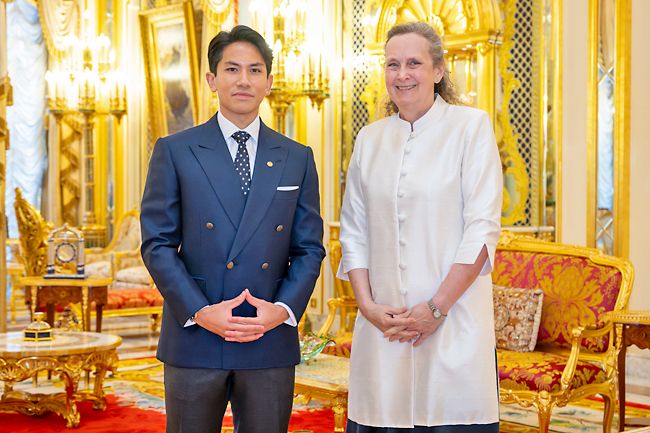
Prince Abdul Mateen, Brunei's Minister of Foreign Affairs, formally received outgoing United States Ambassador Caryn R McClelland for a farewell meeting on Saturday at Istana Nurul Izzah in Bandar Seri Begawan. The audience represented a ceremonial conclusion to McClelland's posting in the sultanate and highlighted the significance both nations place on their diplomatic relations during her tenure.
The Prince extended his formal appreciation to the departing envoy for her efforts in reinforcing the established partnership between Brunei Darussalam and the United States. His remarks underscored the strategic importance Brunei attributes to its long-standing relationship with Washington, a connection that spans decades of collaborative engagement across multiple sectors.
Throughout her appointment, McClelland oversaw a period of substantive advancement in the bilateral relationship. The two governments intensified their joint efforts across several critical domains, reflecting a comprehensive approach to deepening ties beyond traditional diplomacy. This multifaceted engagement has positioned the relationship as one of mutual importance for both parties.
Defence cooperation formed a significant pillar of the enhanced bilateral framework. The United States has maintained strategic security interests in Southeast Asia, and Brunei's location along key sea lanes in the Strait of Malacca makes the sultanate a valued partner in regional stability efforts. Enhanced military-to-military dialogue and defence exchanges characterised McClelland's tenure, contributing to shared security objectives in one of the world's most vital maritime regions.
Educational initiatives constituted another area of tangible progress. American scholarship programmes, student exchanges, and institutional partnerships continued to expand, fostering people-to-people connections that transcend official channels. These educational investments build long-term understanding and create networks of Brunei citizens with direct experience of American society and values, strengthening cultural and intellectual bridges between the nations.
Economic engagement also accelerated during McClelland's posting. Trade and investment frameworks evolved as both countries sought to expand commercial opportunities. American businesses have shown continued interest in Brunei's market and strategic location within ASEAN, while Bruneian enterprises have increasingly engaged with American counterparts. The bilateral economic relationship reflects broader regional trends where Southeast Asian nations seek diversified trade partnerships.
People-to-people exchanges broadened considerably under McClelland's stewardship. Tourism, business travel, and cultural programmes facilitated direct contact between citizens of both nations. These grassroots connections prove essential for sustaining public support for bilateral relationships and creating stakeholder communities invested in the partnership's success.
McClelland's diplomatic posting comes at a significant moment for regional geopolitics. The Southeast Asian region has become increasingly central to global strategic considerations, with powers seeking influence and partnerships. Brunei, as a member of ASEAN and chair of the ASEAN Regional Forum, occupies a position of diplomatic weight disproportionate to its small population. American ambassadors to the sultanate therefore carry responsibility for representing broader US interests in the region while strengthening bilateral ties.
The timing of her departure reflects standard diplomatic rotation cycles, though ambassadorial postings in Southeast Asia often carry extended tenures due to the complexity of regional relationships. McClelland's presence in Brunei coincided with shifting geopolitical dynamics, including evolving trade relationships and security considerations in the Indo-Pacific region. Her work helped navigate these changing circumstances while maintaining continuity in bilateral relations.
Brunei's emphasis on receiving outgoing ambassadors at the ministerial level demonstrates the respect accorded to diplomatic representatives and the value placed on bilateral relationships. Prince Abdul Mateen, as Foreign Affairs Minister, functions as the principal architect of Brunei's external relations. His personal engagement in this farewell audience signals that the United States relationship ranks among Brunei's diplomatic priorities.
McClelland's credentials had been formally presented to Sultan Hassanal Bolkiah, the Sultan and Yang Di-Pertuan of Brunei Darussalam, on May 24, 2022, marking the official commencement of her ambassadorial tenure. Her appointment came during a period when both nations were reassessing regional strategies and priorities, making her tenure particularly consequential for establishing frameworks that would guide bilateral engagement.
The conclusion of McClelland's posting opens opportunities for renewed engagement under her successor. Ambassadorial transitions often provide moments for recalibrating bilateral priorities and identifying emerging areas for cooperation. For Malaysia and other ASEAN nations watching closely, the sustained depth of US-Brunei relations underscores America's ongoing commitment to maintaining active partnerships throughout the region, even with smaller member states.
Looking forward, the relationship appears positioned for continued strengthening. The foundations established during McClelland's tenure in defence, education, trade, and cultural exchange provide solid ground for future development. Both nations have demonstrated commitment to advancing their partnership systematically, suggesting that bilateral relations will remain robust regardless of individual ambassadorial appointments.

