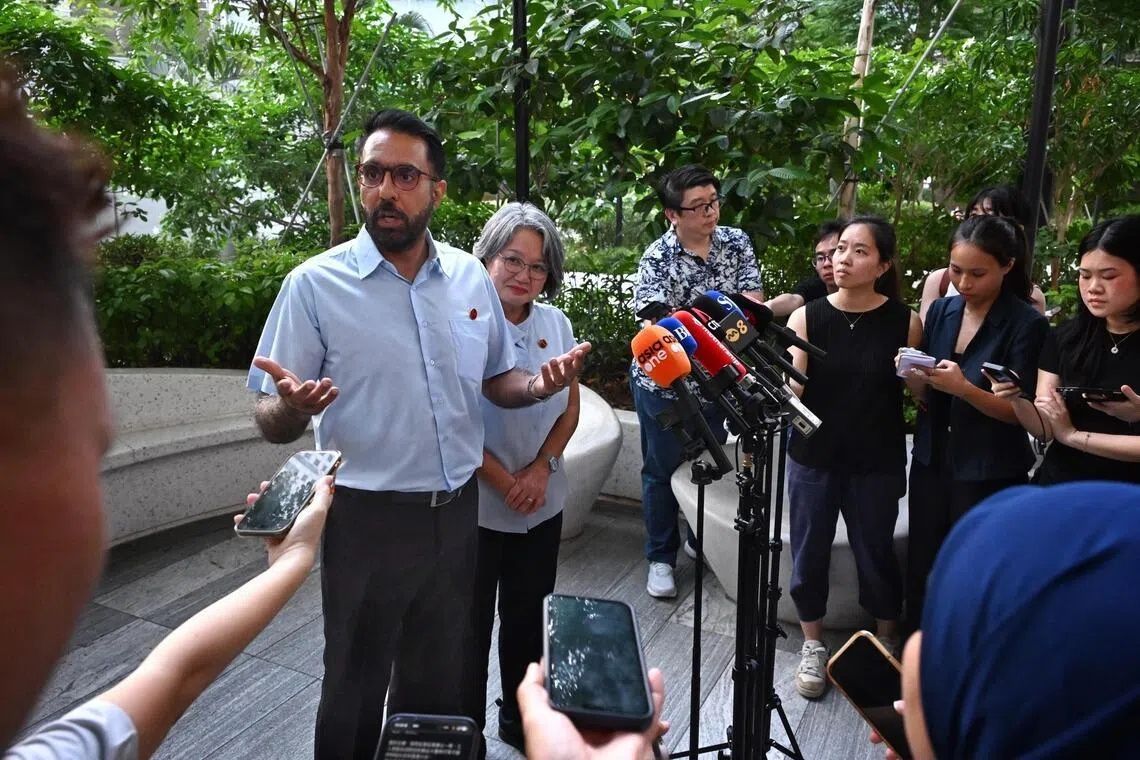
Pritam Singh has consolidated his grip on Singapore's Workers' Party after internal elections held on June 28 saw him returned unopposed as chief, with party members decisively rejecting an attempt by dissident cadres to force his removal from office. The outcome represents a turning point for Singapore's largest opposition movement, which has weathered multiple years of turbulence stemming from the 2021 parliamentary falsehoods of former Sengkang GRC MP Raeesah Khan and their subsequent handling by party leadership.
The electoral process itself reflected deep divisions within party ranks. Earlier on the same day, a special cadres conference convened to consider three separate motions: whether Singh should resign, whether he should face accountability for his actions preceding his court conviction, and whether a secret ballot should be held on his continued leadership if he refused to step down. The fact that the gathering proceeded at all underscored mounting frustration among a faction of party members, yet the result ultimately vindicated Singh's stewardship of the organisation.
Speaking to journalists after his re-election, Singh struck a reconciliatory tone while affirming the party's foundational principles. He characterised the party's approach as centred on rational decision-making and responsible representation of Singaporean interests, emphasising that unity across party structures remained essential for any credible political organisation. Though Singh declined to disclose the precise voting figures, he indicated that the outcome demonstrated substantial cohesion within the party's inner circles, which comprise just over one hundred members.
Alljunied GRC MP Gerald Giam, who presided over the cadres' meeting, confirmed that Singh had secured significantly more than the two-thirds supermajority required for vindication. Party sources subsequently revealed that Singh received approximately eighty percent of the vote, a commanding endorsement that transcended simple victory and amounted to decisive validation. The gathering itself proceeded with decorum, Giam noted, featuring a single round of voting accompanied by robust but civilised discussion. Members raised grievances formally, Singh delivered a substantive statement addressing their concerns, and the process concluded with proper accountability procedures and responsive answers to questions posed.
The challenge to Singh's leadership crystallised when twenty-five disgruntled cadres submitted a formal letter in December 2025, precipitating the extraordinary meeting. Their grievances extended beyond abstract ideological differences, drawing substantially from Singh's ongoing legal entanglement. Singh's High Court conviction for misleading Parliament regarding his management of Khan's deception had reverberated through party structures, creating legitimate questions about his continued suitability for the top position. The fact that such a substantial challenge failed to dislodge him signals party members' assessment that his leadership remains credible despite these judicial setbacks.
Before the voting commenced, significant uncertainty had swirled regarding whether former party chief Low Thia Khiang would publicly endorse Singh's continuation in office. Dissident cadres had reportedly searched unsuccessfully for a viable challenger to contest the leadership position, creating a vacuum of opposition that might have been filled had Low withdrawn his support. However, in a decisive intervention, Low appeared before journalists on the morning of June 28 and unambiguously reaffirmed his backing for Singh, effectively foreclosing any possibility of a serious internal contest and lending the elder statesman's considerable prestige to Singh's retention.
Following the cadres' meeting, the party proceeded with its regular biennial internal elections, during which party chair Sylvia Lim was also returned to her position, which she has occupied continuously since 2003. The broader central executive committee underwent electoral renewal, with twelve members selected to the party's top decision-making body. Most positions went to returning members, though the slate notably included four individuals who do not currently hold parliamentary seats: Low, former Aljunied GRC MP Faisal Manap, longtime committee stalwart Tan Kong Soon, and Harpreet Singh, a senior counsel who contested as part of the Workers' Party's Punggol GRC campaign during May 2025's general election. The inclusion of Harpreet Singh as a sole new addition suggests the party's intention to refresh its leadership pipeline and broaden perspectives within senior councils.
The party constitution permits the co-optation of seven additional committee members, a process typically concluded approximately one month following the formal election, suggesting that further refinement of the executive body remains pending. This staged approach to leadership renewal reflects established party practice and allows for considered reflection on optimal committee composition. Following his election to the executive committee, Harpreet Singh posted reflections on LinkedIn characterising cadres' conduct as anything but mechanistic obedience to leadership. Rather, he framed their decision-making as grounded in careful assessment of Singh's demonstrated record, including his capacity to maintain composure under sustained political pressure and his track record of advancing significant parliamentary achievements.
Singh's legal troubles have substantially shaped his recent trajectory. The High Court upheld his conviction in December 2025 for misrepresenting facts to Parliament's Committee of Privileges regarding his handling of Khan's parliamentary deceptions. Parliament's formal disciplinary apparatus subsequently identified him as unsuitable for the Leader of Opposition designation in January 2026, following which Prime Minister Lawrence Wong removed him from that position and invited the Workers' Party to nominate an alternative MP. The party's refusal to recommend a successor—insisting instead that the position properly belongs to the largest opposition party's leader—represented a principled stand with potential implications for parliamentary procedure and opposition representation structures.
Two months before the June elections, Singh had received a formal reprimand from the party's central executive committee following a disciplinary panel's investigation. The panel, comprising Sengkang MPs Jamus Lim and He Ting Ru alongside former Hougang MP Png Eng Huat, determined that Singh had contravened two constitutional articles through his conduct surrounding Khan's matter. These internal disciplinary steps preceded the broader cadre vote, establishing a process whereby party members could weigh past accountability measures alongside his ongoing legal defence.
Addressing the dissident faction directly after voting concluded, Singh suggested that their grievances had been substantively aired and addressed through the democratic process. He framed their petition not as evidence of malfunction but rather as exemplifying the party's commitment to internal deliberation and the articulation of diverse viewpoints. His characterisation implicitly acknowledged that intraparty contestation, properly conducted, reflects organisational health rather than pathology. The cadres' acceptance of the voting outcome, he suggested, demonstrated their respect for democratic procedures.
For Malaysian observers and Southeast Asian analysts tracking opposition politics across the region, Singh's electoral vindication carries broader significance. The Workers' Party's capacity to retain leadership despite serious legal challenges and internal factionalism suggests that regional opposition movements can survive and even recover from major crises through institutional resilience and principled internal processes. Singh's re-election does not erase his conviction or the legitimate policy questions it raises, but it does signal that voters and party members can distinguish between judicial judgments and broader assessments of political leadership. As Singapore's parliamentary opposition continues to evolve, the workers' party's internal dynamics—and Singh's restored mandate—will shape the trajectory of democratic contestation in the island republic.

