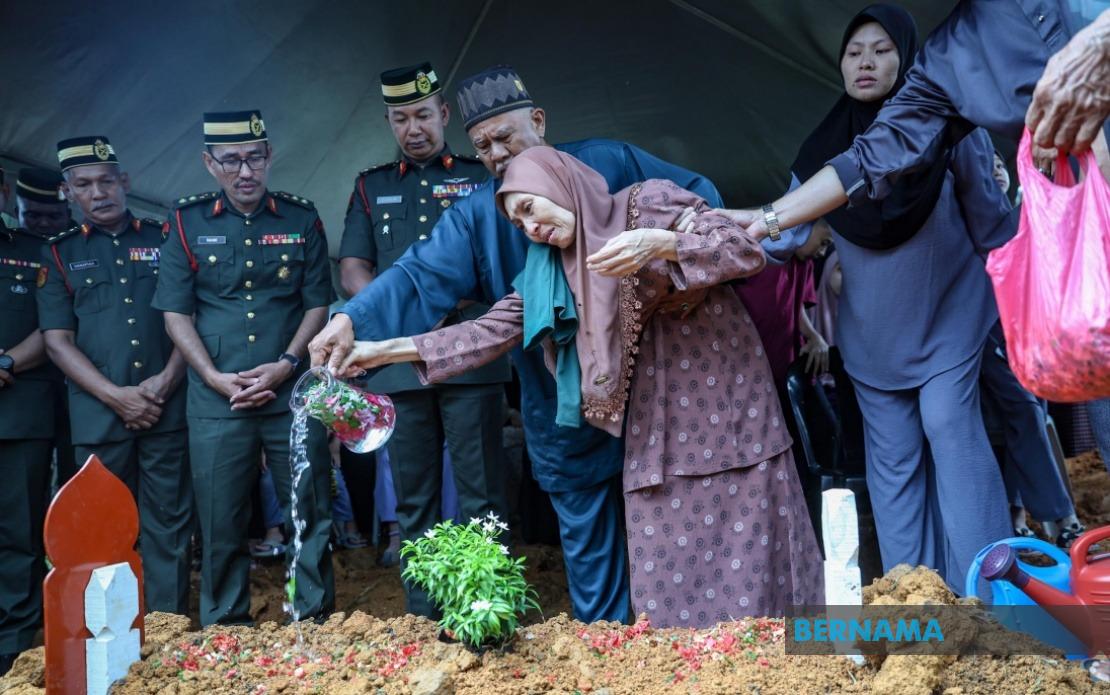
A somber farewell unfolded at Taman Sri Lambak Muslim Cemetery in Kluang on June 17 as the Malaysian Army laid to rest Private Siti Khadijah Sungip, 24, who lost her life during a training exercise at Hobart Camp in Gurun, Kedah. The burial, conducted at 1.15 pm, brought together grieving family members, military colleagues, and friends to honour the young soldier who became the latest casualty in what appears to be an increasingly troubling pattern of training accidents within Malaysia's armed forces.
The incident that claimed Private Siti Khadijah's life unfolded during routine grenade throwing instruction at the camp's training range. At 10.57 am the previous day, an explosion occurred that proved fatal for two personnel undergoing the exercise. Beyond the immediate tragedy, the accident raises serious questions about safety protocols and risk management in military training environments across Southeast Asia, where such incidents have periodically sparked public concern and military reviews.
Private Siti Khadijah served with the First Squadron of the Royal Engineer Regiment (RAJD) based at Sangro Camp in Taiping, Perak. Her death was accompanied by that of Corporal Norazmi Abu Bakar from the Sixth Battalion of the Royal Malay Regiment (RAMD). Both personnel sustained injuries classified as serious enough to prove fatal during emergency transport to Sultan Abdul Halim Hospital in Sungai Petani. The pattern of dual casualties in a single training mishap underscores the explosive nature of the accident and suggests the incident occurred without immediate protective measures or supervisory intervention that might have prevented escalation.
The military extended formal honours to the deceased, with the Brigadier General Datuk Zulhelmy Masdar, Commander of the 7th Brigade at Mahkota Camp, overseeing the ceremonial presentation of the Jalur Gemilang to Private Siti Khadijah's father, Sungip Jais, 65. This symbolic gesture, deeply meaningful within military tradition, acknowledges the sacrifice made by service members in the line of duty. The presence of the First Field Troop Leader, Lieutenant Muhammad Lutfil Hadi Osman, and four members of the Royal Engineer Regiment throughout the funeral procedures demonstrated institutional solidarity with the bereaved family.
Medial procedures preceded the burial by several hours. The deceased's body underwent post-mortem examination at Sultanah Bahiyah Hospital in Alor Setar, with the process concluding around 2.30 am. Following completion of these formalities, the remains were transported to the family residence in Taman Sri Lambak, arriving at 12.10 pm before being transferred to Darul Iman Mosque for final religious rites. The funeral prayer, conducted by Major Mohd Azlan Shah Abdul Razak from the TDM Field Engineering Institute, provided spiritual closure within Islamic tradition.
The circumstances surrounding the explosion warrant deeper examination. Training with explosive ordnance, particularly hand grenades, represents one of the most inherently dangerous military activities. The fact that an incident occurred during what should be routine, well-supervised instruction suggests either lapses in established safety procedures or inadequate instructor oversight. In Malaysia's military context, such incidents periodically surface, prompting internal investigations and occasional policy adjustments, though systemic improvements remain inconsistent across different training facilities.
For Malaysian families with loved ones serving in the armed forces, incidents like the Hobart Camp explosion raise legitimate concerns about whether adequate safeguards protect personnel during training. Unlike combat operations, where soldiers accept elevated risks as inherent to their mission, training accidents carry particular poignancy because they occur in controlled environments where risk theoretically should be minimized. The deaths of Private Siti Khadijah and Corporal Norazmi represent preventable losses that might have been avoided through rigorous adherence to established protocols.
The regional implications extend beyond Malaysia's borders. Southeast Asian militaries collectively face challenges in maintaining training standards while managing budgetary constraints and aging equipment. Incidents at facilities like Hobart Camp become cautionary reminders for neighbouring countries' armed forces to evaluate their own training protocols. Information sharing regarding best practices in explosives handling could benefit the entire region's military establishments, potentially preventing similar tragedies in Indonesia, Thailand, Singapore, and other Southeast Asian nations.
Private Siti Khadijah's death also reflects the evolving role of women in Malaysia's military. As female recruitment and integration into combat and technical roles expands, instances where female soldiers suffer fatal casualties during training take on additional significance within broader conversations about gender equality in service. Her service with the Royal Engineer Regiment, a technically demanding branch requiring specialised training, underscores the capabilities women bring to Malaysia's defence establishment.
The Malaysian Army's official statement confirming the circumstances surrounding the explosion—that both victims suffered injuries from an explosion while undergoing training at the target range—provides minimal detail regarding root cause analysis or preliminary findings. Military investigations into such incidents typically examine equipment condition, training protocols, instructor qualifications, and adherence to standard operating procedures. Whether findings from this investigation will be made public and whether they will prompt facility-wide safety reviews remains uncertain, though transparency would serve the military's institutional credibility.
Moving forward, the deaths of Private Siti Khadijah and Corporal Norazmi should catalyse institutional reflection within the Malaysian Army regarding training safety. Beyond memorial services and ceremonial honours, genuine commitment to preventing future tragedies requires honest assessment of whether current protocols adequately protect personnel. For the families grieving these losses, the question extends beyond acknowledgement of sacrifice to whether the military environment in which their loved ones served maintained sufficient safeguards to justify their confidence in institutional competence.