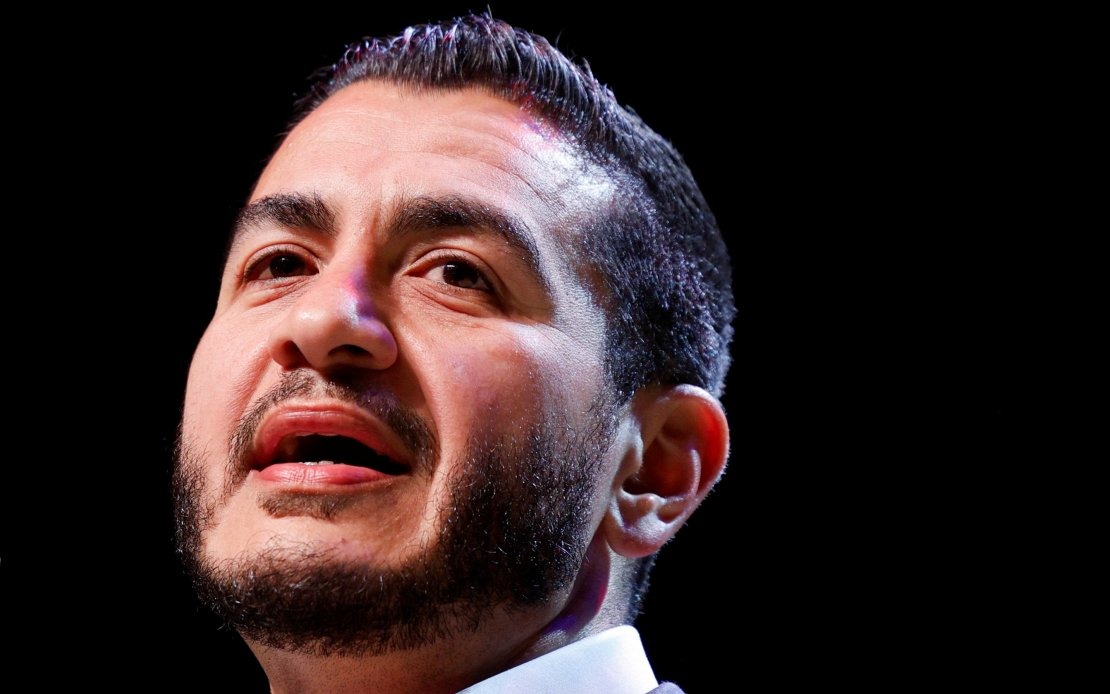
Abdul El-Sayed maintained a narrow advantage in Michigan's Democratic Senate primary as voting concluded Wednesday, with nearly nine-tenths of ballots counted, while four other states simultaneously held their own contests to nominate candidates for the November midterm elections. Voters in Kansas, Michigan, Missouri, Virginia and Washington determined their party nominees for pivotal races that will shape the political landscape heading into the general election campaign. The Associated Press had not yet officially called the Michigan Democratic primary, though El-Sayed's lead over US Rep. Haley Stevens appeared resilient as final tallies accumulated.
The victor in Michigan's Democratic primary will ultimately confront Republican Mike Rogers, who secured his party's nomination without meaningful opposition. Rogers steps into the general election as the presumed Republican standard-bearer in a contest to succeed retiring Democratic Sen. Gary Peters, who declined to seek another term. The matchup carries significance for both parties as they calibrate their strategies in a state that frequently determines national political trajectories.
El-Sayed's campaign drew momentum from the progressive wing of the Democratic Party, receiving endorsements and active support from Sen. Bernie Sanders and U.S. Representatives Alexandria Ocasio-Cortez and Rashida Tlaib. Stevens, by contrast, cultivated backing from establishment figures within the party apparatus, most notably the retiring Peters himself and other veteran Democrats committed to traditional party orthodoxy. This fault line between progressive and centrist Democrats reflected broader divisions animating the 2024 election cycle across American politics.
The question of United States policy toward Israel and the military campaign in Gaza emerged as a decisive factor influencing voter sentiment in the Michigan primary. This issue resonated particularly with the state's substantial Arab American and Muslim American communities, who constitute a meaningful political force in statewide contests. The divergence between the candidates' positions and their respective coalition supporters underscored how international conflicts have increasingly penetrated domestic American electoral politics, a dynamic with implications for how both parties approach their base constituencies.
Michigan's congressional races produced relatively predictable outcomes in Republican-held districts. In the state's 1st Congressional District, incumbent Republican Rep. Jack Bergman secured renomination with commanding support, capturing 74.3 percent of the primary vote against two challengers as most precincts reported results. Similarly, Republican Rep. Bill Huizenga dominated his renomination contest in the 4th District, defeating challenger Philip Tanis with an overwhelming 85 percent to 15 percent margin. Huizenga will advance to face Democratic state Sen. Sean McCann, who prevailed in his party's primary by defeating Diop Harris II with 67.2 percent support.
Kansas presented a different political dynamic, with Republican Sen. Roger Marshall easily dispatching his primary challenger Pond Naramore with nearly four-fifths of the vote recorded across virtually all precincts. Marshall will encounter Democrat Adam Hamilton, who consolidated support across a competitive Democratic primary field to claim the nomination. The Kansas gubernatorial contest featured Democrat Cindy Holscher emerging victorious from a three-candidate Democratic primary, positioning her to challenge Republican Ty Masterson, who prevailed in a crowded Republican field bolstered by an endorsement from President Donald Trump. The Republican nominee will compete to succeed Democratic Gov. Laura Kelly, whose eligibility ended due to constitutionally mandated term limits preventing third-term candidacies.
Missouri's primaries occurred under circumstances shaped by Republican control of state legislative redistricting, which incorporated a Trump-endorsed map designed to enhance Republican prospects for maintaining House majority control. In the state's 1st Congressional District, Democratic Rep. Wesley Bell successfully defended his nomination against four opponents, including former Rep. Cori Bush, who had previously held the seat before losing to Bell in 2022. Bell will advance to the general election to face Republican Paul Berry III, who overcame Andrew Jones in the Republican primary contest. This race underscored internal Democratic factional disputes even as the party confronts Republican electoral challenges statewide.
Virginia's Republican primary for Senate produced Bert Mizusawa as the party's nominee to challenge incumbent Democratic Sen. Mark Warner, who secured renomination without opposition. The state's congressional contests revealed mixed competitive dynamics. In the 1st Congressional District, Democrat Shannon Taylor captured the nomination with 53.1 percent support, positioning her to challenge Republican Rep. Rob Wittman, who advanced unopposed and seeks an unprecedented 10th consecutive full term in the House. Virginia's 2nd District sent former Democratic Rep. Elaine Luria back into the general election arena after she won her party's primary with 80.4 percent of votes, setting up a rematch with Republican Rep. Jen Kiggans, who similarly advanced unopposed.
Virginia's 7th District illustrated the continuation of national security themes in electoral politics as Republican Doug Ollivant secured the Republican nomination with 56.6 percent of the primary vote, qualifying him to challenge first-term Democratic Rep. Eugene Vindman, an Army officer who rose to prominence during the Trump impeachment proceedings. Vindman advanced unopposed through his party's nomination process, ensuring a high-profile contest between military-connected candidates representing sharply contrasting political philosophies.
Washington conducted its characteristic all-party primary system, allowing candidates from all parties to compete on a single ballot with the top two finishers advancing to November's general election regardless of party affiliation. In the 1st Congressional District, Democratic Rep. Suzan DelBene and Republican Mary Silva both advanced to the general election. Democratic Rep. Marie Gluesenkamp Perez qualified for the November ballot despite facing Republican John Braun, who benefited from Trump's endorsement in the primary competition. Washington's 6th District sent Democratic Rep. Emily Randall through to the general election, where she will encounter Republican Teresa Fox.
These concurrent primaries across five geographically and demographically diverse states provide early indicators of the political terrain Democrats and Republicans will navigate through the November general election cycle. The prominence of foreign policy debates, particularly regarding Middle Eastern conflicts, suggests that international issues will command sustained voter attention throughout the campaign season. Regional variations in primary outcomes—from competitive Democratic contests in Michigan to dominant Republican performances in Kansas and Virginia—hint at the complex patchwork of electoral battlegrounds that will determine control of Congress and shape the trajectory of American governance.

