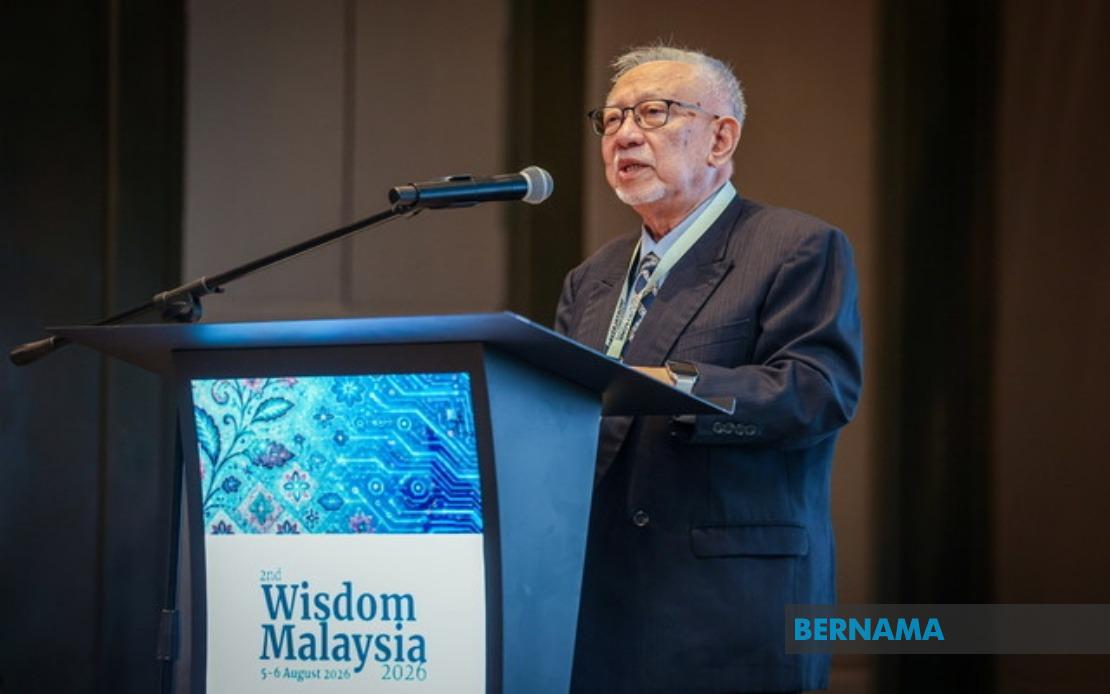
Datuk Syed Ahmad Idid Syed Abdullah, a former High Court Judge of Malaya and Borneo, has issued a stark warning about the dangers of suppressing those willing to expose wrongdoing within government and public institutions. Speaking at the 2nd Wisdom Malaysia Conference 2026 in Kuala Lumpur, he argued that the protection of whistleblowers represents a cornerstone of any effective anti-corruption framework, yet remains frequently undermined by institutional resistance and intimidation tactics.
The absence of genuine safeguards for those who come forward with evidence of abuse of power creates what he termed a "climate of fear" among honest and principled officials. Rather than encouraging integrity, systems that punish or marginalise whistleblowers actively discourage the very people most likely to detect and prevent financial malfeasance from stepping forward. This paradox lies at the heart of why many corruption schemes go undetected for years, festering within organisations until they balloon into major scandals affecting entire economies.
Syed Ahmad Idid emphasised that whistleblowing should be recognised and respected as an act rooted in justice, not as a form of slander or personal grievance. The distinction is crucial in the Malaysian context, where whistleblowers have historically faced considerable professional and social consequences for speaking out. When investigators and prosecutors conflate genuine reports of corruption with malicious accusations, the legitimate function of whistleblowing becomes corrupted itself, turning potential allies in the fight against graft into targets for retaliation.
The practical consequences of discouraging whistleblowing extend beyond mere inefficiency in detecting crime. According to Syed Ahmad Idid, suppressing reports of corruption essentially guarantees that dishonest behaviour will proliferate unchecked within organisations. Without honest voices willing to challenge wrongdoing, institutions become increasingly captured by those engaged in illicit activities. This represents not just a failure of governance but an active encouragement of further malfeasance, as corrupt actors gain confidence from the absence of internal accountability mechanisms.
Beyond the moral imperative to protect whistleblowers, Syed Ahmad Idid highlighted the staggering financial opportunity costs of tolerating widespread corruption. Every ringgit lost to graft, every leakage in public spending, every misappropriated fund represents resources that could have been deployed for genuine public benefit. He drew attention to Malaysia's chronic infrastructure and education deficits, suggesting that the financial impact of recovered corruption proceeds could fundamentally transform public service delivery across the nation.
His calculations paint a compelling picture of what prevention and recovery could achieve. The funds recovered from existing and future corruption cases could feasibly finance the construction of at least two general hospitals in every Malaysian state, addressing critical gaps in healthcare accessibility and quality in less-developed regions. Simultaneously, similar resources could support the establishment of 20 to 50 high-quality schools nationwide, beginning to close the gap between Malaysia's educational aspirations and current realities in many underserved communities.
Beyond brick-and-mortar infrastructure, Syed Ahmad Idid stressed that properly funded education systems could elevate Malaysia's human capital development to international standards. With adequate facilities, comprehensive equipment, and better-trained teaching professionals, Malaysia's education system could begin competing on the global stage rather than merely aspiring to do so. The ripple effects would extend to national security, as better-trained personnel could fill critical roles in defence and law enforcement, and to national sporting competitiveness, where proper facilities and coaching could nurture elite athletic talent.
A crucial aspect of Syed Ahmad Idid's message was his call for society to resist interpretations of corrupt practices that soften or justify wrongdoing. Whether through cultural relativism, political pragmatism, or expedient legal reasoning, the rationalisation of corruption in any form undermines the foundations of institutional integrity. Malaysia's progress in combating graft depends not merely on technical mechanisms or enforcement capacity, but on a societal commitment to holding principles of justice and honesty as non-negotiable values.
The conference itself, organised by Kerjaya One PLT, served as a forum bringing together current and former industry leaders to exchange perspectives on leadership, ethics, and institutional reform. Such platforms are increasingly important as Malaysia navigates the complexities of modernisation and economic development. The presence of voices like Syed Ahmad Idid's—combining judicial experience, moral clarity, and practical understanding of institutional dynamics—provides essential grounding for discussions about how systemic change actually occurs.
For Malaysia and other Southeast Asian nations grappling with corruption challenges, Syed Ahmad Idid's argument offers a useful reframing of the conversation. Rather than treating whistleblowing protection as a concession to activists or foreign pressure, it should be understood as enlightened institutional self-interest. Nations that successfully combat corruption do so not by silencing internal critics but by creating systems where honest officials feel empowered and protected. The countries that prosper will be those that harness the integrity of their people rather than those that suppress it through fear and intimidation.

