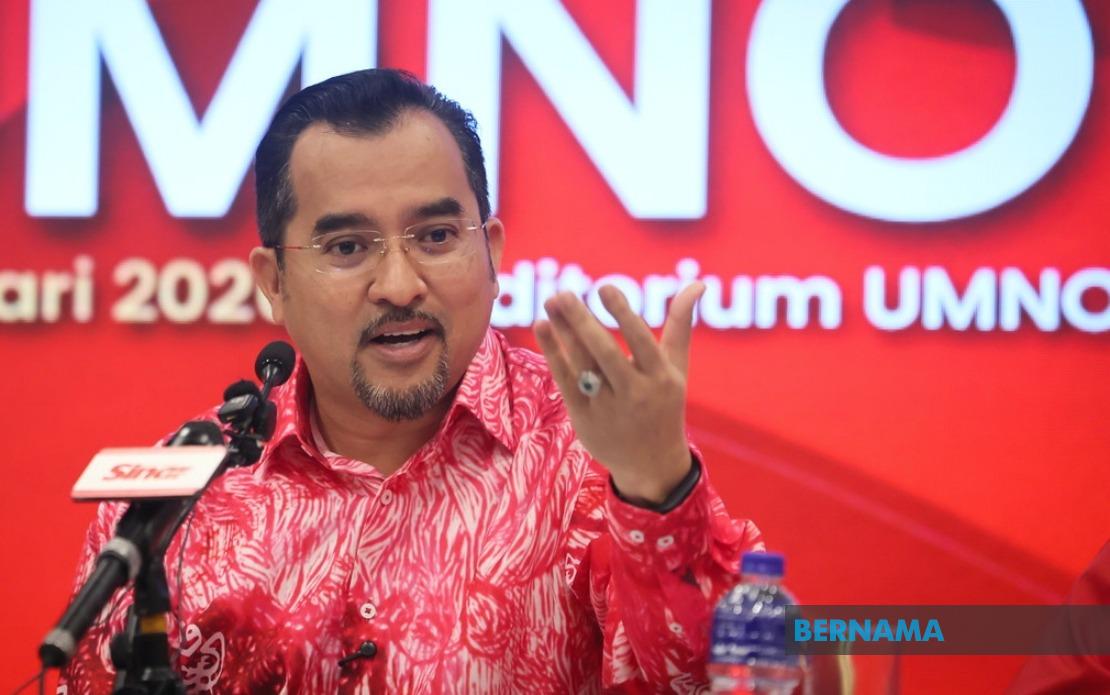
UMNO secretary-general Datuk Dr Asyraf Wajdi Dusuki has attributed the sudden resignation of Supreme Council member Datuk Dr Mohd Puad Zarkashi to frustration over party leadership's rejection of his son as a candidate for the Rengit state assembly seat, a decision that has exposed brewing tensions within Malaysia's longest-ruling political party amid the volatile Johor state election campaign.
Ashraf Wajdi's disclosure, made through a detailed Facebook statement, characterizes Mohd Puad's departure as the culmination of escalating pressure on party leadership to accommodate family succession within the party hierarchy. The UMNO secretary-general revealed that Mohd Puad had submitted lengthy written correspondence threatening both to abandon the party and wage a public campaign against UMNO should the party refuse to nominate his son for the Rengit seat, a state legislative position in Johor's southern region.
The exchange highlights a fundamental governance question facing UMNO as it navigates its role in Malaysia's political realignment. Asyraf Wajdi emphasized that while Mohd Puad's son possesses youth and developmental potential, the party must weigh numerous variables—including political viability, grassroots support, and strategic positioning—when finalizing candidate slates for electoral contests. This measured response suggests UMNO central leadership sought to avoid accusations of cronyism or dynastic favoritism that could undermine its broader political credibility at a critical juncture.
Moreover, this is not Mohd Puad's first documented instance of leveraging internal pressure to secure party concessions. Asyraf Wajdi disclosed that during the administration of then-UMNO president Datuk Seri Najib Tun Razak, Mohd Puad issued similar ultimatums, warning he would exit the party unless renominated for his parliamentary seat representing Batu Pahat. The pattern suggests a recurring pattern of conditional party membership predicated on satisfying personal advancement objectives rather than collective organizational interests.
In his rebuttal, Asyraf Wajdi rejected Mohd Puad's parallel allegation that the Johor royal palace exercises decisive control over Johor UMNO's decision-making architecture and orchestrated the dissolution of the State Legislative Assembly announced on June 1. Characterizing this claim as unfounded slander, Asyraf Wajdi asserted that UMNO's institutional independence remains intact and that candidate selection reflects deliberative party processes rather than external interference. This defensive posture underscores sensitivity within UMNO leadership regarding perceptions of palace influence, a historically contentious issue in Malaysian politics where hereditary monarchies maintain considerable ceremonial and constitutional authority.
Asyraf Wajdi's statement fundamentally challenged the notion that UMNO functions as an instrument for perpetuating family dynasties or advancing kinship networks into positions of political authority. He articulated the party's foundational principle that leadership opportunities represent earned distinctions reflecting organizational service, demonstrated capability, and commitment to UMNO's ideological mission rather than inheritance rights or bloodline entitlements. This rhetorical stance carries particular weight in Southeast Asia, where dynastic political structures remain prevalent across the region, making UMNO's declared commitment to meritocratic principles noteworthy.
The timing of this internal rupture proves consequential for UMNO's electoral prospects in the forthcoming Johor state contest. With the Election Commission designating June 27 as nomination day and scheduling the general ballot for July 11, UMNO must present unified messaging regarding its policy platform and candidate credentials to voters evaluating competing parties' visions for state governance. Public disputes over candidacy selection and allegations of leadership favoritism risk fragmenting party discipline and undermining organizational coherence when consolidated campaign messaging is operationally essential.
Mohd Puad's announced departure via Facebook declaration—framed as an autonomous decision enabling greater expressive liberty—took effect immediately upon announcement, removing him from UMNO's formal institutional structures. His characterization of the resignation as liberating suggests he intends to pursue independent political activity, potentially including public criticism of UMNO's direction or candidate selections. This prospect appears to have prompted Asyraf Wajdi's comprehensive preemptive statement, designed to establish the party's official narrative regarding the rupture before Mohd Puad articulates alternative interpretations through accessible social media channels.
For Malaysian political observers, this episode illustrates ongoing tensions between individual political ambitions and organizational cohesion within major parties navigating democratic competition. UMNO's handling of Mohd Puad's departure reflects its determination to establish institutional autonomy from personal demands while maintaining sufficient internal flexibility to accommodate elite stakeholders. However, the public nature of this confrontation risks signaling to other party members that disappointed personal expectations may justify party abandonment, potentially encouraging additional defections if candidate selections prove contentious.
The broader context encompasses UMNO's repositioning following the 2018 electoral defeat and subsequent power-sharing arrangements through Perikatan Nasional and Barisan Nasional coalitions. Within this landscape, the party confronts competing pressures to reward veteran politicians maintaining loyalty through periods of electoral adversity while simultaneously recruiting fresh talent and calibrating candidate selections to maximize electoral returns in increasingly competitive electoral contests. Balancing these imperatives while resisting accusations of dynastic favoritism represents a persistent organizational challenge.
For Johor voters preparing to cast ballots on July 11, this internal UMNO turbulence introduces uncertainty regarding the governing coalition's internal stability and decision-making transparency. Candidates selected through processes perceived as arbitrary or subject to palace direction may encounter voter skepticism regarding their autonomous policymaking capacity. Thus, Asyraf Wajdi's emphatic defense of UMNO's institutional independence and meritocratic selection procedures carries electoral significance beyond internal party management, functioning as a strategic communication to broader constituencies evaluating their voting preferences in this pivotal state election.

