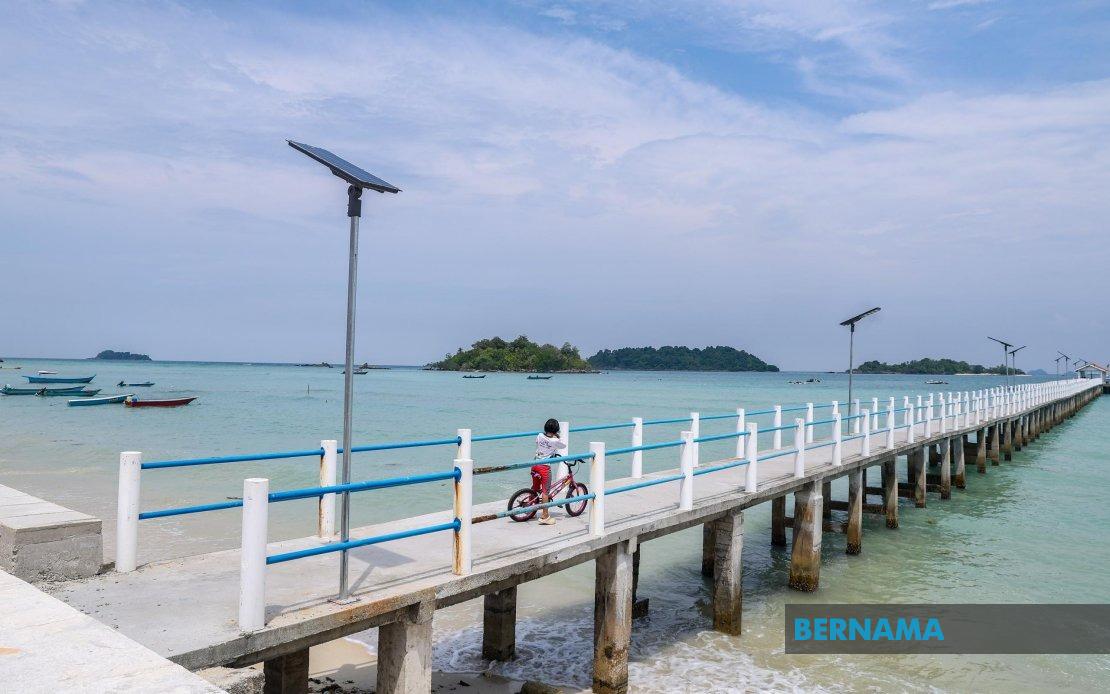
Residents of Pulau Tinggi, a small island community off Mersing in Johor, are pressing the incoming state representative to tackle infrastructure deficits and social welfare gaps that have plagued their isolated settlement for years. With approximately 150 people spread across Kampung Pasir Panjang and Kampung Tanjung Balang, the island's inhabitants face mounting concerns over a deteriorating jetty and inadequate housing facilities for low-income fishermen—issues they hope will finally receive government attention following the Johor state election scheduled for Saturday.
The crumbling Kampung Pasir Panjang jetty stands as the most visible symbol of the island's infrastructure neglect. Originally serving both local fishermen and tourists, the structure has been in continuous decline since around 2017, creating safety hazards for those who depend on it for their livelihoods and for visitors seeking to reach the island. Despite the advanced state of disrepair, residents continue to use the facility out of necessity, navigating the risks as they wait for intervention. Village chief Rossana Hussin, who assumed her position in 2024, explained that the community submitted upgrade applications to the Mersing District Office in March and received encouraging initial feedback, yet no concrete progress has followed.
Rossana's appointment as Kampung Pulau Tinggi village head places her at the forefront of advocating for her community's needs during a critical political juncture. She emphasised that the jetty upgrade project requires urgency, particularly given the dual reliance on the facility by fishermen conducting daily operations and tourists seeking authentic island experiences. The delay in executing what appears to be an approved project reflects a broader pattern of slow-moving bureaucracy affecting remote island communities, where infrastructure improvements often languish in administrative pipelines despite initial approvals.
Equally pressing for Pulau Tinggi's residents is the housing assistance programme for B40 category fishermen residing in Kampung Tanjung Balang. Many households in the village require repairs to existing structures, while others remain incomplete, leaving families living in substandard conditions. Rossana noted that providing repair assistance would significantly improve residents' quality of life while addressing a humanitarian concern that has been largely overlooked. The issue resonates particularly in Johor's fishing communities, where income volatility and limited economic opportunities often leave workers unable to maintain adequate housing standards independently.
The demographic composition of Pulau Tinggi underscores the urgency of these concerns. The island's population consists predominantly of B40 fishermen and their families, making it one of Johor's most economically vulnerable communities. This concentration of low-income residents means that state-level support mechanisms are not merely quality-of-life enhancements but essential safety nets for survival. Without jetty access, fishermen cannot reach markets or secure employment; without adequate housing, families face health risks and reduced productivity.
Beyond immediate infrastructure and welfare issues, Pulau Tinggi faces a longer-term demographic crisis that threatens its viability as a functioning community. Island elder Mariam Mamat, 85, articulated the population decline that has characterised recent decades. Young people have migrated to mainland employment opportunities, while some families have relocated to Felda schemes offering perceived better prospects. This exodus, if unchecked, risks transforming Pulau Tinggi into a ghost settlement where critical infrastructure falls further into decay as the user base shrinks.
Rekindling Pulau Tinggi's tourism potential emerges as a strategic consideration for reversing this decline. Mariam and other residents recognise that the island's natural attractions and cultural heritage could generate sustainable income streams and employment for younger generations. Tourism development, however, requires functioning infrastructure—precisely the jetty upgrade and improved public facilities that remain pending. The interconnection between infrastructure investment and economic revitalisation creates a compelling case for prioritising Pulau Tinggi's development within Johor's broader policy agenda.
The timing of these appeals is significant given that approximately 2.7 million eligible voters across Johor prepare to elect 56 state lawmakers who will serve the coming term. Pulau Tinggi falls within the Tenggaroh state constituency, and residents hope the elected representative will champion their causes with vigour and effectiveness. The incoming representative will inherit this portfolio of unresolved issues and face expectations to deliver tangible improvements within a reasonable timeframe.
Pulau Tinggi's situation illustrates broader challenges facing Malaysia's island and remote communities, which often fall through cracks in state planning and resource allocation. While larger urban centres command political attention and funding, smaller settlements struggle to maintain basic infrastructure without sustained advocacy and political will. The island's predicament also reflects the importance of grassroots mobilisation during election cycles, when communities can leverage democratic processes to demand accountability from incoming representatives.
The residents' measured but persistent approach—having submitted formal applications, engaged with district offices, and publicly aired their concerns during the election campaign—demonstrates civic engagement despite their isolation and limited resources. Their success in attracting attention now depends on whether the newly elected state representative recognises these concerns as legitimate priorities worthy of rapid action. For Pulau Tinggi, the election outcome carries outsized significance, representing not merely a change in political representation but a potential turning point for community development and economic sustainability.

