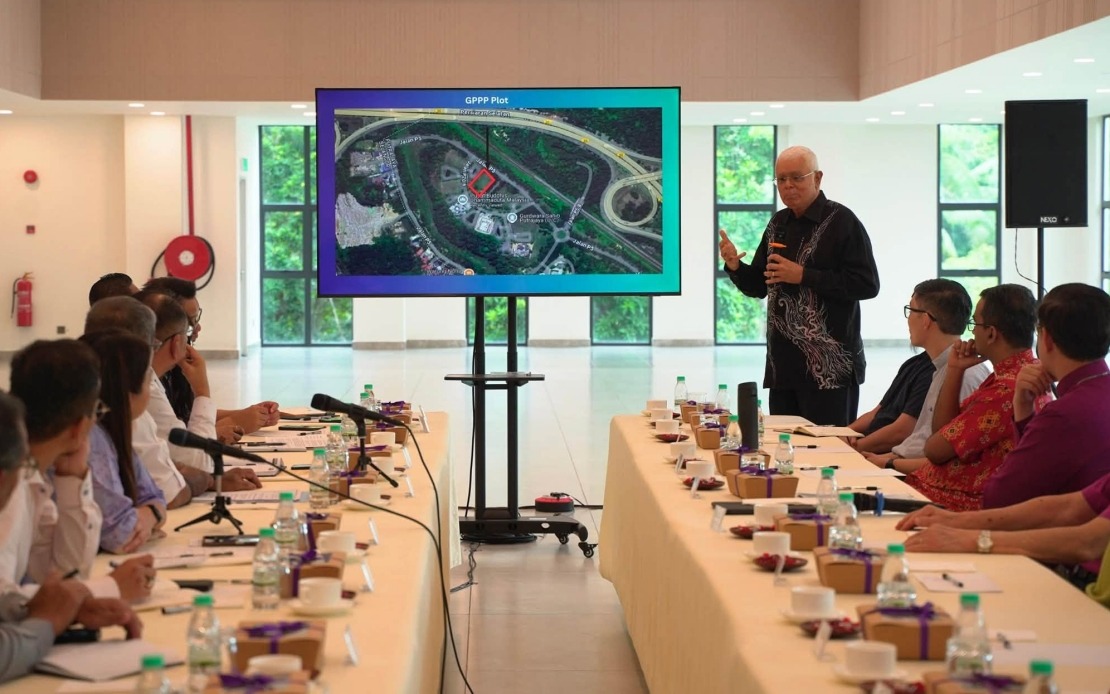
Putrajaya is positioning itself as a model for religious harmony by developing Precinct 20 into a dedicated multifaith worship district, reflecting a decade-long commitment by the federal government to provide designated spaces for Malaysia's diverse religious communities. National Unity Minister Datuk Aaron Ago Dagang unveiled details of the initiative on August 26, emphasising that the systematic allocation of sites for non-Muslim houses of worship represents far more than administrative convenience—it embodies an intentional urban planning philosophy that recognises religious diversity as a cornerstone of national identity.
The development of Precinct 20 reflects broader policy commitments outlined in Putrajaya's Structure Plan 2050, particularly Policy 17, which articulates a vision of an inclusive and compassionate community grounded in mutual respect and peaceful coexistence. By anchoring this vision in concrete urban infrastructure, the federal government signals that religious pluralism is not merely aspirational but institutionalised through deliberate spatial planning. This approach distinguishes Malaysia's approach to religious affairs from purely legislative or ceremonial measures, embedding inclusivity into the built environment itself.
The interfaith cluster already demonstrates tangible progress. The Prince of Peace Church, a newly operational facility in Precinct 20, now serves as a focal point for Christian worship in the federal territory. Alongside this, the Dhammaduta Malaysia Buddhist Centre has been operational since 2023, providing dedicated space for Buddhist practitioners. The presence of multiple active congregations within the same precinct creates natural opportunities for interreligious dialogue and mutual understanding that extend beyond formal government initiatives.
Expanding the scope of religious infrastructure in Precinct 20, several projects remain under development. These include the Gurdwara Sahib Putrajaya, which will serve the Sikh community; the Dewi Sri Lalithaambigai Alayam, catering to Hindu devotees; and the San Qing Taoist Temple. Additionally, the federal government has reserved a dedicated site for the construction of a Roman Catholic church, signalling continued commitment to expanding religious representation across denominations. This staggered approach to development, combining operational facilities with projects in various stages of completion, reflects realistic implementation timelines while maintaining momentum toward the larger vision.
Minister in the Prime Minister's Department (Federal Territories) Hannah Yeoh's participation in site visits alongside Aaron Ago Dagang underscores the cross-ministerial coordination required to operationalise such policies. The involvement of federal territory administration alongside the National Unity Ministry demonstrates that successful multifaith urban planning demands collaborative governance transcending traditional ministerial silos. This institutional approach signals that religious affairs in Malaysia's capital are treated as integral to broader federal priorities rather than compartmentalised concerns.
The Precinct 20 initiative aligns with the broader Harmoni MADANI framework introduced by the National Unity Ministry in 2024. This conceptual platform—organised around the principles of understanding, respecting, accepting, and celebrating diversity—provides philosophical grounding for practical interventions like dedicated worship spaces. By anchoring infrastructure development to explicit values-based language, the government attempts to move beyond mere tolerance toward active celebration of religious diversity as a defining Malaysian characteristic.
For regional observers, the Precinct 20 model offers insights into how federal governments can institutionalise religious pluralism through urban planning mechanisms. Rather than relying solely on legal protections or interfaith dialogue forums, the approach demonstrates how spatial allocation—deciding literally where communities gather for worship—becomes a form of policy implementation. This has implications for other Southeast Asian nations grappling with religious diversity in increasingly urbanised contexts.
The designation of Precinct 20 as a multifaith hub also serves strategic communications purposes for Malaysia internationally. As a Muslim-majority nation with constitutionally protected religious minorities, Malaysia's federal capital now visibly demonstrates religious infrastructure diversity. This physical manifestation of pluralism carries weight in regional and global narratives about Southeast Asian approaches to religious coexistence, particularly amid concerns about religious polarisation elsewhere in the region.
However, the success of Precinct 20 ultimately depends on implementation consistency and community engagement beyond ceremonial visits. Ensuring adequate funding, managing potential operational conflicts between different faith communities, and preventing the accumulation of incomplete projects remain practical challenges. The intervening years between initial designation in 2013 and present-day development suggest that even well-intentioned policies face implementation headwinds requiring sustained political commitment.
The initiative also raises questions about equitable resource allocation across Malaysia's federal territories and beyond. While Putrajaya receives dedicated multifaith infrastructure investment, many other urban areas remain underserved in terms of designated worship spaces. The model, if successful, may create pressure for replication in Kuala Lumpur, Labuan, and other federal jurisdictions, potentially establishing precedent for how government-administered territories approach religious infrastructure planning. This standardisation could either strengthen national approaches to religious pluralism or risk imposing uniform models unsuited to distinct local contexts.
Looking forward, Precinct 20's trajectory will test whether designated interfaith spaces genuinely catalyse community interaction or function primarily as administrative convenience. The physical proximity of multiple worship facilities creates architectural conditions for interfaith exchange but does not automatically generate it. Success requires complementary programming—joint community service initiatives, shared cultural celebrations, and facilitated dialogue—that leverages spatial proximity to build substantive relationships across faith communities.
Ultimately, the Putrajaya development represents a significant investment in Malaysia's multifaith infrastructure landscape, reflecting government recognition that religious diversity requires proactive planning rather than passive accommodation. Whether Precinct 20 evolves into a genuine interfaith hub fostering meaningful community connections or remains primarily a collection of separate denominational facilities will substantially influence both local community cohesion and Malaysia's international standing as a model for religious coexistence.

