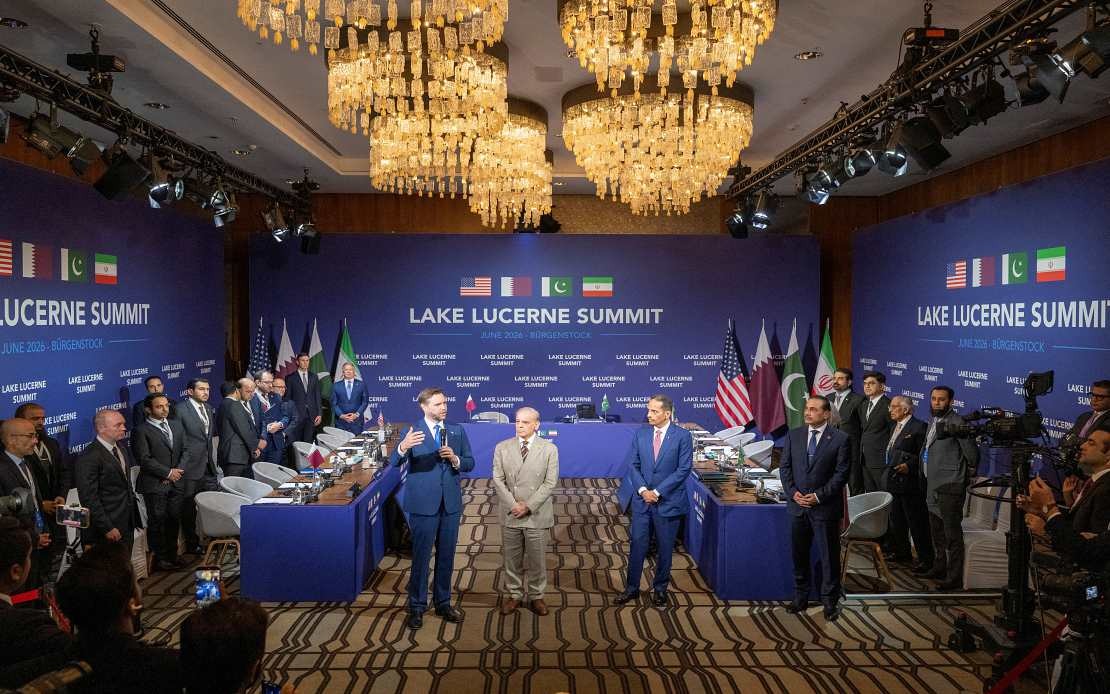
Diplomatic efforts to resolve longstanding tensions between the United States and Iran have entered a new phase following the conclusion of the first round of high-level talks at the Lake Lucerne Summit in Switzerland. Qatar and Pakistan, serving as key mediators in the negotiations, jointly announced on Monday that the discussions had generated what both nations characterised as encouraging momentum, signalling that the process remains on track despite the historically fraught relationship between Washington and Tehran.
The joint statement released by Qatar and Pakistan emphasised that "a positive and constructive atmosphere prevailed during the first day" of the Lake Lucerne Summit, a notably optimistic assessment in the context of decades-long animosity between the two nations. This positive tone carries particular weight given that regional and international observers have watched previous negotiation attempts collapse, making incremental progress a significant achievement in itself. The establishment of institutional mechanisms to sustain dialogue represents a practical commitment from both sides to continue engagement beyond symbolic gestures.
Among the most consequential outcomes of the summit was the creation of a high-level committee responsible for overseeing the political dimensions of the mediation process. This committee will receive regular updates from lead negotiators and supervise specialised working groups dedicated to three critical areas: the Iranian nuclear programme, sanctions relief and reimposition concerns, and mechanisms for dispute resolution. The establishment of these parallel tracks reflects the complexity of the underlying issues, which touch upon national security, economic interests, and international law.
The negotiating parties have agreed to an ambitious timeline, setting a 60-day deadline for reaching a final comprehensive agreement. This timeframe, while compressed, suggests that both the United States and Iran believe the foundational work necessary for a deal remains achievable within that window. The agreement on this roadmap is itself noteworthy, as it indicates that despite significant differences, both nations share an interest in moving toward resolution rather than prolonging the status quo. For Malaysia and other Southeast Asian nations concerned about regional stability, such progress has direct implications for global energy markets and shipping security.
A particularly significant element of the agreement involves the establishment of a dedicated communication channel between the parties covering the period specified in the underlying Memorandum of Understanding. This channel has been explicitly designed to prevent misunderstandings and avoid unintended military or political incidents—a critical safeguard given the volatile history of US-Iran interactions. The emphasis on maintaining safe passage for commercial vessels through the Strait of Hormuz underscores the global economic stakes involved in these negotiations, as this critical waterway handles a substantial portion of world oil and liquefied natural gas trade that affects Malaysian and regional economies.
The framework for technical discussions represents a departure from previous negotiating formats, suggesting that the mediators have designed a structure that allows for detailed, substantive progress on concrete issues while maintaining political oversight. The coordination between technical working groups and the high-level political committee creates both breadth and depth in the negotiation process, enabling specialists to work through complex details while senior officials ensure that technical discussions remain aligned with broader strategic objectives.
For Malaysia's perspective as a member of the Association of Southeast Asian Nations and a nation deeply invested in maritime security and stable energy supplies, the outcome of these talks carries substantial implications. The Strait of Hormuz remains one of the world's most critical chokepoints for energy shipments, and any escalation in US-Iran tensions directly affects regional shipping costs, insurance premiums, and energy security across Southeast Asia. Malaysia's position as a major port hub and energy consumer makes it acutely sensitive to disruptions in this vital shipping lane.
The role of Qatar and Pakistan as mediators reflects broader regional diplomatic patterns in which smaller and medium powers can leverage historical relationships and cultural ties to facilitate dialogue between major powers. Qatar's longstanding connections with both Washington and Tehran, combined with Pakistan's strategic position and influence in the region, position both nations as credible intermediaries. This mediation effort also demonstrates how regional actors can shape international outcomes through patient, behind-the-scenes diplomacy.
The agreement on a mechanism for continued technical discussions signals that the parties have moved beyond preliminary posturing toward substantive engagement on the actual details of any potential accord. Previous negotiations often foundered on disagreements about sequencing—whether sanctions relief should precede nuclear commitments or vice versa. The establishment of working groups suggests that negotiators are now attempting to tackle these linked issues simultaneously rather than serially, potentially unlocking progress that had previously seemed impossible.
The 60-day timeframe, while optimistic, reflects the reality that both Washington and Tehran face domestic political pressures that create windows of opportunity. For the United States, any agreement must withstand scrutiny from Congress and potential future administrations. For Iran, domestic political factions have expressed both support for and opposition to various negotiating approaches. The compressed timeline may reflect a mutual recognition that delaying the process only increases the risk of political changes that could derail negotiations entirely.
Regional analysts observe that the success of these talks could reshape Middle Eastern geopolitics in ways that extend beyond bilateral US-Iran relations. A resolution of the nuclear dispute and sanctions regime would fundamentally alter the strategic calculations of other regional players, including Saudi Arabia, the United Arab Emirates, and Israel, each of which has significant interests in the outcome. For Southeast Asia, a more stable Middle East translates into predictable energy supplies and reduced geopolitical risk premiums in global markets.
The establishment of working groups focused on implementation mechanisms suggests that negotiators have learned from past failures, where agreements were reached but subsequently undermined by disputes over interpretation and execution. By building in dispute resolution mechanisms from the outset, the parties appear to be attempting to prevent the accord from unravelling once it enters the implementation phase. This reflects a more sophisticated approach to international negotiation than previous attempts to resolve the nuclear standoff.
Looking ahead, the Lake Lucerne Summit has established a template and timeline for continuing negotiations. The next critical juncture will come when technical working groups present their findings to the high-level committee, likely within the coming weeks. If that process generates continued momentum, the prospect of a comprehensive agreement by the 60-day deadline becomes more plausible. For Malaysian observers and policymakers, such progress would represent a stabilising force in a region whose turbulence has repeatedly reshaped global economics and geopolitics.

