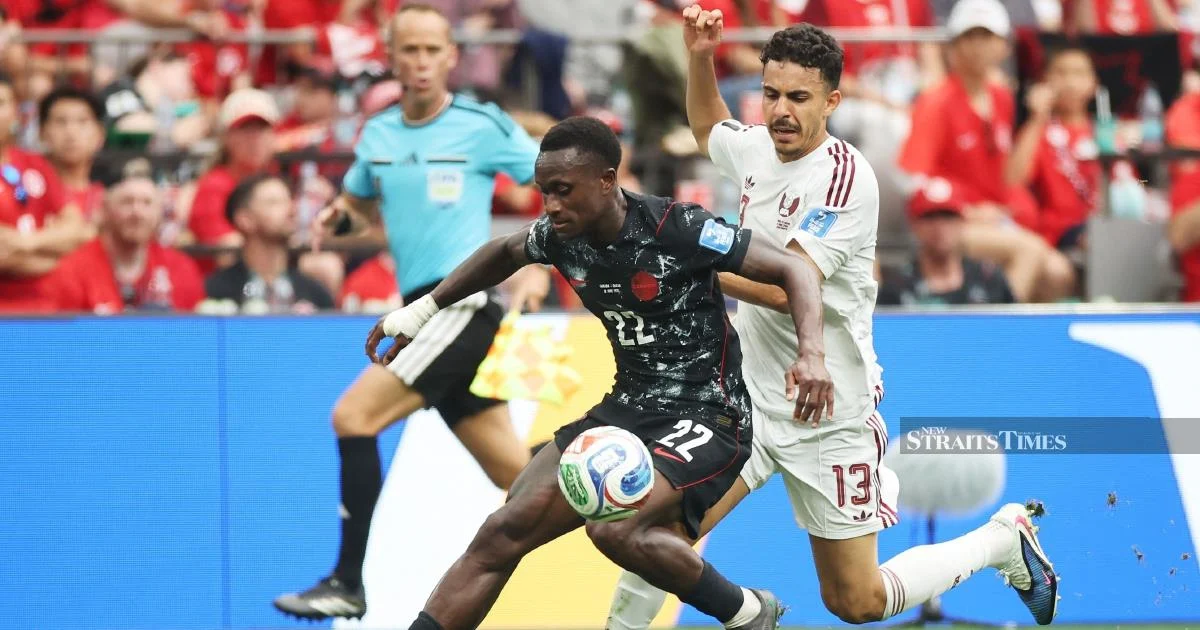
Qatar's catastrophic 6-0 defeat at the hands of Canada during the World Cup has become a cautionary tale for wealthy nations seeking to rapidly establish themselves as football powerhouses. Football experts now point to this lopsided scoreline as stark evidence that pouring billions of dollars into a sport cannot artificially create the foundations necessary for sustained competitive success at the highest levels of international competition.
The gulf between Qatar's enormous financial investments in football infrastructure and their actual on-field performance starkly illustrates a fundamental principle that has repeatedly eluded wealthy patrons of the sport. Building a truly competitive national team requires decades of grassroots development, institutional knowledge, coaching expertise, and a deep-rooted football culture—elements that cannot be hastily assembled regardless of available funds. Qatar's experience offers valuable lessons for other nations considering similar shortcuts to sporting prominence.
The scale of Qatar's financial commitment to football development has been extraordinary by any measure. The nation has invested heavily in state-of-the-art training facilities, world-class coaching staff, and significant financial incentives to attract international expertise. Yet despite these substantial outlays, the team's World Cup campaign—which took place on home soil—produced results that embarrassed the host nation and disappointed the global audience. The inability to convert resource advantages into competitive outcomes represents a significant failure of planning and execution.
The Canada result exposes the reality that football development follows organic principles that resist acceleration through monetary means alone. A successful national program depends on producing a continuous pipeline of technically proficient players nurtured through competitive domestic leagues and systematically structured youth academies. These systems require time to mature and cannot be instantly created by hiring consultants or purchasing infrastructure. Qatar's rapid ascent strategy essentially attempted to skip steps that other successful football nations required generations to implement.
For Southeast Asian football administrators and investors, Qatar's experience serves as a sobering reminder about realistic timelines for sporting development. Nations in the region contemplating significant financial investments in football should consider whether their resources are being directed toward sustainable long-term development or whether they risk replicating Qatar's costly misstep of assuming money alone can guarantee results.
The structural weaknesses exposed in Qatar's squad reveal fundamental problems that transcend the technical aspects of the game. The team appeared to lack the cohesion, tactical discipline, and mental resilience required to compete at World Cup level. These qualities develop through cumulative experience in competitive international fixtures and cannot be manufactured through financial inducement. Qatar's players, many of whom lacked extensive experience in top-tier European leagues, struggled against opponents with deeper competitive traditions and more rigorous developmental pathways.
Coaching expertise, while important, cannot overcome the limitations of a fundamentally underdeveloped player base. Qatar hired experienced international coaches, yet even their technical knowledge proved insufficient when applied to a squad that lacked the foundational skills and match experience of competing nations. This discrepancy highlights how coaching quality, though essential, represents only one component of a complex equation requiring synchronization across multiple dimensions of team development.
The broader football world has watched this experiment with interest, recognizing that Qatar's approach—attempting to establish major-tournament competitiveness within a compressed timeframe—differs fundamentally from the evolutionary path taken by established football nations. Countries like Germany, France, Spain, and others built their competitive status through generations of systematic development, cultural engagement with the sport, and accumulated institutional knowledge that creates resilience against temporary setbacks.
Regional implications for Southeast Asian football are significant. Nations considering hosting major tournaments or seeking rapid elevation in FIFA rankings might view Qatar's outcome as instructive. Success in international football ultimately demands patience, consistent investment over decades rather than years, and willingness to build sustainable systems that transcend individual tournaments or political objectives. The financial resources required are substantial but represent only a foundation; without complementary elements of sporting culture and player development, those resources produce disappointing returns.
Looking ahead, Qatar faces the challenge of rebuilding not just their squad but their entire football philosophy. The massive investments already committed need redirection toward creating sustainable competitive advantage rather than pursuing quick visibility through hosting tournaments or signing marquee international players. This represents a longer journey than many wealthy backers of sports initiatives typically envision or tolerate, but it remains the only pathway to genuine competitive success in modern international football.

