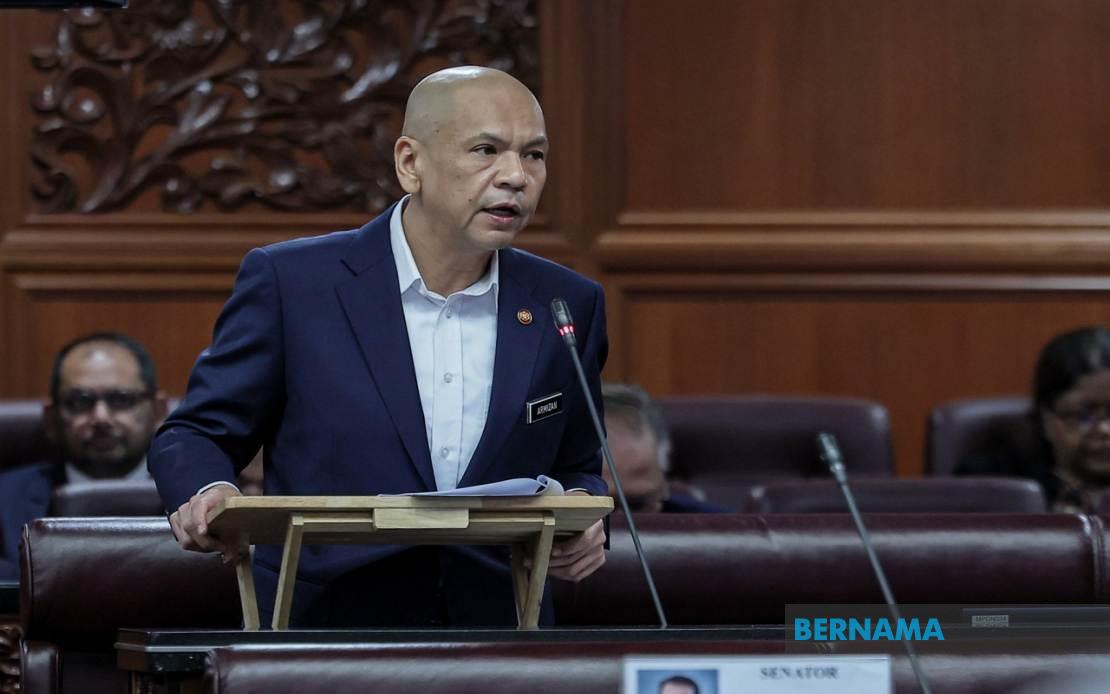
The Ministry of Domestic Trade and Cost of Living has substantially expanded its consumer assistance initiative, with Minister Datuk Armizan Mohd Ali announcing that the Rahmah MADANI Sales Programme conducted 15,881 events nationwide between January and June this year. Speaking in Parliament on June 30, Armizan emphasised that the government remains committed to accelerating the programme's reach across Malaysian communities, responding to widespread public support for the initiative as a practical intervention against rising living expenses.
The scale of the rollout underscores how deeply embedded the Rahmah MADANI Sales Programme has become within Malaysia's domestic trade landscape. With coverage extending to all 600 state constituencies—regardless of political affiliation—and encompassing every Federal Territory zone in Putrajaya, Kuala Lumpur, and Labuan, the initiative now functions as a nationwide phenomenon rather than a sporadic government intervention. This comprehensive geographical reach reflects a deliberate policy shift toward making subsidised retail events a permanent feature of the Malaysian shopping calendar, fundamentally altering how consumers across the country expect to access discounted goods.
The trajectory of growth reveals accelerating momentum. The programme conducted 6,870 events in 2023, nearly doubled that to 12,419 in 2024, and is already at 15,881 sessions by mid-2025. Most significantly, the government has raised its annual target from the initially planned 23,040 sessions to 30,000 for 2025, a revision prompted by Prime Minister Datuk Seri Anwar Ibrahim's strategic decision to intensify cost-of-living support measures. This upward revision reflects recognition that external pressures—particularly economic disruptions stemming from the West Asia conflict affecting energy prices and supply chains—necessitate more aggressive domestic intervention to protect consumer purchasing power.
The architectural transformation of how these sales events operate distinguishes the current approach from previous government bargain sales schemes. Rather than ad hoc interventions organised sporadically and inconsistently, Armizan outlined five strategic mechanisms that institutionalise the Rahmah MADANI programme into permanent governance structures. First, the sales events now receive dedicated budget allocation through their own activity code and earmarked funding, ensuring financial predictability and eliminating the uncertainty that previously characterised temporary promotional initiatives. This budgetary entrenchment signals confidence that these events will continue regardless of political cycles or economic conditions.
Second, the government has established annual scheduling targets and frequency benchmarks for every single state constituency and Federal Territory zone. This systematic planning eliminates the discretionary gaps that allowed some areas to receive substantially more sales events than others. By guaranteeing baseline event frequency nationwide, the programme achieves a degree of equity previously absent from consumer assistance initiatives, ensuring that Malaysians in rural Sabah receive similar retail support opportunities as those in urban Selangor.
Third, the programme has actively integrated private sector participation, securing 2,695 strategic retail partners comprising companies, businesses, and retail cooperatives as of late June. This partnership model transforms the Rahmah MADANI initiative from a purely government-administered scheme into a collaborative arrangement where private retailers benefit from promotional opportunities while government policy objectives receive market-based reinforcement. The breadth of private participation—approaching 2,700 partners—indicates substantial commercial appetite for the programme, suggesting retailers view the guaranteed consumer traffic as beneficial.
Fourth, the delivery mechanisms have diversified considerably beyond traditional retail formats. The programme now operates through in-store sales, open-air bazaars, and mobile sales units, with events timed strategically around paydays, festive seasons, and back-to-school periods. This multipronged approach acknowledges different consumer shopping patterns and extends coverage to communities with limited access to permanent retail infrastructure. Urban shoppers gain convenience through in-store coordination, while rural and remote populations access subsidised goods through mobile units and temporary bazaars—addressing equity concerns across Malaysia's diverse geography.
Fifth, the introduction of a published Rahmah MADANI calendar starting in 2025 represents a significant transparency enhancement. By providing Malaysians with advance notice of sales dates, times, and locations for their respective constituencies and zones, the government enables consumers to plan purchases strategically. Rather than relying on word-of-mouth or last-minute announcements, residents can now consult official schedules to identify upcoming events in their areas, fundamentally altering the information asymmetry that previously characterised these programmes. This transparency also establishes a performance benchmark against which the government and retailers can be held accountable.
The parliamentary context for these announcements matters considerably for Malaysian governance discourse. Datuk Iskandar Dzulkarnain Abdul Khalid, representing opposition-held Kuala Kangsar under Perikatan Nasional, initiated the question specifically requesting constituency-level data and exploring whether the government possessed capacity to increase event frequency. Rather than treating this as politically charged territory, Armizan provided detailed statistical responses and acknowledged the legitimate public concern underlying the query. This response pattern—opposition questioning leading to substantive government accountability through detailed parliamentary answers—reflects functional legislative oversight regardless of political composition.
The timing and scale of the 2025 expansion warrant consideration within Malaysia's broader economic management strategy. The government's decision to escalate from 23,040 to 30,000 annual sessions directly responds to external shocks beyond domestic monetary or fiscal policy reach. By intensifying direct consumer support through subsidised retail events, the administration acknowledges both the reality of global economic pressures and the political reality that Malaysian households increasingly expect tangible government intervention in their cost-of-living challenges. The Rahmah MADANI programme thus functions simultaneously as economic stabilisation tool, political legitimacy mechanism, and private sector coordination initiative.
For Southeast Asian observers, the Malaysian approach offers instructive lessons about scaling consumer assistance programmes beyond emergency responses into institutionalised governance mechanisms. By embedding the Rahmah MADANI initiative into permanent budget structures, establishing systematic scheduling, mobilising private sector partnerships, and adopting transparent communication calendars, Malaysia has transformed what began as an ad hoc intervention into a durable policy architecture. Whether this expansion proves fiscally sustainable long-term and whether it meaningfully impacts inflation expectations or consumer behaviour patterns remain ongoing analytical questions, but the institutional commitment to scaling from 6,870 events in 2023 to a target of 30,000 in 2025 reflects governance ambitions that extend well beyond electoral cycles.

