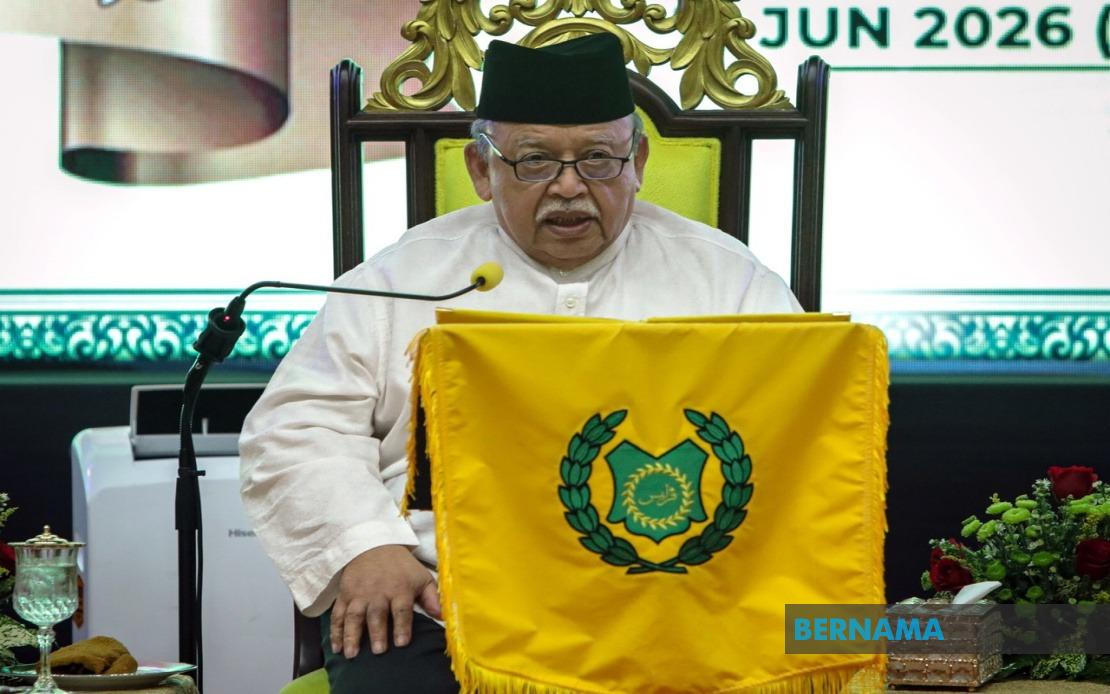
The Raja of Perlis, Tuanku Syed Sirajuddin Jamalullail, has delivered a pointed message about the foundations of national development, arguing that sustainable progress requires citizens to embrace responsibility, ethical conduct and a commitment to fighting graft at all levels of society. Speaking at the state-level Maal Hijrah 1448H/2026M celebration in Kangar on June 18, the Ruler outlined a vision for advancement that prioritises moral character and intellectual development over material accumulation alone.
Tuanku Syed Sirajuddin articulated a view of progress that challenges conventional development metrics. He contended that a thriving state cannot be built solely through infrastructure projects and economic expansion, but demands that its population possess knowledge, maintain high standards of personal integrity, demonstrate civility in public affairs and sustain cohesion across different communities. This framing reflects broader conversations within Malaysia's political and civil society circles about what constitutes genuine national advancement in an era of rapid technological and social change.
The Ruler's emphasis on "true MADANI progress" draws directly on Malaysia's national development framework, which seeks to balance economic growth with improvements in quality of life and social harmony. By repositioning this concept around knowledge advancement, cultural strength, intellectual maturity and the integrity of shared values, Tuanku Syed Sirajuddin signals that economic indicators alone cannot capture whether a nation is genuinely progressing. This distinction matters particularly in Southeast Asia, where several economies have achieved impressive GDP growth yet face persistent challenges related to governance standards and public trust.
Tuanku Syed Sirajuddin called on the population to conduct their professional and civic duties with sincerity, to regard work itself as a spiritual obligation rather than mere employment, and to consistently reject corruption in all its manifestations. These exhortations carry particular weight given Malaysia's historical struggles with graft, which has affected public confidence in institutions and slowed economic competitiveness. By elevating this message at an official state ceremony, the Ruler underscores that anti-corruption efforts require cultural transformation, not simply regulatory enforcement.
The Ruler also emphasised that strengthening an authentic Islamic understanding grounded in the Quran and Sunnah should proceed alongside efforts to develop a mature and sophisticated political culture. This dual emphasis acknowledges Perlis's predominantly Muslim population while signalling that religious commitment and democratic maturity are mutually reinforcing rather than contradictory. The statement reflects awareness that tensions between religious values and pluralistic governance remain sensitive topics across Malaysia, and that reconciling these dimensions is essential for social stability.
Tuanku Syed Sirajuddin further stressed the importance of empowering citizens to become increasingly self-reliant and capable of competing in global markets and knowledge economies. He advocated for the cultivation of courage, intelligence and independence among Perlis's population, positioning these qualities as core elements of regional identity. This framework connects personal development with collective prosperity, suggesting that individual advancement and state progress are interdependent rather than opposing forces.
Addressing contemporary pressures confronting Malaysian society, the Ruler highlighted technological advancement, artificial intelligence deployment, social transformation and fluctuations in the global economic system as defining challenges of the current era. He warned against passive observation of these shifts, urging instead that citizens and leaders must become active architects of change rather than reactive respondents to external developments. This call reflects anxiety across Southeast Asia about whether regional societies can manage technological disruption and economic shifts without experiencing significant social dislocation.
The Ruler's insistence that Perlis's population must transform from observers into initiators and contributors positions proactive engagement as a moral and practical necessity. In the Malaysian context, where concerns about competitiveness and innovation capacity have grown amid regional competition from Vietnam, Thailand and Indonesia, this message resonates with official narratives about human capital development and knowledge-driven growth. However, the emphasis on character and ethical conduct suggests that technological and economic advancement divorced from moral foundations will ultimately prove unsustainable.
During the ceremony, Tuanku Syed Sirajuddin recognised Datuk Izham Mahmud, a board member of Yayasan Tuanku Syed Putra (YTSP), with the Perlis Tokoh Maal Hijrah award in acknowledgement of his public contributions. The award reflects the state's tradition of honouring individuals whose work exemplifies the principles of integrity and service that the Ruler articulated throughout his address. The Raja Muda of Perlis, Tuanku Syed Faizuddin Putra Jamalullail, and the Raja Puan Muda of Perlis, Tuanku Dr Hajah Lailatul Shahreen Akashah Khalil, also attended the gathering.
The Ruler's message carries implications that extend well beyond Perlis's borders. As Malaysia navigates economic slowdown, political fragmentation and generational shifts in values and expectations, the emphasis on integrity, knowledge and ethical conduct offers a framework for addressing multiple challenges simultaneously. Tuanku Syed Sirajuddin's articulation of progress as fundamentally tied to character rather than consumption patterns may resonate with younger Malaysians increasingly sceptical of purely materialist development models. The address suggests that within traditional institutions, there remains space for sophisticated reflection on the relationship between spiritual values, democratic governance, economic resilience and social cohesion—conversations that mainstream political discourse sometimes neglects.