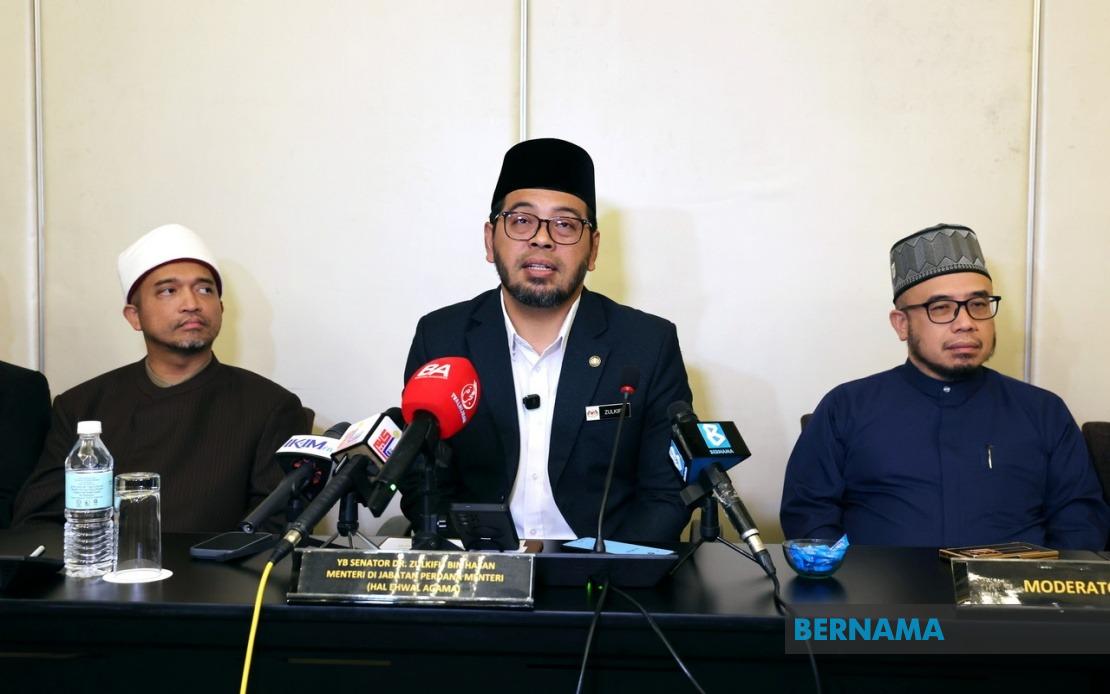
Religious Affairs Minister Dr Zulkifli Hasan has firmly stated that the term 'kafir harbi' — a classical Islamic designation for non-Muslims in enemy territory — has no legitimate application within Malaysia's plural society and constitutional framework. Speaking in Putrajaya on August 10, he drew conclusions from a high-level roundtable discussion convened specifically to examine this contentious terminology and its relevance to the nation's multicultural landscape.
The designation of 'kafir harbi' carries significant historical and theological weight in Islamic jurisprudence, traditionally referring to non-Muslims living in territories hostile to Islamic rule. However, Zulkifli's pronouncement reflects an official position that such medieval categorisations fundamentally contradict Malaysia's constitutional architecture and the lived reality of a diverse citizenry bound by common law and shared national identity. His intervention arrives at a moment when such language has occasionally surfaced in public discourse, prompting authorities to address its appropriateness.
During the roundtable discussion, participants examined presentations and exchanged views on the historical context and modern implications of the term. The consensus that emerged emphasises that all Malaysian citizens, regardless of religious affiliation, operate within a single constitutional framework and shoulder identical civic obligations and rights. This observation extends beyond mere legal technicality—it reflects a substantive claim about the nature of Malaysian citizenship and the impossibility of categorising fellow nationals as enemies or outsiders based on religious identity.
Zulkifli articulated the theological and civic contradiction inherent in applying such terminology domestically. He noted that the term presupposes a condition of conflict or enmity that simply does not characterise Malaysia's constitutional order. Instead, Malaysian citizens of all faiths inhabit a shared homeland, participate in common institutions, and bear collective responsibility for national development and security. The framing moves beyond tolerance rhetoric into a more fundamental assertion that certain medieval Islamic legal categories cannot be transposed onto modern nation-states structured around inclusive citizenship and constitutional pluralism.
The minister's statement carries particular weight given his position overseeing religious affairs at the federal level. His remarks effectively signal that Malaysia's official Islamic establishment—represented through the Department of Islamic Development Malaysia (JAKIM)—recognises limits to how classical Islamic legal categories can be applied in contemporary contexts. This represents a deliberate theological and political stance, distinguishing between historical Islamic jurisprudence and its relevance to functioning multicultural democracies.
To amplify this message and embed it more deeply within public consciousness, JAKIM will now coordinate with other government agencies and ministries to launch comprehensive information campaigns addressing the issue. This collaborative approach deliberately extends beyond the religious sector, recognising that clarifying Malaysia's constitutional and civic principles requires engagement across multiple institutional domains. The decision to involve broader government structures suggests an awareness that public misunderstandings about citizenship and religious identity may carry consequences for communal relations.
Zulkifli's call for coordinated action reflects an understanding that challenging the use of particular terminology requires more than official statements—it demands sustained educational effort and reinforcement through multiple channels. By embedding this message within various government services and public information streams, authorities aim to shift common understandings of what language appropriately describes relationships between Malaysian citizens of different faiths.
For Malaysian readers, these developments carry implications for ongoing conversations about religious harmony and national integration. The minister's position essentially declares that divisive religious categorisations rooted in historical contexts of conflict have no application to Malaysia's constitutional present. This represents an official assertion of boundaries around acceptable religious discourse within the public sphere—a boundary defined not by suppression but by appeal to shared constitutional identity and citizenship.
The roundtable approach also signals a preference within Malaysia's religious establishment for dialogue and consensus-building rather than top-down prohibition. By convening diverse stakeholders to discuss and reach agreement on these questions, authorities have constructed a legitimacy for their position that rests on broader consensus rather than mere ministerial decree. This methodology may prove more persuasive for religious scholars and community leaders who participate in such deliberations.
Looking regionally, Malaysia's official stance on this terminology distinguishes it from other Muslim-majority democracies grappling with how classical Islamic legal concepts apply to modern states. The position articulated by Zulkifli prioritises constitutional citizenship and shared national belonging over religious identity as the primary framework for understanding relationships between Malaysian citizens. This choice reflects particular historical experiences of managing religious plurality within a single constitutional order.
The minister's broader appeal for Malaysians to strengthen mutual respect, understand diverse cultures and religions, and foster closer bonds of brotherhood contextualises the technical discussion about terminology within a larger vision of national unity. This framing presents the rejection of divisive language as integral to strengthening the nation rather than compromising religious values—a rhetorical move designed to align religious authenticity with inclusive citizenship.
Moving forward, the success of these efforts will depend partly on how effectively government agencies translate ministerial statements into community-level education and engagement. The decision to involve multiple ministries suggests recognition that sustained messaging across different institutional contexts may be necessary to shift longstanding usages and understandings within various communities.

