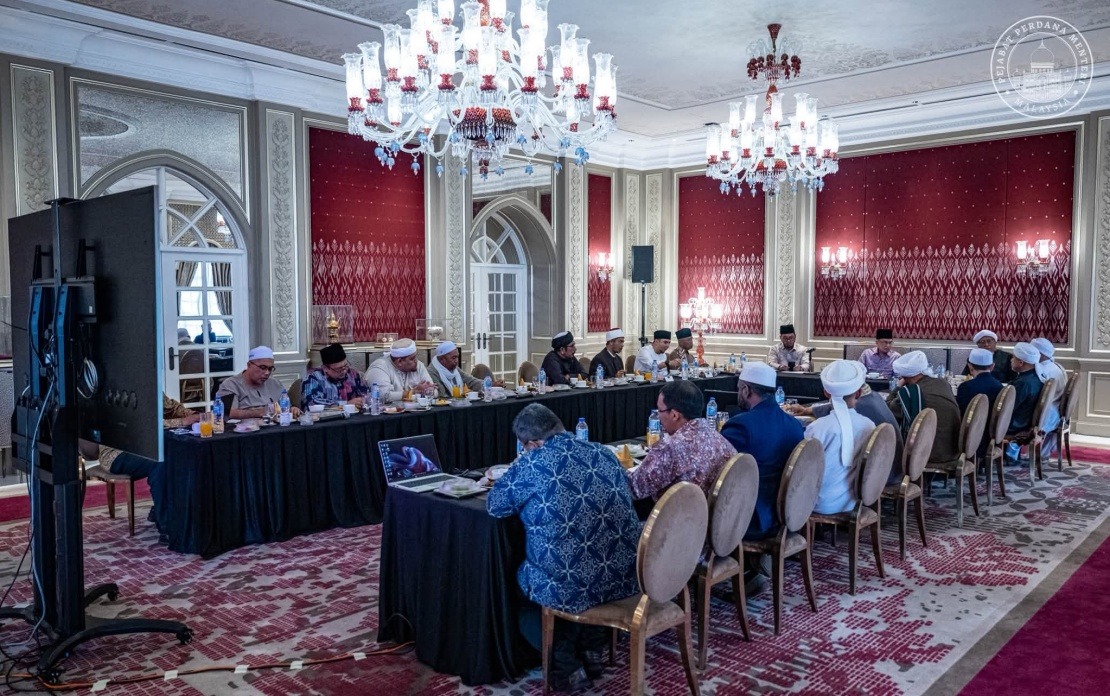
Prime Minister Datuk Seri Anwar Ibrahim has framed dialogue with Islamic scholars as far more than ceremonial engagement, positioning such conversations as foundational to how his government approaches policymaking on matters affecting Malaysia's Muslim majority. Speaking after a series of religious consultations held in conjunction with Maulidur Rasul celebrations, Anwar stressed that these interactions serve as moments for genuine reflection rather than mere protocol meetings, allowing the administration to ground its decisions in intellectual rigor while remaining attuned to evolving community priorities.
The consultations, known locally as muzakarah, represent an established tradition within Islamic governance frameworks, yet their reinvigoration under Anwar's administration signals a deliberate shift toward institutionalizing scholarly input at the highest levels of executive decision-making. By characterizing such engagement as essential infrastructure for policy formulation, the Prime Minister effectively positions Islamic knowledge not as an afterthought or consultation exercise but as a fundamental organizing principle for government action. This approach carries particular significance in Malaysia's political context, where competing interpretations of Islamic governance have long featured prominently in electoral and institutional debates.
Among those consulted was Sheikh Dr Muhyiddin Awwamah, representing Darul Hadis al-Awwamiyyah, an institution recognized for its scholarly work in Islamic jurisprudence and hadith studies. The younger scholar represents a significant link to his father, Al-'Allamah Sheikh Muhammad bin Awwamah, whose writings on Islamic jurisprudence have shaped academic and religious discourse across the Muslim world. Anwar's specific acknowledgment of the elder scholar's intellectual contributions underscores how these meetings extend beyond immediate policy concerns to affirm broader networks of Islamic scholarship that transcend Malaysia's borders.
The Prime Minister's emphasis on viewing such meetings as opportunities to "ensure that every government effort is guided by knowledge, put right through advice and refined according to the needs of the Muslim community and the demands of the times" reveals a tripartite framework for governance. Knowledge provides the intellectual foundation, advice functions as corrective mechanism, and community needs combined with contemporary demands establish the practical parameters within which policy must operate. This formulation sidesteps simplistic iterations of Islamic governance by acknowledging that faithful application of religious principles requires continuous calibration against changing social, economic, and technological realities.
For Malaysian policymakers and observers, this approach carries implications across several governance domains. Whether addressing issues of Islamic finance, education curricula, family law, or social welfare provision, systematic consultation with recognized religious authorities creates both legitimacy and accountability mechanisms. When government actions are explicitly informed by scholarly input, the administration creates a framework for explaining its decisions to constituencies concerned with Islamic compliance, while simultaneously establishing benchmarks against which to measure policy outcomes. This represents a departure from governance models where religious considerations remain compartmentalized or treated as secondary to economic or administrative factors.
The practice also reflects deeper questions about how modern Muslim-majority democracies can simultaneously honor traditional sources of religious authority while maintaining institutional separation of powers and preserving pluralistic governance structures. Malaysia's constitutional framework guarantees Islam's position as the federation's official religion while protecting religious freedom for other communities and maintaining a secular legal architecture alongside Sharia courts. Within this complex institutional landscape, formalized consultation mechanisms with religious scholars represent one means of acknowledging Islam's constitutional status without subordinating all governance to religious interpretation.
Anwar's articulation that "religion continues to flourish when those in power are willing to listen to the voice of knowledge" carries additional weight given Malaysia's recent political history. Previous governments have faced criticism both for insufficient engagement with scholarly perspectives and, conversely, for allowing narrow religious interpretations to override other policy considerations. By framing scholarly consultation as mutually beneficial—suggesting that both governance and religious tradition are strengthened through such dialogue—Anwar positions this practice as serving interests beyond any single constituency.
The involvement of Darul Hadis al-Awwamiyyah specifically reflects global dimensions of Islamic scholarship. As an institution with standing across Muslim communities from Southeast Asia to the Middle East, its participation signals that Malaysia's government is engaging with scholars whose authority extends beyond parochial or national boundaries. This connects Malaysian policy discussions to broader intellectual currents within Islamic thought, potentially enriching local policy discussions while positioning Malaysia within networks of Islamic scholarly exchange.
The timing of these consultations during Maulidur Rasul observances is also instructive. By conducting muzakarah during celebrations marking the Prophet Muhammad's birth, Anwar symbolically links contemporary governance practice to foundational Islamic traditions of seeking wisdom from learned individuals. This temporal framing transforms what might otherwise appear as purely administrative consultation into a practice rooted in Islamic historical practice, thereby lending the exercise deeper resonance within Muslim consciousness.
For regional observers, particularly in Southeast Asia where multiple governments grapple with balancing Islamic representation and modern governance, Malaysia's formalized approach to scholarly consultation may offer useful models worth examining. Thailand's Muslim-majority southern provinces, Indonesia's efforts to integrate Islamic parties into broader governance frameworks, and Brunei's approach to Islamic law all face comparable tensions. The Malaysian experiment with institutionalized muzakarah demonstrates one method of channeling religious perspectives into policy processes while maintaining broader democratic and constitutional structures.
Moving forward, the effectiveness of this consultative model will likely depend on several factors: the consistency with which the government seeks and implements scholarly advice, the transparency surrounding such consultations, and the extent to which this practice extends beyond ceremonial engagement to substantively influence policy formulation. If successful, it could establish a template for how governments might integrate religious scholarship into contemporary policymaking while respecting both Islamic tradition and modern democratic principles.

