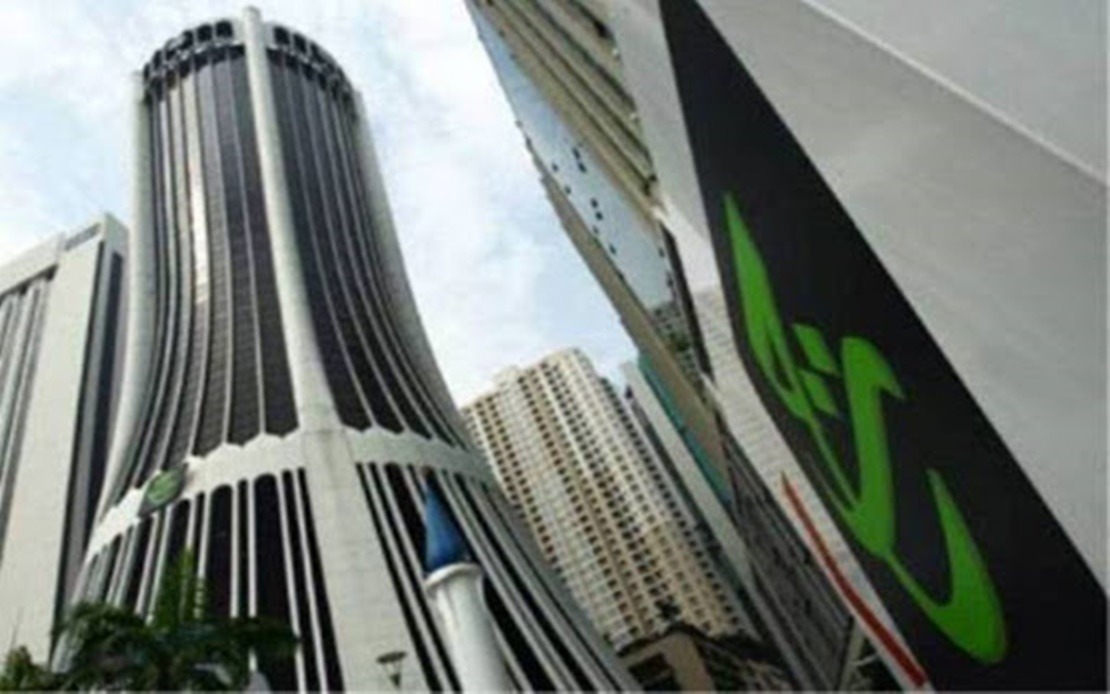
The Royal Commission of Inquiry's findings on Lembaga Tabung Haji's stewardship between 2014 and 2020 have sparked concern among Malaysian economists over the institution's valuation methodology. The damning revelation that RM4.044 billion of TH's RM4.6 billion property portfolio valuation for 2017 depended entirely on internal management assessments—with just RM556 million backed by professional valuers—points to a structural weakness in how the Islamic pilgrimage savings fund determines its financial position. This disparity raises uncomfortable questions about asset inflation and the robustness of governance frameworks that should protect the interests of over two million depositors across the country.
Prof Emeritus Dr Barjoyai Bardai of Malaysia University of Science and Technology identifies a fundamental problem with this approach: management teams naturally harbour incentives to present their institution's performance in the most favourable light. When those same individuals control the valuation process without independent oversight, the temptation and opportunity for optimistic assessments intensifies. Barjoyai emphasises that this does not necessarily indicate deliberate wrongdoing occurred at TH, but rather highlights a methodological flaw that should never have been permitted. The absence of external validation mechanisms removes a critical safeguard that prevents subjective judgment from distorting the financial picture.
The consequences of inflated asset valuations ripple through TH's entire operational structure. If property holdings are recorded at valuations exceeding what the market would actually pay, the resulting Realisable Asset Value appears artificially elevated, making TH's financial cushion seem larger than reality. This misjudgement creates space for the institution to authorise hibah payments—the profit distributions to depositors—at levels that may exceed what prudent financial management would permit. Barjoyai recommends that high-value properties undergo independent appraisals using standardised methodologies grounded in genuine market evidence, establishing a transparent baseline for valuation decisions.
Further strengthening governance protocols, Barjoyai proposes that RAV calculations be anchored to explicit standards, subjected to independent audit verification, and reviewed by specialist committees combining investment expertise with qualified accounting knowledge. These institutional reforms would embed conservatism into the valuation process, ensuring figures withstand scrutiny and reducing reliance on estimates made by interested parties. The principle underlying his recommendations reflects international best practice: financial figures that guide major decisions affecting depositors must command credibility through transparency and independence.
Prof Dr Ahmed Razman Abdul Latiff from Putra Business School identifies a parallel failure in governance oversight. Board directors and audit committees bear statutory responsibility to interrogate management assumptions before incorporating them into financial calculations. When estimates carry material consequences—as TH's valuations do for Section 22 compliance under the Tabung Haji Act 1995—multiple layers of scrutiny should activate automatically. Yet the RCI report suggests these governance circuits either malfunctioned or remained insufficiently vigilant. Ahmed Razman queries whether previous auditors adequately flagged concerns about TH's financial trajectory and dividend distributions, particularly given what the RCI later uncovered.
The governance failure extends to the role of independent auditors. Ahmed Razman raises the uncomfortable possibility that audit functions did not penetrate deeply enough into management assumptions or perhaps failed to escalate concerns with sufficient force. The PricewaterhouseCoopers audit report cited by the RCI confirms that RAV calculations relied on management estimates and non-market-based valuations rather than verifiable pricing data. This raises questions about audit quality and whether audit committees possessed the expertise and independence necessary to challenge professional auditors when their conclusions seemed optimistic relative to external benchmarks.
TH's management defence—that Section 22 of the Tabung Haji Act failed to define assets precisely and therefore allowed discretionary valuation approaches—exposes a legislative ambiguity that should have prompted immediately remedial action rather than creative interpretation. Instead of seeking ministerial clarification or legislative amendment, management appears to have exploited the gap to justify methodologies that diverged sharply from conventional practice. This interpretation aggressiveness, whether intentional or not, shifted substantial financial risk onto depositors who relied on published figures to assess the safety of their savings.
The treatment of TH Plantations Berhad illustrates the amplitude of potential distortion. The RM2.294 billion contribution to overall RAV calculations means roughly half the property portfolio valuation derived from a single asset assessed through management estimates rather than market-tested values. Plantations represent specialised assets without transparent public markets, making independent valuation genuinely challenging. However, this complexity justified more cautious valuations and clearer disclosures rather than simply accepting management assessments without independent reality-checking.
A particularly revealing detail concerns TH's treatment of investments experiencing market price declines. Management adjusted RAV upward based on management estimates while declining to record downward adjustments for holdings whose market values plummeted to negligible levels. This asymmetrical treatment—optimistic on uncertain assets, passive on obvious losses—demonstrates how the absence of binding valuation standards permitted selective methodology that systematically favoured higher reported asset values. Independent oversight would have caught and corrected this one-directional bias.
For Malaysian depositors and policymakers, these findings underscore the vulnerability inherent when financial institutions operate with insufficient external validation of critical metrics. TH serves over two million ordinary Malaysians saving for pilgrimage, a sacred purpose that demands irreproachable financial stewardship. The 252-page RCI report, debated by Parliament in August after its July 29 release, provides roadmap guidance: Malaysia's financial regulatory framework must incorporate mandatory independent valuations for material assets, explicit standards governing RAV calculations, and multi-layered governance verification before financial figures inform dividend decisions.
Beyond TH itself, these revelations suggest broader examination may be warranted across Islamic financial institutions and government-linked entities employing similar valuation methodologies. The principle established by the RCI extends universally: when management controls both the assets being valued and the valuation process itself, without robust external checks, financial credibility erodes regardless of individual integrity. Restoring public confidence requires structural reforms embedding independence, transparency, and conservatism into every calculation affecting depositor interests.

