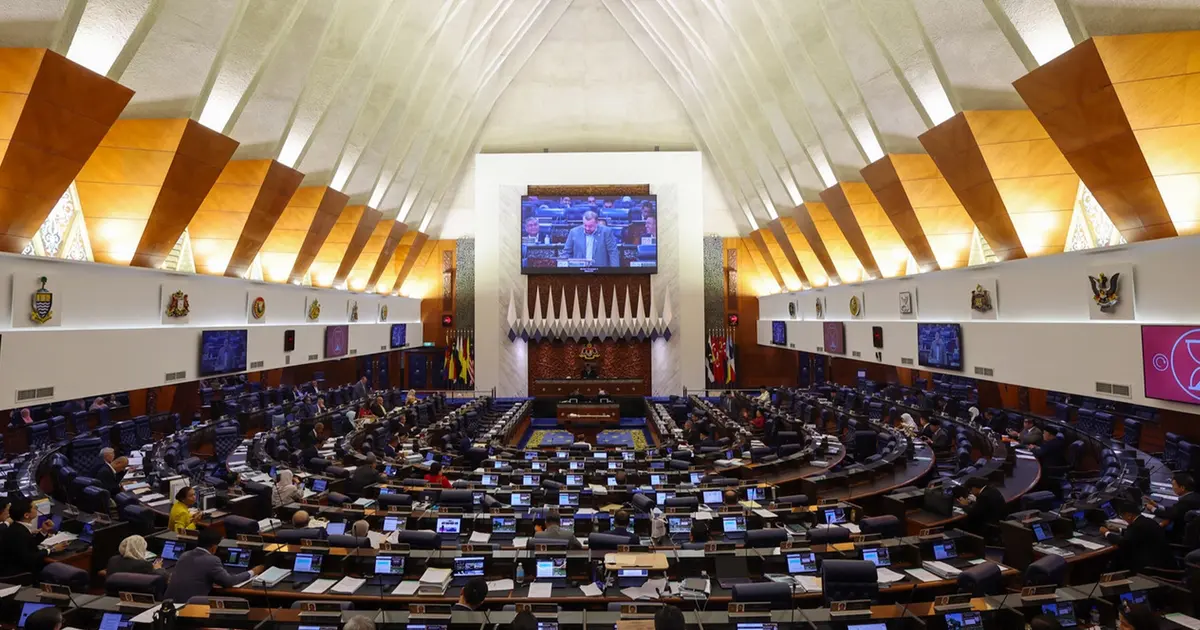
Malaysia's Parliament is preparing for a pivotal week of legislative business as the Dewan Rakyat reconvenes Monday with four substantial bills on the parliamentary calendar, foremost among them an attempt to impose a constitutional ceiling on prime ministerial tenure. The measure, which would restrict any prime minister to a maximum of 10 years in office, represents a significant structural reform of the nation's political system and carries considerable implications for Malaysia's constitutional framework and executive governance.
The proposed term limit has emerged as a central plank of institutional reform efforts, reflecting growing sentiment across the political spectrum that consolidating executive power over extended periods carries inherent risks to democratic accountability. The bill's reintroduction after failing to achieve the necessary supermajority during the previous parliamentary sitting signals persistent determination among reform advocates to reshape the constitutional parameters governing the prime ministerial office. Such constitutional amendments in Malaysia require a two-thirds majority in both chambers, a threshold that has proven challenging to achieve and indicates the reform enjoys substantial but not universal support across parliamentary representation.
The previous failure to secure the required two-thirds vote underscores the complexity and sensitivity surrounding prime ministerial powers in the Malaysian political context. Establishing tenure limits fundamentally alters the balance of authority within the executive branch and affects the strategic calculus of political parties seeking to consolidate power or consolidate institutional advantage. The renewed attempt reflects calculations that either additional parliamentary support has been secured or that the political moment for advancing this reform has strengthened since the earlier motion.
Term limits for heads of government represent a recurring theme in constitutional democracies globally, with varying approaches ranging from absolute prohibitions on re-election to graduated restrictions on consecutive tenures. Malaysia's proposed 10-year cap positions the nation among countries favouring defined boundaries on executive tenure, a framework that proponents argue enhances democratic rotation and reduces the concentration of power within a single individual. For Southeast Asian readers, this development resonates with ongoing debates across the region regarding executive accountability and constitutional safeguards against excessive centralisation of authority.
The inclusion of this bill within a broader package of four major legislative items suggests Parliament is prioritising comprehensive institutional review during this sitting. The portfolio of pending measures likely addresses multiple dimensions of governance, potentially encompassing electoral reform, parliamentary procedures, or other constitutional matters alongside the term limit proposal. This clustering of significant legislation indicates either an unusually productive parliamentary agenda or reflects deliberate sequencing to address multiple reform imperatives within a defined timeframe.
The political mathematics surrounding the term limit vote remain uncertain, and the two-thirds requirement ensures that no single faction can unilaterally advance such constitutional amendments. This supermajority threshold, enshrined in the Federal Constitution, was designed precisely to prevent radical institutional changes driven by narrow parliamentary majorities. The provision reflects Malaysia's founders' intent to embed consensus around fundamental constitutional alterations, though it simultaneously creates substantial barriers to reform when broad agreement proves elusive.
Prime ministerial term limits carry significant implications for Malaysia's political trajectory and succession planning within administrations. A 10-year maximum would theoretically necessitate institutionalised transition mechanisms and potentially reshape how political parties approach leadership development and internal succession dynamics. Such constraints could affect the strategic planning horizons of individual prime ministers and the political priorities within governing coalitions, as leaders would confront definitive deadlines for their tenure rather than remaining indefinitely positioned for re-election.
The bill's timing within Malaysia's contemporary political context deserves consideration, as the nation has experienced considerable flux in executive leadership over the past decade. Multiple transitions between prime ministers have highlighted questions regarding constitutional protections, institutional stability, and the parameters governing executive power. Fresh considerations of tenure limits reflect evolving perspectives on how Malaysia might strengthen constitutional governance and establish clearer frameworks for predictable leadership transitions.
For the broader Southeast Asian region, Malaysia's engagement with executive term limits carries analytical value as the region grapples with questions of democratic consolidation and constitutional development. Several neighbouring nations face analogous debates regarding executive power, suggesting that pressures for formalising constitutional constraints on leadership tenure represent potentially significant trends across multiple political systems. Malaysia's approach, whether ultimately embracing or rejecting term limits, offers instructive lessons regarding democratic reform within constitutional monarchies and Westminster-influenced parliamentary systems.
Parliamentary observers will closely monitor whether the Dewan Rakyat can mobilise the supermajority necessary for passage during Monday's sitting. The outcome will signal broader trends regarding institutional reform capacity within Malaysia's political system and the extent to which competing political actors can coalesce around structural constitutional changes transcending partisan advantage. Success would represent significant constitutional advancement and reflect growing consensus around limiting executive concentration, while renewed failure would suggest persistent resistance to such reforms among sufficient parliamentary forces.

