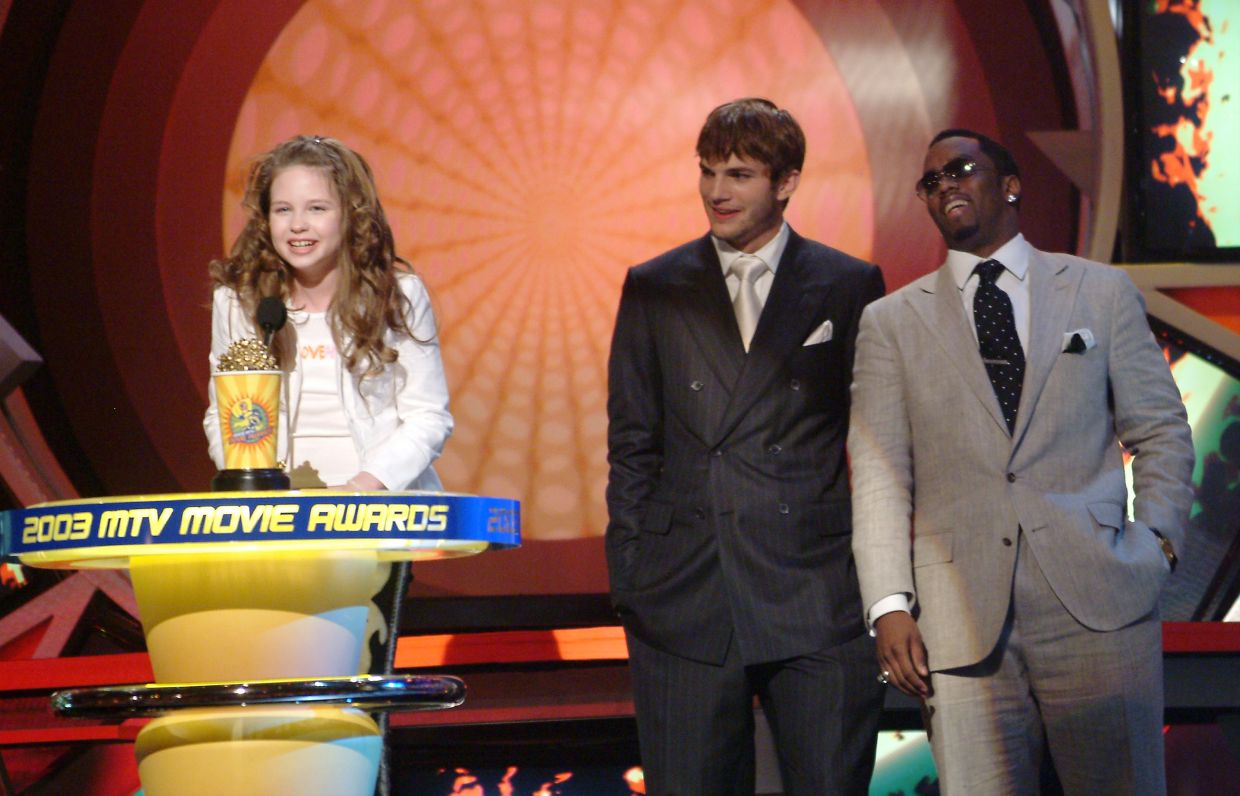
A video clip from an awards ceremony nearly two decades ago has reignited scrutiny of Sean Combs's conduct, capturing a moment where the music mogul invited a preteen actress to one of his notorious parties. The footage, which has resurfaced online following recent tragic developments in entertainment circles, shows Combs approaching Daveigh Chase at the 2003 MTV Awards shortly after she had received recognition for her role in a horror film franchise. The interaction has taken on troubling significance given the legal landscape surrounding the 55-year-old rapper and the circumstances that have since emerged about his private gatherings.
Daveigh Chase, who gained prominence as the frightening Samara Morgan in The Ring, passed away on June 16 at a Los Angeles hospital at the age of 35. Her father, John Schwallier, revealed that she succumbed to complications stemming from bacterial meningitis and a concurrent blood infection, exacerbated by severe malnutrition. The actress had been battling addiction issues and living without stable housing in the years preceding her death, residing near the medical facility where she ultimately passed away. Her passing prompted a broader conversation about the vulnerabilities of child actors in an industry that has historically struggled with safeguarding young talent.
At the MTV ceremony where the video was recorded, Chase was honoured for Best Villain, recognising her chilling portrayal in the Japanese-inspired horror film. The presentation sequence included actor Ashton Kutcher alongside Combs, who presented the award to the young performer. Immediately following the presentation, the footage shows Combs approaching Chase with a beverage in hand and extending an invitation to his after-party gathering. The casual nature of the invitation, captured on camera and broadcast to millions, now appears markedly different in light of subsequent revelations about the nature of such private events.
The specific significance of this video lies not merely in the invitation itself but in what has emerged about Combs's legendary parties in the years since. Federal authorities and prosecutors have characterised these gatherings, referred to as "freak-off" parties, as elaborate, multi-day affairs fuelled by controlled substances and centred around sexual exploitation. These events allegedly involved numerous sex workers and were conducted with little regard for legality or consent. The scale and nature of these parties have become central to the accusations that ultimately led to serious criminal charges.
Combs's legal troubles accelerated dramatically in September 2024 when he was arrested at the Park Hyatt Hotel in Manhattan. The arrest set in motion a federal investigation that would uncover the extent of his alleged misconduct. In July 2025, a jury in New York returned guilty verdicts on two counts of transportation to engage in prostitution following a comprehensive federal sex trafficking trial. The conviction represented a significant moment in a broader reckoning within the entertainment industry regarding power imbalances and exploitation.
The severity of the sentencing reflected the gravity of the charges. Combs received a 50-month prison sentence, currently being served at FCI Fort Dix in New Jersey. Beyond the criminal case, the disgraced mogul faces civil litigation on an unprecedented scale. More than 100 civil suits have been filed against him, suggesting that numerous individuals believe they experienced harm through association with his events or conduct. These lawsuits span various allegations and continue to expose the breadth of accusations against him.
For Malaysian and Southeast Asian audiences, this case underscores critical questions about celebrity accountability and the protection of young talent within the global entertainment apparatus. The music and film industries operate across borders with significant influence in this region, and the patterns of behaviour revealed in Combs's case reflect systemic issues that warrant vigilance. Young performers throughout Asia pursuing international opportunities should be aware of the environments they are entering and the potential risks associated with private industry gatherings.
The resurfacing of the MTV footage also highlights how digital media creates a permanent record of events that may have seemed innocuous at the time but take on new meaning in retrospect. What was broadcast as light celebrity interaction became evidence of potential predatory overtures once the full scope of Combs's activities came to light. This phenomenon has implications for how societies understand and evaluate past conduct through contemporary ethical and legal frameworks.
Chase's death adds another layer of tragedy to her legacy. Despite her early success as a talented young actress, she struggled with addiction and poverty in her final years, spending time homeless near the hospital where she eventually died. Her trajectory from celebrated child performer to someone facing severe hardship mirrors stories of other former child actors whose early promise gave way to personal struggles. The circumstances surrounding her death and the conditions she faced raise questions about industry responsibility toward performers whose careers have ended or stalled.
The convergence of these events—the archival footage, Chase's untimely death, and Combs's conviction and imprisonment—has prompted renewed examination of power dynamics within entertainment. The casual nature with which an adult man in a position of industry influence invited a child to a private party, captured on film, now reads as emblematic of broader patterns of inappropriate boundary-crossing and exploitation. The video serves as a historical marker of a moment before such conduct was widely acknowledged and prosecuted.
Combs's situation represents one of the most prominent and well-documented cases of misconduct within modern entertainment, with implications extending far beyond his individual circumstances. The scale of the criminal charges, the civil litigation, and the public attention focused on his case have established new precedents for how the industry addresses abuse allegations. For workers throughout the entertainment sector globally, including in Southeast Asia, the case demonstrates that accountability is possible, even for individuals with significant wealth and influence.

