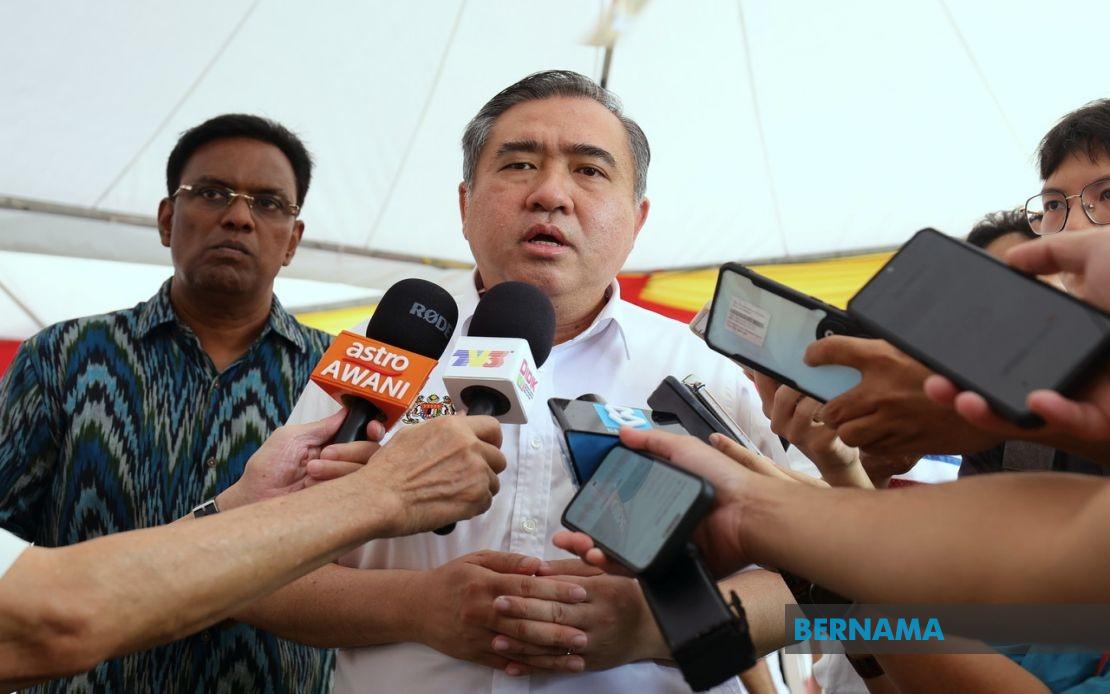
Transport Minister Anthony Loke has unveiled a RM100,000 funding package for Kampung Bukit Temiang in Seremban, marking another step in the government's ongoing effort to improve living standards in rural communities across Malaysia. The allocation comes under the MADANI Adopted Village Programme, a flagship initiative designed to forge direct engagement between federal ministries and local populations to identify and address grassroots challenges. The financial injection comprises equal contributions of RM50,000 each from the Railway Assets Corporation, a Transport Ministry agency, and from Loke's personal allocation as the Member of Parliament for Seremban.
The funding mechanism demonstrates a collaborative approach to rural development within Malaysia's governance framework. Rather than centralising all project management at federal level, the government has channelled resources through the Federal Village Development and Security Committee, known as JPKK, which will oversee the staged implementation of improvements. This decentralised model allows for greater flexibility in execution and leverages existing local governance structures to deliver tangible results to residents. Kampung Bukit Temiang residents have already articulated their priorities through consultative processes, identifying several critical infrastructure needs that the allocation will address.
The infrastructure improvements earmarked for Kampung Bukit Temiang reflect genuine community input rather than top-down planning, a hallmark of the MADANI programme's philosophy. The proposed upgrades encompass renovation of the community meeting hall, structural repairs to residential roofing, rehabilitation of the village drainage network, and enhancement of other essential public amenities. By prioritising these initiatives, the government acknowledges that basic infrastructure deficiencies in rural settlements directly impact residents' quality of life and economic prospects. The phased implementation approach allows the JPKK to manage financial resources prudently while ensuring that works progress systematically.
Loke's statement underscores a broader principle underlying the MADANI initiative: that effective governance requires listening to communities before implementing solutions. This bottom-up planning methodology contrasts with conventional development approaches that sometimes impose predetermined projects without adequate local consultation. By committing to understand Kampung Bukit Temiang residents' needs before proceeding, the government demonstrates responsiveness to grassroots concerns. The JPKK will have flexibility in execution methods, either undertaking work through the Railway Assets Corporation or mobilising traditional communal labour arrangements known as gotong-royong, or engaging qualified local contractors for specialised repairs such as roofing work.
The MADANI Adopted Village Programme itself represents a strategic shift in how Malaysia's federal ministries approach rural development. Rather than functioning in isolation from local communities, each ministry adopts specific villages to facilitate sustained dialogue and tailored support. This creates accountability mechanisms whereby government agencies must demonstrate concrete outcomes in their adopted communities. The Transport Ministry's involvement in Kampung Bukit Temiang exemplifies this broader commitment to ensuring that no settlement is overlooked in the government's development agenda. For residents of similar rural communities across Negeri Sembilan and beyond, the Kampung Bukit Temiang initiative signals that federal resources can be mobilised through persistent advocacy and engagement with elected representatives.
Beyond the immediate village upgrade initiative, Loke simultaneously announced developments in the National MADANI Taxi Renewal Programme, reflecting the government's multi-faceted approach to addressing sectoral and community challenges simultaneously. The Transport Ministry has received an additional RM10 million allocation to enhance awareness and participation among taxi and ride-for-hire operators in the various government support initiatives. This supplementary funding follows the allocation of RM10 million under Budget 2026 for the taxi renewal programme, indicating growing government recognition of the taxi industry's importance to Malaysia's public transport ecosystem and drivers' livelihoods.
The taxi renewal initiative extends considerably beyond simple vehicle replacement financing, embodying Prime Minister Datuk Seri Anwar Ibrahim's broader vision for inclusive economic development. The programme addresses multiple dimensions of taxi drivers' circumstances, including access to driver-friendly financing arrangements, income diversification opportunities, social protection coverage, permit application procedures, and incentives supporting industry modernisation. By packaging these elements together, the government acknowledges that taxi drivers' challenges are multifaceted and require coordinated support across financial, regulatory, and social domains. The RM10 million supplementary allocation aims to boost participation rates by improving drivers' understanding of available benefits and streamlining access to programme services.
A particularly notable aspect of government strategy involves repositioning the relationship between traditional taxi services and e-hailing platforms from competitive antagonism toward complementary partnership. Rather than viewing ride-for-hire applications as threats to conventional taxi livelihoods, the Transport Ministry actively promotes collaboration between taxi associations and digital platform operators. This reframing recognises that consumers increasingly utilise multiple transportation options and that taxi drivers can enhance earnings by accessing e-hailing platform networks while maintaining traditional street-hailing and radio-dispatch operations. For Malaysian taxi drivers struggling with income pressures from digital disruption, this collaborative model offers pathways to economic sustainability by integrating rather than isolating them from emerging transport technologies.
Implementation of the National MADANI Taxi Renewal Programme requires coordination across multiple government agencies and private sector stakeholders. The Transport Ministry, the Land Public Transport Agency (APAD), financial institutions, automotive manufacturers, and e-hailing platform operators all play interconnected roles in programme success. This ecosystem approach acknowledges that sustainable solutions to transport sector challenges demand buy-in from numerous actors with divergent interests. By fostering strategic cooperation among these stakeholders, the government seeks to create an environment where taxi drivers benefit from modernised vehicle access, financial support, income diversification opportunities, and integration with digital platforms without compromising traditional service models.
For regional Southeast Asian observers, Malaysia's MADANI initiatives provide a case study in how middle-income countries attempt to balance rapid urbanisation and technological disruption with inclusive development across rural and declining sectors. The allocation to Kampung Bukit Temiang demonstrates commitment to infrastructure equity despite fiscal constraints, whilst the taxi programme reflects pragmatic engagement with sector-specific challenges through collaborative rather than punitive approaches. The success or otherwise of these initiatives will influence perceptions of whether Malaysia can sustain equitable growth patterns as digital transformation accelerates across transportation, services, and rural economies.
The funding announcements represent incremental but meaningful government commitment to constituencies that lack political leverage relative to urban centres. Seremban's allocation reflects the Transport Ministry's prioritisation of parliamentary constituencies whose MPs maintain regular engagement with federal leadership. Other rural communities observing these resource flows may intensify advocacy for similar MADANI programme adoption. Over time, the cumulative effect of multiple village upgrades and sectoral support programmes could meaningfully reshape rural infrastructure conditions and livelihood prospects, provided implementation quality matches policy ambition and funding quantum remains adequate to address the substantial backlog of unmet rural development needs across Malaysia.

